Dental Implants for Missing Tooth Treatment
1. Why Is an Implant Preferred for Missing Tooth Treatment?
The main reason implant treatment is the preferred method for replacing missing teeth is that it best mimics the natural tooth structure and oral anatomy. Unlike traditional methods, it is applied directly into the gap without needing to cut down or reduce adjacent healthy teeth. Because it integrates directly with the jawbone, it distributes chewing force evenly and prevents bone loss. Thanks to its long-lasting, durable, and biocompatible structure, it permanently improves patients’ quality of life.
- Preservation of Healthy Teeth: Unlike bridge treatment, adjacent teeth do not need to be filed down.
- Preservation of Bone Health: By functioning like a tooth root, it stops bone resorption in the jaw.
- High Chewing Performance: Offers comfort closest to the chewing pressure of natural teeth.
2. What Is a Dental Implant and How Does It Work?
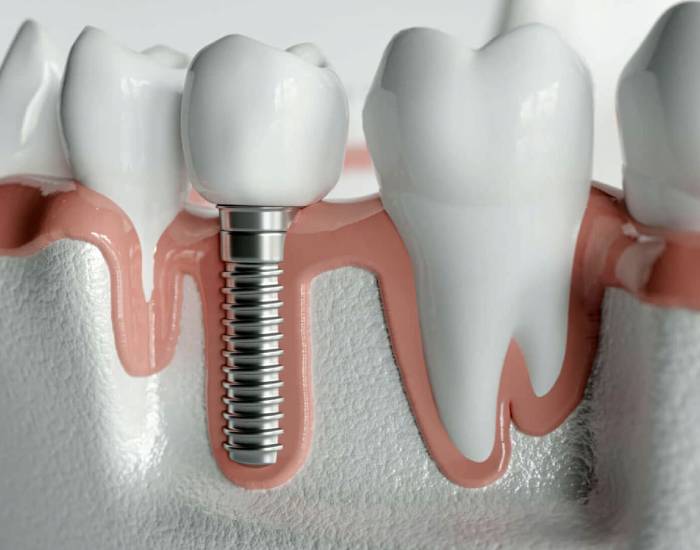
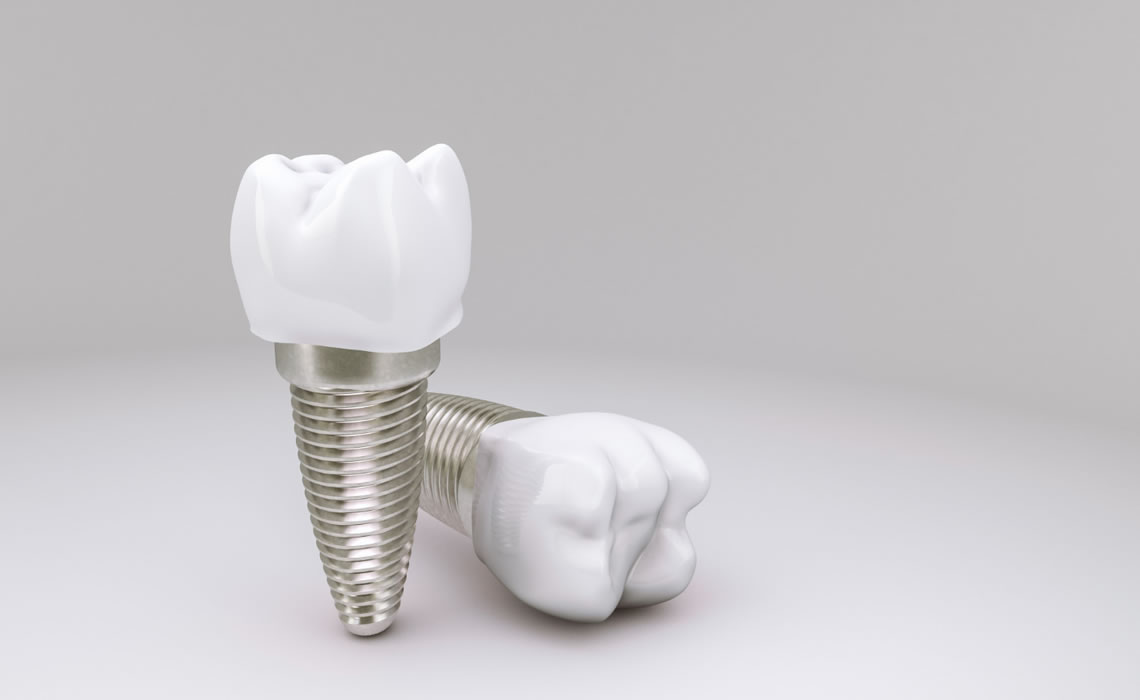
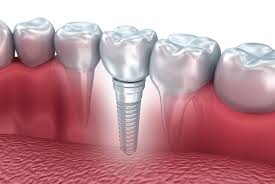
A dental implant is an artificial tooth root, usually made of titanium, surgically placed into the jawbone to replace a lost tooth. The system works based on a mechanism called osseointegration. The titanium screw placed into the bone through surgery forms a mechanical and biological bond with bone tissue at the cellular level. Once this fusion process is complete, the implant forms a stable foundation capable of bearing the crown, bridge, or denture placed on top of it.
- Implant Body: The screw-shaped titanium part placed inside the jawbone.
- Abutment: The connector piece linking the artificial root to the porcelain/zirconium tooth above.
- Superstructure (Crown/Prosthesis): The artificial tooth visible in the mouth, designed for chewing function and aesthetics.
3. How Do Missing Teeth Affect Oral Health?
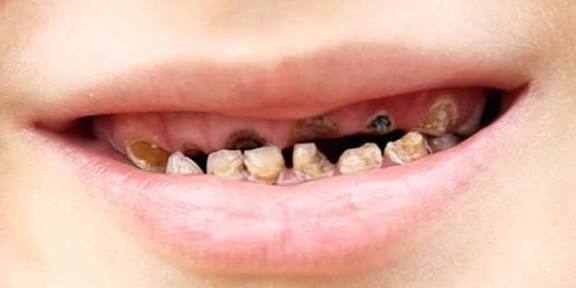
Even the loss of a single tooth disrupts the mechanical balance of the entire jaw system, leading to a chain of health problems. The jawbone in the area of the missing tooth loses volume and erodes over time because it no longer receives chewing stimulation. Neighboring teeth begin to tilt into the resulting gap, while the opposing tooth in the other jaw extends into the space; this leads to bite misalignment (malocclusion) and gum disease. In addition, insufficient chewing of food can cause digestive problems, and missing front teeth can lead to speech impairments.
| Missing Tooth Problem | Short-Term Effect | Long-Term Result |
|---|---|---|
| Lack of Bone Stimulation | Mild gum recession | Serious jawbone loss and facial collapse |
| Teeth Shifting Into the Gap | Food buildup between teeth | Bite misalignment and TMJ (jaw joint) disorders |
| Insufficient Chewing | Swallowing large pieces of food | Stomach and digestive issues such as gastritis and reflux |
4. Can an Implant Be Applied for a Single Missing Tooth?
Single tooth loss is one of the most common and most successful indications for implant treatment. When a single tooth is lost, functional and aesthetic loss can be fully restored with just one dental implant placed in that area. During this procedure, the healthy teeth on either side of the gap are not touched at all. The implant prevents neighboring teeth from tilting into the gap, while allowing the patient to continue their normal brushing and flossing routine.
- The integrity and enamel structure of neighboring teeth are preserved.
- Since a single-tooth anatomy is maintained, interdental cleaning is easy.
- Especially ideal for preserving the natural gum shape (papilla) in cases of missing front teeth.
5. How Is Implant Treatment Planned for Multiple Missing Teeth?
When several teeth in a row are missing, placing a separate implant for each missing tooth is not always necessary from a surgical or financial standpoint. During planning, the size of the gap, the quality of the jawbone, and nearby anatomical structures (sinus cavities, nerve canals) are examined in detail. For example, in an area where three teeth in a row are missing, an implant can be placed at each end with a bridge section connecting them in between. This way, maximum load-bearing capacity and stability are achieved with minimal surgical intervention.
- Regional Implant Bridges: Anatomical restoration of multiple missing teeth is achieved with fewer screws.
- Strategic Positioning: Implants are placed at the densest and highest-quality points of the jawbone.
- Cost and Surgical Optimization: Unnecessary surgical load is reduced, speeding up the healing process.
6. How Is Implant Treatment Performed for Total Tooth Loss?
For patients with no remaining teeth (fully edentulous), implant treatment varies depending on whether a fixed or removable denture is planned. When a fixed prosthesis is desired, depending on the condition of the jawbone, 6-8 implants are placed in the lower jaw and 6-8 in the upper jaw, and full-arch porcelain or zirconium bridges are screwed onto them. In cases where bone volume is insufficient in the back regions, the “All-on-4” concept can be applied, allowing a fixed prosthesis to be supported by 4 angled implants. If the patient prefers a removable denture, snap-on (overdenture) prostheses supported by fewer implants (2-4) are planned.
| Method | Number of Implants (Per Jaw) | Prosthesis Type | Suitable For |
|---|---|---|---|
| Traditional Fixed | 6 – 8 Units | Fixed Bridge (Porcelain/Zirconium) | Patients with sufficient bone volume and budget |
| All-on-4 Concept | 4 Units (Angled) | Hybrid Fixed Prosthesis | Patients with bone loss in the back region |
| Overdenture (Snap-on) | 2 – 4 Units | Removable Denture with Precision Attachments | Patients seeking an economical solution or with very insufficient bone |
7. What Is the Difference Between Implant and Bridge Treatment?
The main difference between implant treatment and traditional bridge treatment lies in the anatomical structures that support the restoration. In bridge treatment, the healthy teeth on both sides of the gap are filed down to prepare the prosthesis, meaning the load is placed on neighboring teeth. In implant treatment, since an artificial root placed directly into the jawbone is used, the neighboring teeth are not touched. While implants preserve bone, bone loss under a bridge can continue over time.
- Integrity of Neighboring Teeth: Tooth integrity is preserved with implants, while healthy teeth are cut down for bridges.
- Lifespan: Implants can last a lifetime with proper care, while bridges may need to be renewed every 7-10 years on average.
8. What Is the Difference Between Implants and Removable Dentures?
Removable dentures are appliances supported by the oral tissues and remaining teeth, which the patient can put in and take out; implants, on the other hand, are permanent structures anchored to the bone. Removable dentures can shift, click, or cause sore spots due to the flexibility of the tissue during chewing, whereas implant-supported prostheses do not experience such stabilization issues. While implants prevent bone loss, full palate dentures can accelerate bone loss over time by applying constant pressure to the jawbone.
- Stability and Comfort: Implants are fixed and stable; removable dentures can shift in the mouth.
- Taste and Speech Sensation: Upper jaw removable dentures reduce taste sensation because they cover the palate, whereas the palate remains open with implants.
9. Who Is a Suitable Candidate for Implant Treatment for Missing Teeth?
All individuals whose general health allows for surgical intervention, whose bone development is complete (generally age 18 and above), and who have good oral hygiene are suitable candidates for implant treatment. Systemic conditions such as uncontrolled severe diabetes, active chemotherapy or radiotherapy, and advanced osteoporosis requiring bisphosphonate medication may prevent or require postponing treatment. Smoking is a factor that lowers the success rate but is not an absolute barrier.
- Individuals who have completed their growth and development,
- Those with systemic conditions (blood pressure, diabetes, etc.) under a doctor’s control,
- People with sufficient jawbone volume, or volume that can be increased through surgery.
10. What Evaluations Are Done Before Implant Treatment?
The foundation of successful implant treatment lies in detailed radiological and clinical planning done before the operation. In the first examination, the patient’s general health history is reviewed and the oral tissues are examined. Then, beyond traditional two-dimensional (panoramic) X-rays, a Three-Dimensional Jaw Tomography (Dental CT) is taken, showing the precise width, height, and density of the jawbone. Nerve canals and sinus cavities are identified on this digital data, allowing the angle and size of the implant to be determined with precision.
- Clinical Examination: Checking gum health and oral hygiene standards.
- 3D Radiological Analysis: Mapping bone volume and anatomical risk areas.
- Systemic Health Screening: Analysis of blood values and chronic disease medications.
11. How Does the Jawbone Affect Implant Treatment?
The quality and quantity of the jawbone are the most critical factors directly determining the implant’s mechanical attachment to the bone (primary stability) and the subsequent biological fusion. There should be at least 1-2 mm of healthy bone tissue surrounding the implant screw. Bones that are either very hard (Type D1) or overly soft and spongy (Type D4) in density require changes to the surgical technique; balanced-density bone is ideal. When bone volume is insufficient, the implant surface may become exposed, leading to treatment failure.
12. Can an Implant Be Placed If There Is Insufficient Bone?
Thanks to today’s advanced jaw surgery techniques, it is possible to safely apply implants even to patients with bone loss or insufficiency in the jaw. Using methods known as “bone augmentation” or commonly as “bone grafting,” artificial or natural bone grafts are placed in insufficient areas. A “sinus lift” operation is performed to raise the sagging sinus cavities in the upper jaw. These advanced surgical procedures create the necessary volume for the implant; bone grafting can be done either at the same time as the implant or a few months beforehand, depending on the situation.
- Autogenous/Allogenic Grafting: Transfer of bone graft material to increase bone volume.
- Sinus Lift Operation: A procedure to increase vertical bone distance in the back of the upper jaw.
- Block Bone Grafts: Transfer of a bone block from another part of the jaw in cases of advanced horizontal bone loss.
13. How Does the Implant Treatment Process Proceed?
The implant treatment process consists of two main stages: surgical placement and the prosthetic stage. Under local anesthesia, the gum is opened in the planned area, a socket suited to the implant size is prepared in the jawbone, the screw is placed, and the gum is closed; this surgical stage takes an average of 15-30 minutes per implant. After the operation, a waiting period of 3-4 months in the upper jaw and 2-3 months in the lower jaw is required for the implant to fuse with the bone (osseointegration). Once fusion is achieved, a healing cap is attached with a minor procedure, an impression is taken, and the permanent prosthetic tooth is manufactured and fitted.
| Stage No. | Procedure | Average Duration / Waiting Time |
|---|---|---|
| 1 | Planning and Surgical Placement | 15 – 30 Minutes (Per Implant) |
| 2 | Osseointegration (Bone Fusion) | 2 – 4 Months (Varies by Jaw) |
| 3 | Healing Cap and Impression | 1 – 2 Weeks |
| 4 | Permanent Prosthesis Placement | 3 – 7 Days |
14. What Is the Healing Process Like After Implant Treatment?
The acute healing period, which begins immediately after surgery and lasts about the first 48 hours, can be comfortably managed with proper care. Once the anesthesia wears off on the day of the operation, mild pain and swelling (edema) depending on the extent of the operation are normal; the pain relievers and antibiotics prescribed by the dentist keep this process under control. Slight oozing bleeding on the first day is considered normal. Stitches are typically removed after 7 to 10 days, or left to dissolve on their own if self-absorbing sutures were used.
- Cold Compress: Applying ice externally during the first 24 hours minimizes swelling.
- Soft Diet: Warm, pureed foods that won’t strain the implant area should be consumed for the first few days.
- Avoid Rinsing: Spitting and vigorous rinsing should be avoided on the first day so the blood clot is not dislodged.
15. When Can Patients Return to Daily Life After an Implant?
After a standard single or few-implant procedure performed under local anesthesia, patients can generally return to their routine work and social lives the next day. Resting on the day of the operation and avoiding strenuous physical activity is important for balancing blood pressure and reducing the risk of bleeding. Patients who undergo more advanced surgical procedures (such as bone grafting or sinus lifting) or who receive general anesthesia/sedation may take 2-3 days to fully return to work.
- In standard cases, patients can return to work after 24 hours.
- Strenuous exercise, saunas, and intense physical exertion should be avoided for the first 3-5 days.
- Speech and social interaction are almost never affected after surgery.
16. What Are the Long-Term Benefits of Implant Treatment?
The greatest long-term benefit of implant treatment is that it provides the patient with a permanent, stable oral structure that can last a lifetime. Because it stimulates the jawbone like a natural tooth root, it prevents age-related facial sagging and an aged appearance. Unlike traditional bridges, there is no risk of food leaking underneath or causing decay over time. When supported by proper oral hygiene, its biomechanical lifespan is nearly unlimited, making it the most economical dental investment in the long run.
- Preservation of Facial Aesthetics: Supports the lips and cheek muscles, preventing age-related facial collapse.
- High Quality of Life: Completely eliminates the fear of a denture falling out in public.
- Sustainable Financial Solution: Economical in the long run since it doesn’t require frequent replacement.
17. How Does an Implant Support the Natural Appearance and Function of Teeth?
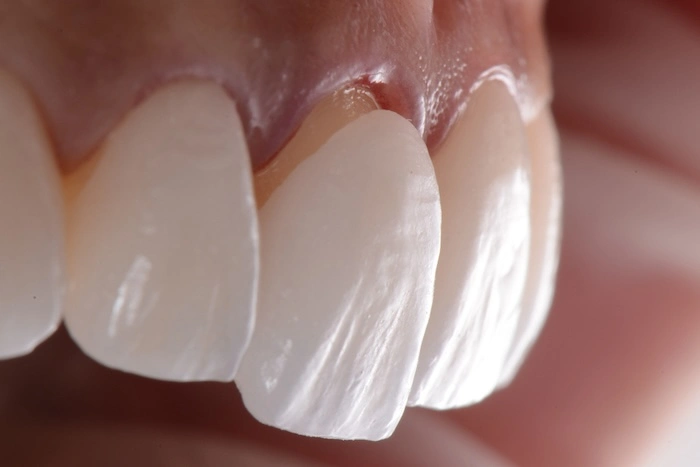
When designing implant-supported prostheses, today’s advanced computer-aided design and manufacturing (CAD/CAM) technologies are used. Superstructures made with porcelain or highly translucent zirconium materials are manufactured to match the color, shape, and surface characteristics of the patient’s natural teeth exactly. Functionally, since it emerges directly from the gum line, it gives a natural tooth sensation; the patient feels the chewing force directly in the bone, which preserves the natural chewing reflex.
18. What Factors Affect the Success Rate of Implant Treatment?
In modern dentistry, the success rate of implant treatment ranges quite high, between 95% and 98%. However, achieving this rate directly depends on both the dentist’s surgical precision and the quality of the patient’s post-treatment care. Full compliance with sterilization rules and placing the implant into the bone at the correct angle and torque are success factors related to the dentist. Patient-related factors include uncontrolled systemic diseases and, most importantly, poor oral care leading to peri-implantitis, which is inflammation of the gum tissue around the implant.
- Oral Hygiene: Not brushing regularly is the leading cause of implant loss.
- Smoking: Heavy smoking impairs tissue blood flow, hindering bone fusion.
- Dentist Experience: Accurate diagnosis, sterile surgery, and flawless prosthetic planning.
19. How Should Oral Care Be Done After an Implant?
Although implants are made of titanium and ceramic structures resistant to decay, the surrounding gum and bone tissue are still sensitive to bacterial infections. For this reason, oral care after an implant must be carried out even more meticulously than natural tooth care. In addition to standard brushing at least twice a day, special interdental brushes or dental floss should be used to clean the junction between the implant and the gum. Superfloss and oral irrigators (water flossers) should be added to routine care to clean underneath bridges or multiple implant units.
- Interdental Brush: Should be used daily to mechanically clean plaque around the edges of the implant.
- Oral Irrigator: Removes food debris from deep pockets that a brush cannot reach, using a pressurized water stream.
- Regular Dental Checkups: Professional clinical examinations twice a year help detect potential problems early.
Frequently Asked Questions About Dental Implants for Missing Teeth
Question 1: Will I feel pain during the implant procedure?
Answer: No, the implant operation is performed under local anesthesia, and the area to be treated is completely numbed. It is not possible to feel any pain during the procedure. Any mild soreness that may occur afterward can easily be managed with standard pain relievers.
Question 2: Can the body reject an implant?
Answer: Titanium is a biocompatible material and, since it has no antigenic properties, it is not perceived by the body as a “foreign tissue” and rejected (as with organ rejection). Failures are usually caused by infection or excessive early loading, which are mechanical/biological complications.
Question 3: How long does an implant last?
Answer: An implant treatment performed correctly, with maximum attention paid to oral hygiene, can remain in the mouth for a lifetime. However, the porcelain or zirconium crowns on top may need to be renewed after 10-15 years due to mechanical wear.
Question 4: Can diabetic patients get implants?
Answer: Yes, patients with diabetes can get implants. The critical point here is keeping the HbA1c level and blood sugar under control. In patients who take their medication regularly and have stable blood sugar, the healing process does not differ from that of healthy individuals.
Question 5: Is the tooth attached right after the implant is placed?
Answer: Generally, after the implant is placed, a waiting period of 2-4 months is required for it to fuse with the bone, during which a temporary prosthesis is used. However, in cases of very high bone quality, it is also possible to attach a temporary fixed tooth on the same day using the “Immediate Loading” technique.