What Are the Differences Between Laminate Veneers and Zirconium Crowns?
The question of what the differences are between laminate veneers and zirconium crowns is one of the fundamental topics frequently encountered during the research process of individuals who want to reshape their oral and dental aesthetics. These two prominent methods in aesthetic dentistry applications aim to reorganize the structural features of teeth such as shape, size, and color. However, the production technologies of these two materials, their mode of application to the tooth surface, light transmittance rates, and mechanical durability limits embody quite different dynamics. The intraoral requirements of individuals, the presence of tooth loss, jaw occlusion relationships, and the thickness of the existing enamel tissue are the main medical parameters that determine which method will be selected. While laminate applications are generally considered conservative, minimally invasive approaches; zirconium crowns are options preferred in wide-scale structural restorations by completely encircling the tooth and providing high durability. When deciding which method to apply, chewing forces as well as aesthetic expectations need to be analyzed in a multidimensional manner.
In this decision-making process, detailed clinical and radiographic examinations performed by the dentist act as a guiding framework. Since there is no standard and single-type approach in dentistry, personalized planning specific to each individual’s anatomical structure is essential. An individual who wants to correct minor deformities in the anterior region and an individual with major substance loss in the posterior molars will naturally require different material infrastructures. In our OPC Klinik organization, which aims to provide services to our clients in the Kozyatağı region, it is a priority approach for individuals to have transparent, accurate, and understandable information about these two different materials. Accurate identification of needs allows the process to proceed smoothly in its usual flow and enables the acquired aesthetic and functional gains to contribute to oral health for many years. In this comprehensive guide, the structural differences, areas of use, and process management of laminate and zirconium applications are examined in detail.
What is a Laminate Veneer and in Which Structural Conditions Can It Be Evaluated?
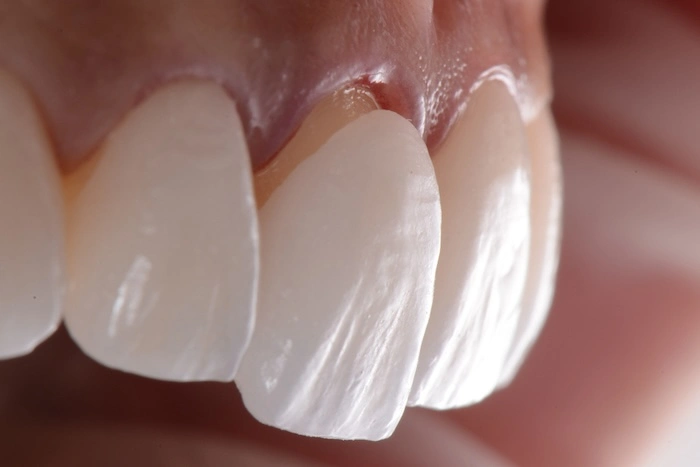
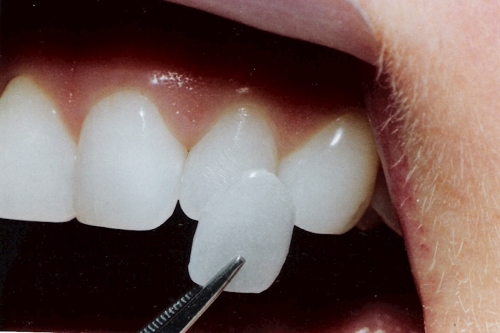
The answer to the question of what a laminate veneer is and in which structural conditions it can be evaluated is based on a conservative aesthetic restoration philosophy focusing solely on the front surface of the tooth. “Laminate” literally means “leaf” and refers to thin veneers produced from porcelain or composite materials in dentistry. The prominent feature of this method is that it is performed with minimal intervention to the natural structure of the tooth. During the procedure, a thin enamel layer, usually ranging between 0.3 and 0.7 millimeters, is abraded only from the front (facial) surface of the tooth facing the lips and cheeks. In some suitable anatomical situations (for example, when teeth are smaller than normal), applying a laminate without touching the tooth at all (no-prep) is also a feasible approach. The prepared thin ceramic leaves are integrated chemically and mechanically onto the tooth surface using special resin agents (adhesives) with high bonding strength.
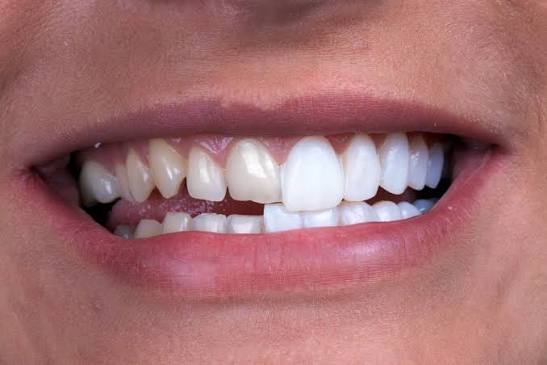
Since laminate applications structurally preserve the biomechanics of the tooth to a great extent, they are mostly planned for anterior group teeth where aesthetic expectations are at the forefront. Closing spaces between teeth (diastema), and masking deep discolorations due to hereditary or external factors that do not respond to tooth whitening (bleaching) are areas where this method is frequently evaluated. In addition, laminate veneers are used in the aesthetic restorations of individuals who do not prefer orthodontic processes, such as eliminating asymmetries in tooth lengths, and correcting mild crowding or rotations. However, due to their thin structure, laminate veneers are not materials designed to be used on posterior molars where chewing forces are very high or in bridge restorations to replace missing teeth.
What is a Zirconium Crown and How Does It Adapt to the Tooth Structure?
The answer to the question of what a zirconium crown is and how it adapts to the tooth structure lies in the properties of an infrastructure material that combines aesthetic appearance with mechanical resistance. Zirconium is a white-colored alloy formed by combining the zirconium element found in nature with oxygen. It was developed and became widespread to replace traditional gray metal-substructured porcelains used in dentistry. Its distinct advantage is that it eliminates gray or purple reflections that form over time at the gum line in metal-supported porcelains, and thanks to its white color, it can reflect light reflection much closer to natural tooth tissue. Zirconium material exhibits a highly successful structure in terms of tissue compatibility (biocompatibility); it is not affected by oral fluids or temperature changes, and the likelihood of causing an allergic reaction in the gums is quite low.
Zirconium crowns are classified as full-coverage restorations that completely encircle the tooth (360 degrees). During the application phase, a circumferential abrasion of a certain proportion (usually 1.5 – 2 millimeters) is performed not only from the front surface of the tooth, but also from the front, back, side, and chewing surfaces. This abrasion process is carried out to create sufficient space for the zirconium block, which will be fitted over the tooth like a jacket, to sit properly. Zirconium crowning is a process that goes beyond the enamel layer of the tooth and requires a deeper loss of substance. Being a mechanically very strong material, it is an ideal option evaluated both in the aesthetic repair of front teeth and in the functional strengthening of extensive tissue losses occurring in posterior molars (large cavities, fractures, or weak root-canal-treated teeth).
What Are the Fundamental Differences Between the Amounts of Tissue Removed From the Tooth?
The question of what the main differences are between the amounts of tissue removed from the tooth is a decisive factor in understanding which restoration is more conservative (minimally invasive). Preserving tooth enamel is always one of the primary targeted principles in dentistry. A laminate veneer, by its nature, is an application targeting only the externally visible front surface of the tooth. The physician plans an abrasion (preparation) of approximately half a millimeter from the front surface to prevent the porcelain from looking bulky on the tooth and to create a natural emergence profile. The inner (palatal/lingual) surface facing the tongue side of the tooth and the chewing surfaces of the teeth are not touched. In this way, the natural integrity, flexibility, and strength of the tooth are preserved in the patient’s own mouth to a great extent.
In zirconium crowns, however, the clinical approach differs. In order for zirconium to be applied to a tooth, the tooth needs to be reduced from all sides (circumferentially) to take the shape of a cube or a cone. This process is a procedure applied to make room for both the zirconium infrastructure and the aesthetic porcelain to be crafted onto it. This circumferential substance loss, averaging between 1.5 and 2 millimeters, means removing more healthy tissue from the tooth. Therefore, if only a shape and color change (for aesthetic purposes) is planned for a completely healthy, decay-free, and filling-free tooth, preferring tissue-preserving laminate applications instead of cutting the tooth circumferentially to make a zirconium crown is accepted as a biologically more favorable step.
How is the Light Transmittance Difference Evaluated in Terms of Aesthetic Expectations?
The question of how the light transmittance difference is evaluated in terms of aesthetic expectations helps in understanding the optical illusions during the process of mimicking natural teeth. A natural human tooth does not only reflect light from its surface; it also has a translucent structure that allows light to pass through the enamel layer to reach the underlying dentin layer and reflect back from there. Laminate veneers produced from glass-ceramics (e.g., lithium disilicate) structurally mimic this translucent property very successfully. Since there is no opaque (matte) core inside, light passes through the porcelain leaf to reach the natural tooth, creating a very high sense of vitality and depth. Due to these features, they allow achieving aesthetic results in anterior aesthetics that are quite difficult to distinguish from natural teeth.
The light transmittance of zirconium crowns exhibits a different structure compared to laminates. Although zirconium blocks are white in color, their light transmission rates are lower than glass-ceramics; by nature, they are more opaque (matte). This opacity can turn into a great advantage in some clinical situations; for example, when it is desired to mask the color of a tooth that has blackened after root canal treatment or gray-colored metal implant abutments in the mouth, this opaque structure of zirconium prevents the underlying dark color from reflecting outward. Although monolithic zirconiums or translucent zirconium blocks developed with today’s technology yield more aesthetic results in terms of light transmittance, capturing that transparent depth offered by a thin laminate made of glass porcelains is anatomically more limited.
Key Comparison Table of Laminate and Zirconium Crowns
| Feature | Laminate Veneer (Leaf Porcelain) | Zirconium Crown (Full Crown) |
|---|---|---|
| Amount of Abrasion (Reduction) | Abrasion is made only from the front surface (0.3 – 0.7 mm). | Reduction is made circumferentially around the tooth (1.5 – 2 mm). |
| Coverage Area | Covers only the surface of the tooth facing the lip and cheek. | Completely encloses the tooth 360 degrees like a jacket. |
| Light Transmittance (Aesthetics) | High, offers a translucency very close to natural enamel. | More opaque (matte), effective in masking dark-colored teeth. |
| Mechanical Durability | Suitable for the anterior region but sensitive to shearing/tearing forces. | High, resistant to posterior molars and chewing loads. |
| Tooth Deficiency (Bridge) Use | Cannot bridge gaps, cannot be used as a bridge pontic. | Bridges can be constructed to fill the space of missing teeth. |
Which Method Comes to the Forefront in Which Tooth Structure and Deformities?
The answer to the question of which method comes to the forefront in which tooth structure and deformities focuses on the loss of substance in the individual’s mouth and the current alignment of the teeth. If the individual does not have extensive decay, large old fillings, or fragility due to root canal treatment in their teeth; and if the main expectation is the shortness of tooth lengths, gaps between them, structural roughness on the surface, or aesthetic dissatisfaction with the tooth’s own natural color, laminate applications are the first option evaluated to manage the process. Since laminates require bonding to healthy tissue, they provide a very stable and aesthetic repair with the strength of adhesive agents in cases where enamel is preserved to a large extent. The general integrity of the tooth is preserved, and only aesthetic parameters are reconfigured.
If there is very severe crowding in the individual’s dental alignment, where the teeth heavily overlap each other, abrading a small amount only from the front surface of the tooth to make a laminate does not create sufficient space to achieve an aesthetic and proper alignment. In such cases, it may be necessary to cut the tooth much more to accommodate the porcelain. When there is excessive loss of substance in the tooth, the tooth weakens and the enamel layer, which is the bonding area of laminates, disappears. In teeth with such large cavities, previously cut all around for crowning, or structurally weakened, zirconium crowns take over the process by protecting the tooth like armor. Zirconium supports the tooth against fractures and ensures integrity against chewing forces.
Which Material is Used in Cases of Missing Teeth or the Need for Bridges?
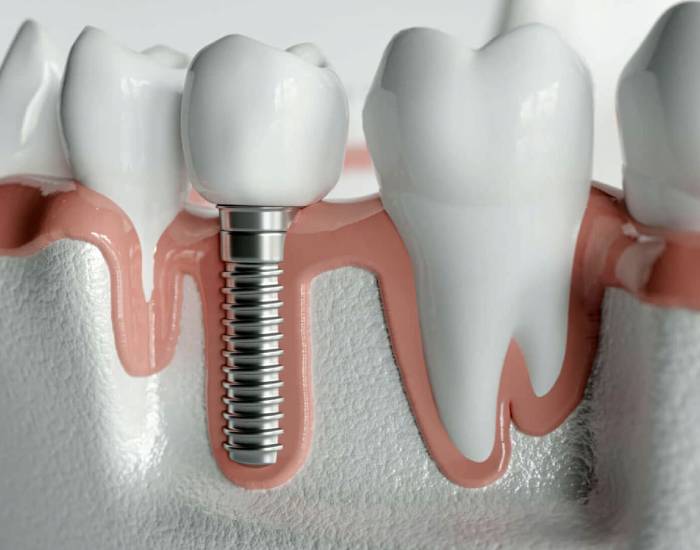
The question of which material is used in cases of missing teeth or the need for a bridge clearly draws the mechanical boundaries of the two materials. If there are missing teeth in the mouth that were previously extracted or never formed congenitally, there are basically two main approaches to fill this gap: Implant applications or bridge prostheses supported by adjacent teeth. Since laminate veneers are in the form of a thin leaf and can only bond to the solid tooth surface underneath, they do not have the chance to hang in space mechanically. Therefore, laminate material cannot be used in bridges planned to fill missing tooth spaces.
In such cases, zirconium crowns step in thanks to their high mechanical resistance. Since zirconium is a material with very high flexural and fracture strength, it is fitted onto bridge abutments prepared by reducing the healthy teeth (supporting teeth) located on the right and left of the gap. The supporting teeth and the pontic tooth filling the gap in between are produced as a single-piece zirconium block, completing the gap aesthetically and functionally. Although implant applications are frequently evaluated today in the treatment of missing teeth so as not to cut healthy adjacent teeth, zirconium’s tissue compatibility and resistance offer a great advantage in cases where bridge construction is preferred.
How is the Process Planned by OPC Klinik for Individuals in the Kozyatağı Region?
When we focus on how the process is planned by OPC Klinik for individuals in the Kozyatağı region, a systematic service approach emerges that takes into account the personal expectations and life flows of clients. When designing our aesthetic and functional restoration services for our clients in the Kozyatağı region, as OPC Klinik, we start every process with a detailed preliminary consultation. Intraoral scans, panoramic radiographs, and facial photographs of individuals applying to the clinic are recorded. In light of these data, our physicians analyze the patient’s gum levels, closure dynamics, and aesthetic expectations. If an individual is undecided between laminate and zirconium, the clinical results of both methods are conveyed to them in transparent language by adapting them to the patient’s own mouth model.
Digital dentistry applications provide great practical convenience in planning the process. The individual’s dental measurements are taken in seconds with digital scanners, transferred to the laboratory, and virtual modelings called “Digital Smile Design” are performed before the process begins. In this way, the patient gets the opportunity to see how the result will adapt to their facial anatomy before the procedure even starts. For our clients reaching us from the Kozyatağı region who have a busy social or work life, appointment schedules are arranged with a flexible approach, optimizing session times. Our goal is to bring together the physician’s experience and the individual’s aesthetic vision on a healthy foundation that preserves structural integrity.
How Are Their Mechanical Durability and Resistance Against Chewing Forces?
The question of how their mechanical durability and resistance against chewing forces are forms the basis of the performance of restorations in different regions of the mouth. The human jaw produces a very strong chewing, crushing, and grinding force that can reach 100 kilograms in the posterior molar regions. Zirconium crowns have extraordinary mechanical durability against bending, cracking, and heavy pressure, thanks to the zirconium dioxide crystals in their structure. Thanks to this structural strength, they can easily meet functional movements in the posterior molars and maintain their form without flexing in wide-span bridges.
Laminate veneers, on the other hand, are thin ceramic or composite leaves by nature. On their own (before bonding to the tooth), they are fragile just like thin glass. However, when integrated into solid enamel tissue with high-tech resin cements (adhesives), they virtually become a single piece with the tooth, and their debonding resistance reaches a very high level. They do not easily detach from the surface; however, this does not mean that they are completely resistant to all forces. The sensitive point of laminates is “shearing” or “lever” forces. Biting a hard object with the front teeth, or trying to crack shell nuts like walnuts with teeth places a sudden stress on the tips of the thin ceramic and can lead to minor chipping (fractures). For this reason, laminates are generally accepted as a suitable aesthetic material for anterior region teeth where crushing forces are low.
Which Option is More Suitable for Individuals with a Teeth Clenching (Bruxism) Habit?
The analysis of which option is more suitable for individuals with a teeth clenching (bruxism) habit is a very important criterion that determines the lifespan of restorations. Uncontrolled contraction of jaw muscles during sleep or stress (teeth grinding) causes the lower and upper teeth to rub against each other very severely. This involuntary movement is a destructive force that leads to serious wear on the chewing and incisal surfaces of teeth. Applying a laminate veneer to an individual who actively clenches their teeth without taking precautions may cause the thin ceramic surfaces to chip or crack at the tips, unable to withstand this excessive friction pressure.
In such a case, zirconium crowns primarily offer a much more protective alternative against friction and pressure due to their high resistance. Because it completely encloses the tooth, it has the ability to distribute the chewing force evenly. However, if a laminate is planned despite the teeth clenching habit due to aesthetic expectations or the desire to preserve tooth tissue, the post-procedure approach is of great importance. After the completion of the procedure, it is requested to use a hard acrylic “night guard” (occlusal splint) specially prepared for the individual. The night guard prevents contact between the upper and lower teeth during sleep, reducing muscle tension and ensuring long-term use by protecting all applied aesthetic restorations—whether zirconium or laminate—from mechanical traumas.
What Are the Differences in Terms of Application Time and Session Intervals?
The answer to the question of what the differences are in terms of application time and session intervals shows that both methods progress on largely similar schedules thanks to today’s digital dentistry possibilities. Whether it is a laminate veneer or a zirconium crown, the basic steps of the process—preparation (reduction), impression taking, laboratory production, rehearsal, and bonding stages—require a specific clinical workflow. Although both laminate and zirconium processes depend on the size of the case and the number of teeth to be treated, in general terms, they are divided into two or three clinical sessions and completed in an average time frame of one week to ten days.
In clinics with advanced digital systems, time can be shortened much more because impressions taken with digital scanners are instantly transferred to the laboratory and rapid production can be made from blocks with milling devices. However, in laminate applications, since work is carried out in the anterior region where aesthetic expectations are very sensitive, rehearsal sessions may require much more meticulous craftsmanship and mutual exchange of ideas (examining the tooth form, evaluating its harmony with facial features). In zirconium full crown applications, since functional occlusion dynamics are at the forefront in the posterior molar region, upper and lower jaw contact tests are carried out more intensively during the rehearsal stage.
What Are the Requirements of Materials in Oral and Dental Care Routines?
The question of what the requirements of materials are in oral and dental care routines defines how individuals will protect their restorations with their own daily habits. Both laminate and zirconium crowns are smooth materials produced with high technology that are resistant to staining agents (tea, coffee, cigarettes). These features allow the crowns to maintain their first-day brightness. However, the care process is aimed not only at the porcelain material, but also at the gums adjacent to these materials and your own natural tooth underneath its structure. In order for restorations to be long-lasting, plaque accumulation should not be allowed at the junction of tooth and gum.
In laminate veneers, the back surfaces of the teeth remain as natural enamel tissue; therefore, if brushing is neglected, your own tooth behind the laminate can decay. In addition, dental floss must be used for interdental cleaning of laminates. In zirconium crowns, the tooth is covered like a hat, but the margin where the crown sits on the gum is a sensitive area for bacterial plaque retention. In addition to brushing teeth with zirconium, using interdental brushes or oral irrigators specially designed to clean under bridge pontics, if any, are fundamental habits that need to be integrated into the routine to prevent gum recession and infections.
Frequently Asked Questions
1. Are laminate veneers and zirconium crowns the same thing?
No, both are different methods structurally and in terms of application philosophy. While a laminate is a thin porcelain leaf bonded only to the front surface of the tooth; zirconium is a type of full crown that circumferentially encloses the tooth and goes deeper.
2. Which type of crown looks more natural?
In terms of light transmittance and translucency, laminate veneers made of glass-ceramic offer a much more advanced optical reflection in mimicking natural enamel tissue. Zirconium crowns can also yield aesthetic results with advancing technology, but the transparency of laminates is ideal for the anterior region.
3. Do zirconium crowns damage teeth?
Zirconium is a tissue-friendly material with very high biocompatibility and does not harm the body. However, in order for it to be applied, an abrasion (loss of substance) of around 1.5 – 2 mm circumferentially on the tooth is an anatomical necessity.
4. Can laminates be made if I have too many fillings in my teeth?
If you have extensive decay or multiple large fillings previously made on your front teeth, the healthy enamel surface to which the laminate can bond will be limited. It is more functional to plan a zirconium crown to preserve structural integrity in such teeth with high tissue loss.
5. Do laminate veneers or zirconium crowns last longer?
Both materials maintain their form for many years when made correctly and provided with regular oral care. While zirconium is more resistant to mechanical chewing forces, laminate is aesthetically strong but more prone to breakage under reverse forces such as biting hard objects.
6. Which method should be selected to correct crooked teeth?
Very mild crowding can be aesthetically arranged with laminates. However, in the presence of severe crowding, the tooth needs to be cut significantly to fit the porcelain. At this point, either a zirconium crown is preferred or, most healthily, orthodontic treatment is planned first.
7. What is the difference between porcelain laminates and zirconium-substructured porcelain?
A porcelain laminate is a translucent leaf produced from glass-ceramic that does not contain infrastructure material inside. In zirconium-substructured porcelain, there is an opaque white zirconium core that provides durability on the inside, and aesthetic porcelain on the outside.
8. Will my own teeth decay under the crowns?
Thanks to special adhesive agents, crowns establish a chemical bond with the tooth and prevent micro-leakage. However, if the individual neglects brushing and flossing habits, plaque can accumulate at the margin areas where the crowns meet the gum, causing decay at the tooth root.
9. Can zirconium crowns be applied to individuals with metal allergies?
Yes, they can be applied safely. Zirconium oxide, unlike traditional metals, is a highly tissue-friendly material that does not cause allergic reactions (hypoallergenic).
10. Can I bite hard foods with my front teeth if I have laminate veneers?
Laminates are durable during chewing, but movements involving shearing/lever forces such as crushing ice, trying to bite off a hard apple, or biting pens with front teeth can cause the thin porcelain tips to break; therefore, it is recommended to consume such foods by slicing them.
11. Do crowns change color from tea and coffee?
Both glass-ceramic laminates and zirconium porcelains have very smooth baked surfaces, so they do not change color with tea, coffee, or cigarette use. Only the surrounding natural teeth or gum margins can hold stains.
12. How are processes organized at OPC Klinik for guests in the Kozyatağı region?
As OPC Klinik serving our clients in the Kozyatağı region, we optimize session times by managing the process with a digital workflow and create a flexible appointment schedule that adapts to the social lives of individuals.
13. Which material is more suitable for individuals who clench their teeth at night?
In cases of excessive teeth clenching, zirconium crowns can be evaluated primarily due to their high mechanical resistance. If a laminate is planned, it is strongly recommended to prepare a night guard to be used during sleep at the end of the process to protect the restorations.
14. I have a missing tooth, can a laminate be made in that region?
Due to their thin structure, laminates cannot hang in space, so they cannot be evaluated as bridge pontics in areas with missing teeth. Missing teeth spaces should be filled with implant applications or zirconium bridges receiving support from adjacent teeth.
15. Is there an age restriction for both procedures?
As a general rule, starting aesthetic laminate or zirconium applications in the period after the age of 18-20, so that skeletal jaw development and tooth eruption stages become stable, is deemed appropriate in terms of bone growth dynamics.