What Is a Single Tooth Implant?
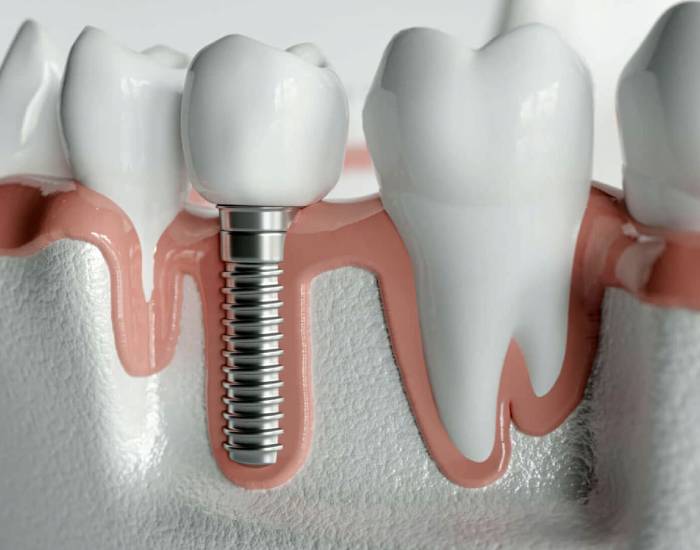
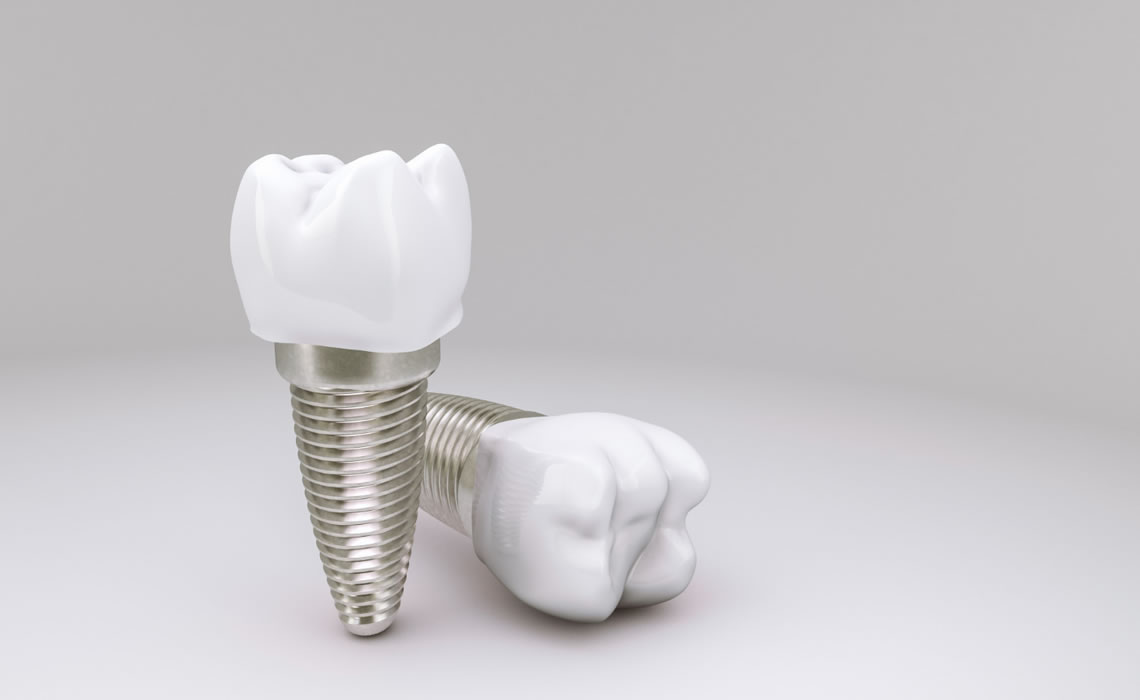
A single tooth implant is a dental restoration method consisting of an artificial titanium root placed into the jawbone in areas with a single missing tooth, along with a crown prosthesis positioned on top of this root. This application aims to recreate the anatomical and functional structure of only the area with the gap, without any physical intervention on the neighboring teeth. This method, frequently used in dentistry, provides an artificial structure to take the place of the missing tooth.
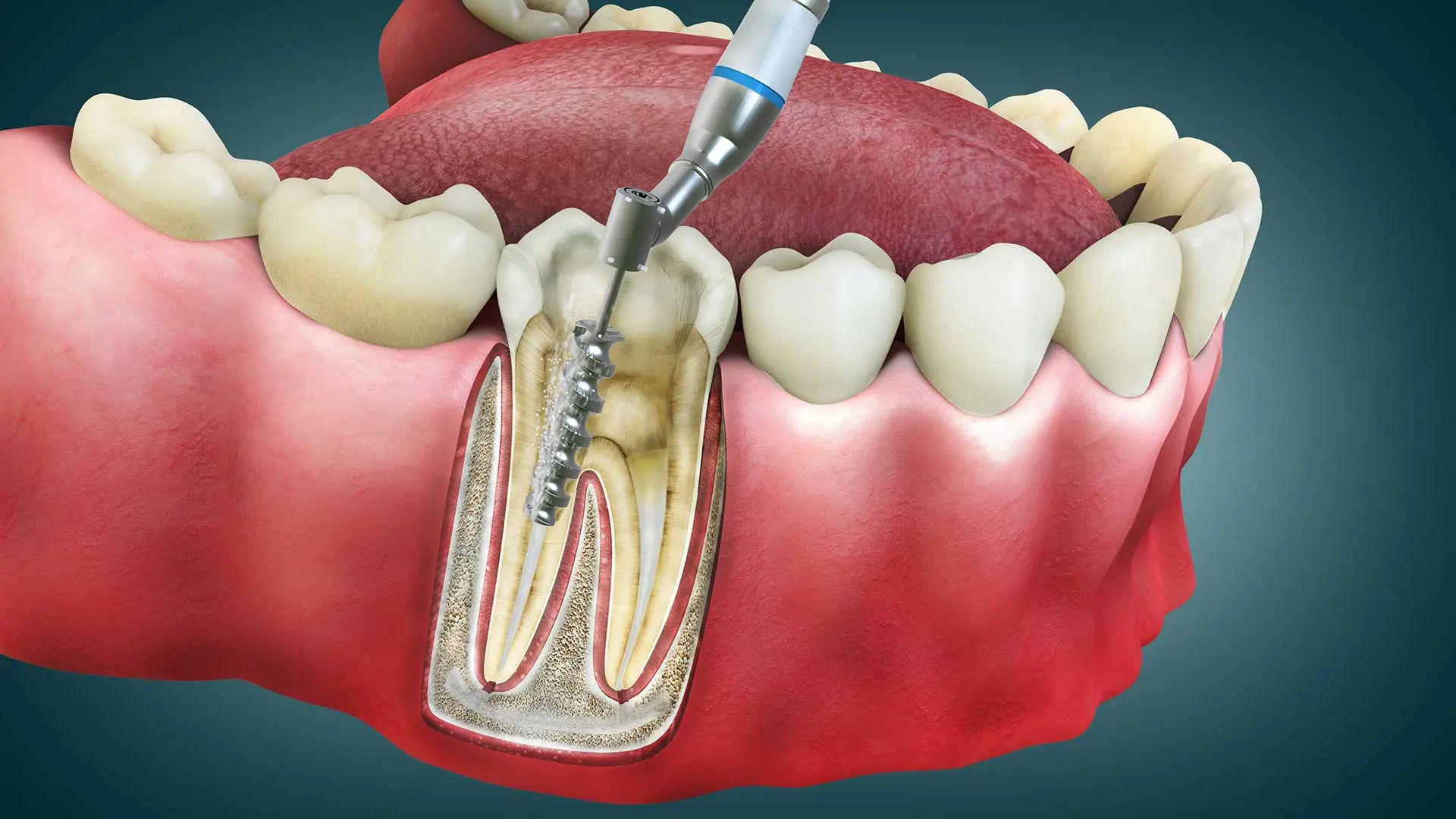
During the treatment process, the patient’s mouth and jaw structure are first examined with detailed imaging systems. In light of the data obtained, the density of the bone tissue in the area where the tooth was lost is evaluated. The screw-shaped structure, made of titanium, is placed into the jawbone through a surgical procedure, and a certain period is waited for it to fuse with the bone. Afterward, the procedure is completed by adding a prosthesis (crown) onto this artificial root that provides aesthetic and functional integrity.
In Which Situations Can a Single Tooth Implant Be Preferred?
This dental procedure is generally applied in cases where only a single tooth has been lost as a result of trauma, decay, or gum disease. The fact that individuals have completed the development of their jawbone and that their bone density is at a level capable of supporting the artificial root are the factors that stand out in the preference for this application.
The situations in which this application is preferred can generally be summarized as follows:
- In single tooth losses that occur as a result of an accident, impact, or similar physical trauma,
- Following the extraction of teeth that have suffered advanced tissue loss and have no chance of restoration,
- In scenarios where traditional bridge prostheses, which require the cutting down and reduction of healthy neighboring teeth, are not preferred,
- In anatomical situations where a certain tooth never erupted due to congenital reasons.
Why Should a Single Missing Tooth Be Treated?
The loss of a single tooth can, over time, lead to volumetric loss in the jawbone, the tilting of neighboring teeth into the gap, and the elongation of the opposing teeth into the gap. Failure to treat this gap brings about anatomical changes that pave the way for the disruption of the intraoral biomechanical balance and for chewing functions to become asymmetric.
Every tooth in the mouth is positioned to support the others. In the case of a missing tooth, chewing forces are distributed unevenly among the remaining teeth. In evaluations carried out at OPC Clinic, which serves in İstanbul, it has been observed that single tooth gaps that are not addressed in time can trigger orthodontic problems and jaw joint disorders in later stages. For this reason, it is recommended that the resulting anatomical gap be filled with suitable dental materials.
What Stages Does the Single Tooth Implant Procedure Consist Of?
This procedure is completed in four basic stages, respectively: detailed examination, surgical placement, integration with the bone (osseointegration), and the prosthesis stage. Each stage is planned in a way that will vary according to the patient’s biological healing rate and tissue response.
When the steps followed throughout the process are detailed, the following table emerges:
| Stage Name | Procedure Applied | Average Duration / Waiting Period |
|---|---|---|
| 1. Clinical Examination and Planning | Taking bone measurements with X-rays and 3D tomography, creating the treatment map. | 1 – 2 Sessions |
| 2. Surgical Placement | Placing the titanium root into the socket opened in the jawbone, under local anesthesia. | 30 – 60 Minutes |
| 3. Healing (Osseointegration) | The biological integration of the titanium material with the human bone tissue. | 2 – 6 Months |
| 4. Fitting the Prosthesis (Crown) | Fixing the tooth-shaped structure, prepared in the laboratory from the measurements taken, onto the artificial root. | 1 – 2 Weeks |
How Does the Process Proceed at İstanbul OPC Clinic?
OPC Clinic, which operates within the boundaries of İstanbul, creates a treatment plan for individuals applying with a single missing tooth in line with standardized medical protocols and current imaging technologies. From the moment of application to the clinic, every step is carried out with transparent communication in a manner appropriate to the patient’s anatomical structure.
The patient’s clinical visit begins with taking a detailed anamnesis (patient history). The intraoral condition, evaluated by jaw surgery and prosthesis specialists, is supported with digital X-ray devices. After the necessary measurements are obtained, the relevant area is treated under local anesthesia under sterile surgical conditions. When the prosthesis stage is reached, porcelain or zirconium materials suited to the color and form of the patient’s other teeth are chosen with the aim of achieving a natural appearance.
What Are the Differences Between Implant and Traditional Bridge Treatment?
While bridge treatment requires the healthy teeth on either side of the missing tooth to be cut down and reduced, an implant application is an independent system that draws support directly from the jawbone without any intervention on the neighboring teeth. While there are specific situations in which both methods are applied, their structural approaches are quite different from one another.
| Comparison Criterion | Single Tooth Implant | Traditional Dental Bridge |
|---|---|---|
| Effect on Neighboring Teeth | No cutting or filing procedure is applied to other teeth. | The healthy teeth on either side need to be reduced to a certain degree in order to provide support. |
| Interaction with the Jawbone | The artificial root structure helps slow down bone resorption by transferring the chewing force to the bone. | Since there is no stimulation within the bone in the toothless area, volume loss may occur in that area over time. |
| Duration of Use | Offers the possibility of use for many years when oral hygiene is attended to. | In the event of decay or similar conditions in the support teeth, the entire bridge may need to be replaced. |
| Cleaning and Maintenance | Can be cleaned individually with dental floss and a brush, just as with natural teeth. | Cleaning underneath the body of the bridge with special interdental brushes and bridge floss requires care. |
What Methods Are Followed in Cases of Insufficient Jawbone?
In cases where there is not sufficient bone height or thickness in the area where the artificial root is to be placed, the volume of the relevant area is increased through bone powder (graft) addition procedures, making it suitable for the procedure. Prolonged toothlessness or infections can lead to the resorption (melting away) of the jawbone.
Additional surgical procedures applied in such cases include the following:
- Autogenous Graft Applications: The transfer of bone tissue taken from another area of the patient’s own jaw to the area with the deficiency.
- Synthetic or Animal-Derived Grafts: The placement of bone powder materials, produced under sterile conditions to support bone formation, into the relevant area.
- Sinus Lifting: In the case of sagging of the sinus cavities located at the rear of the upper jaw, this is the procedure of pushing the sinus floor upward and filling underneath it with bone powder.
Following the bone grafting procedure, a waiting period of an average of 3 to 6 months is needed for the new bone formation to be completed. Once this period is complete, the transition to the main procedure is made.
What Types of Anesthesia Are Used During the Procedure?
The surgical application is mostly carried out under local anesthesia, in which only the relevant tooth area is numbed; in this way, the patient does not feel any sensation in that area during the operation. The patient’s consciousness is fully clear, and the procedure is carried out in the clinic chair just as in a standard filling or tooth extraction procedure.
However, in certain special situations, such as in individuals with severe dental phobia, a very high gag reflex, or difficulty cooperating, sedation (a state of conscious sleep) or general anesthesia options can also be considered in the presence of an anesthesiologist. The anesthesia method to be applied is determined as a result of a joint evaluation by the physician and patient, taking the person’s general state of health into account.
What Should Be Paid Attention to During the Healing Process?
For the tissues to recover in a healthy manner following the surgical intervention, the regular use of medications prescribed by the physician and protecting the operation site from trauma are of great importance. The healing period is a critical timeframe that affects the general course of the treatment.
The basic rules to be followed within the first few days after the operation are as follows:
- Movements that would increase intraoral pressure, such as spitting, vigorous rinsing, or drinking beverages through a straw, should be avoided.
- Applying a cold compress (ice) to the operation site from the outside at certain intervals helps to minimize any swelling that may occur.
- Very hot, very cold, overly spicy, acidic, and hard foods should be avoided; warm and soft foods should be preferred.
- Extra care should be given to oral hygiene, but care must be taken to avoid brush strokes hitting the sutured area. The special mouthwashes recommended by the physician should be used.
Frequently Asked Questions (15 Questions)
1. How long does the implant placement procedure take on average?
The procedure of placing a single artificial root into the jawbone is generally completed in a clinical setting within 30 to 60 minutes. This period includes the anesthesia application and preparation stages.
2. What should the eating and drinking routine be like after treatment?
It is recommended not to eat or drink anything immediately after the procedure until the effect of the local anesthesia wears off (an average of 2-3 hours). In the following days, until the sutures are removed, eating soft-textured foods supports tissue healing.
3. Are titanium implants compatible with the human body?
Since titanium is a biocompatible metal, it is frequently used in medicine and dentistry. The likelihood of it being perceived as a foreign substance and rejected by the human body is quite low.
4. How does the process work for individuals with gum disease?
In people with active gum inflammation (periodontitis), gum treatment must first be completed. Once the gums have regained a healthy form, planning for the artificial root can proceed.
5. When is a temporary crown applied to the tooth?
In missing teeth in the front area, which is important aesthetically, temporary prostheses that will not be exposed to chewing force can be applied on the same day as the operation or within a few days, so that the patient is not left without a tooth during the healing process.
6. How does the process proceed for individuals who smoke?
The use of tobacco products can slow down wound healing by reducing intraoral blood flow and can increase the risk of infection. For this reason, it is strongly recommended to pause smoking for a certain period before and after the procedure.
7. What determines the selection of the crown covering material?
The material of the crown that will go on top of the artificial root (zirconium, metal-supported porcelain, full ceramic) is determined by the physician according to the patient’s chewing forces, the tooth’s position in the mouth, and aesthetic expectations.
8. How should the daily oral care routine be applied?
The routine applied to natural teeth — that is, brushing twice a day, using an interdental brush, and using dental floss — should be continued with the same care. The health of the surrounding gums directly affects the long-term stability of the procedure performed.
9. Is swelling or bleeding expected after the procedure?
Since it is a surgical procedure, mild swelling and oozing-type bleeding after the procedure are considered physiologically normal. The cold compress applied in line with the instructions given helps keep these conditions under control.
10. Is there an age limit for implants in younger age groups?
The basis taken is the completion of the growth and development process. Since this development generally continues until the ages of 16-17 in women and 18-19 in men, the application is postponed for individuals below these ages, and different temporary solutions are used instead.
11. How many months does the healing period take on average?
The integration of the titanium material with the jawbone (osseointegration) can generally take around 2-3 months in the lower jaw and 3-4 months in the upper jaw. In cases where bone powder has been added, this period may extend somewhat further.
12. Is any change made to the structure of the other teeth?
The most distinctive feature of this procedure is that it targets only the area with the gap. There is no need to apply any cutting, reduction, or coating procedure to the healthy neighboring teeth.
13. At what intervals are the check-up sessions planned?
Suture removal and the first check-up are carried out one week after the operation. Afterward, periodic X-ray check-ups, such as at the 1st month and 3rd month as determined by the physician, are planned in order to monitor the osseointegration process.
14. Is the method applied to individuals who have not completed their jaw development?
This application is not preferred in individuals whose bone development is still ongoing, as it may lead to asymmetries in jaw development. During this period, space-maintaining appliances or temporary dental solutions are used to preserve the gap.
15. Do chronic diseases affect the treatment process?
Uncontrolled diabetes, severe osteoporosis (bone loss), or conditions that suppress the immune system can affect the healing process. It is anticipated that such patients consult with their physicians and begin treatment after their chronic values have stabilized.