Why Does My Jaw Make Sounds?
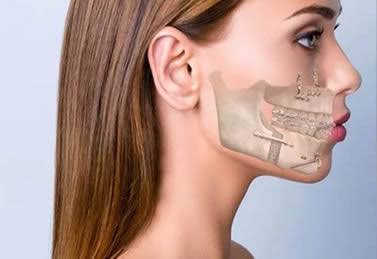
It is quite common to hear a clicking, pop, or grating sound when opening and closing your jaw. The most common cause of these sounds is disc displacement with reduction, which occurs when the disc in the jaw joint slips out of its normal position.
The disc in the jaw joint is a structure that ensures the joint functions smoothly and in a balanced manner during the movements of the lower jaw. In the case of disc displacement, a characteristic clicking sound occurs as the disc snaps back into place when the mouth is opened or closed.
If the sound comes from only one side, a slight deviation of the lower jaw to that side while opening the mouth is also a common finding.
Should you be concerned if your jaw joint makes sounds?
Not every jaw sound indicates a serious problem. However, this situation should not be ignored.
Disc displacement with reduction is a common disorder in the society. Nevertheless, it is important to be evaluated by a dentist experienced in temporomandibular joint diseases.
If the disc continues to function in the wrong position for a long time, structural changes can develop over time. In the later stages, deformation of the disc may occur, or the disc may become displaced in such a way that it can no longer return to its original position.
At this point, a situation arises that surprises many patients: The clicking sound may disappear. However, the disappearance of the sound does not always mean healing. On the contrary, during this period, restricted mouth opening, a feeling of locking in the jaw, and difficulty during chewing may be observed.
What other sounds can be heard besides clicking?
Another sound described by our patients is a grating sound similar to walking on snow (crepitus).
This sound is usually seen in advanced ages and is mostly associated with degenerative changes in the jaw joint, especially osteoarthritis.
The evaluation of crepitus is important in terms of understanding the structural changes occurring in the joint.
Is there a treatment for jaw sounds?
Sound coming from the jaw joint is not a condition we aim to treat on its own.
The main factors determining the treatment decision are;
- pain in the jaw joint,
- restricted mouth opening,
- deterioration in chewing function,
- loss of function affecting daily life.
If these findings accompany the sound, treatment should be initiated.
The role of the stabilization splint in jaw joint treatment
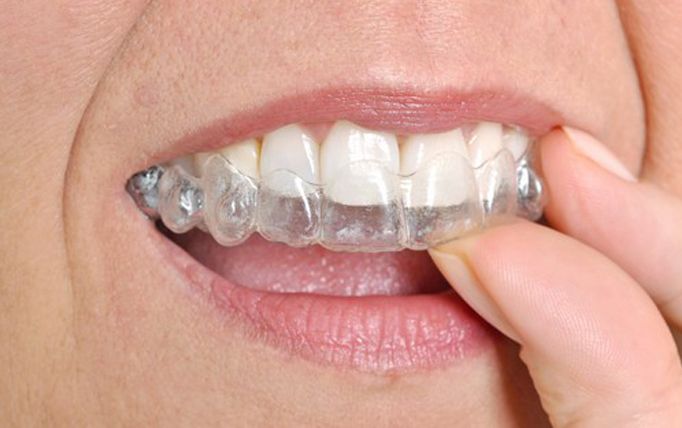
In patients with pain and restricted mouth opening, a stabilization splint is one of the first-line treatments, along with physical therapy applications and, when necessary, medication.
When accurately diagnosed and used in suitable patients, it can contribute to a reduction in pain, improvement in jaw functions, and the complete disappearance or significant reduction of joint sounds in many cases.
However, the primary goal of treatment is not to completely eliminate the sound. The main purpose is to control the pain, restore jaw functions, and prevent the progression of the disease in the joint.
If your jaw has been making sounds for a long time, and this is accompanied by pain or restricted mouth opening, the most appropriate approach would be to consult a dentist experienced in temporomandibular joint diseases without wasting time.