One of the most common questions patients ask after learning they need a tooth extraction is:
“How long do I need to wait after a tooth extraction before getting a dental implant?”
Contrary to what many people believe, it is not always necessary to wait for months. Today, in suitable cases, tooth extraction and implant placement can be performed during the same appointment. This approach is known as immediate implant placement.
But can it be applied to every patient? In which situations is it better to wait? Let’s take a closer look.
What Is Immediate Implant Placement?
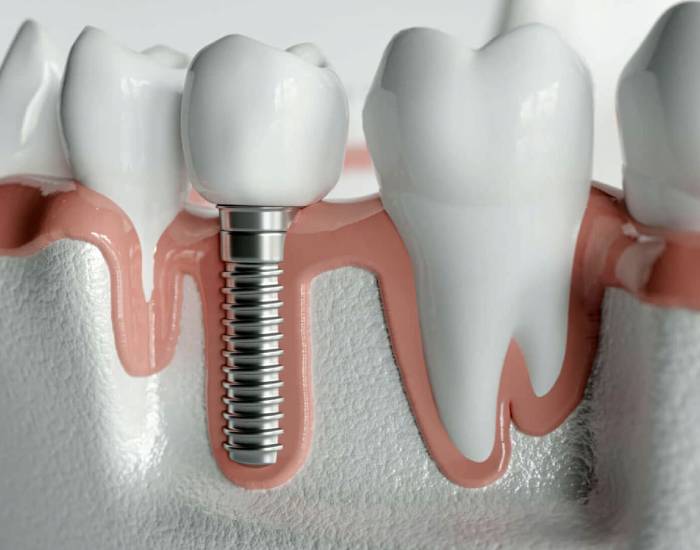
Immediate implant placement refers to inserting a dental implant during the same appointment immediately after the tooth requiring extraction has been removed.
In the past, the standard approach was to wait for the extraction site and surrounding bone to heal before placing the implant several months later. However, thanks to advances in implant technology, imaging systems, and surgical techniques, this waiting period can often be eliminated today.
As a result:
- Treatment time is reduced.
- The need for additional surgical procedures may decrease.
- Bone and gum tissues can often be preserved more effectively.
- Patients do not have to remain without a tooth for an extended period.
Can Immediate Implants Be Performed for Every Patient After Tooth Extraction?
The short answer is: No.
However, contrary to popular belief, a large number of patients are suitable candidates for immediate implant placement.
Factors That Determine the Decision
1. Bone Quantity and Quality
Sufficient bone support must be present to allow the implant to be placed with adequate stability.
Using three-dimensional CBCT scans, bone volume can be thoroughly evaluated before the extraction procedure.
2. The Condition of the Infection
In the past, placing an implant immediately into an area with infection was considered risky.
However, current scientific evidence suggests that successful outcomes can often be achieved in many infected extraction sites when proper decontamination and appropriate surgical protocols are followed.
That said, in cases involving extensive infection, uncontrolled inflammation, or severe bone loss, delaying implant placement may be the safer option.
3. Gum Tissue Characteristics
Especially in aesthetically critical areas such as the front teeth, gum thickness and the condition of the surrounding tissues are important considerations.
The goal is not only to achieve implant integration but also to obtain a natural and aesthetically pleasing result.
4. The Patient’s Overall Health
Smoking, uncontrolled diabetes, and certain systemic conditions that affect healing may alter the treatment plan.
Why Is an Experienced Surgeon Important?
Immediate implant placement involves much more than simply inserting an implant.
The surgeon must be able to answer several critical questions simultaneously:
- Can the tooth be extracted atraumatically?
- Can the surrounding bone walls be preserved?
- What is the ideal implant position?
- Is bone grafting necessary?
- Can a temporary tooth be placed on the same day?
For this reason, the success of treatment depends greatly on proper case selection and surgical experience.
An experienced implant surgeon can assess the anatomical conditions encountered during extraction and determine whether immediate implant placement is a safe and predictable option.
In Which Situations Is It Better to Wait?
For some patients, postponing implant placement may lead to more successful long-term outcomes.
Examples include:
- Cases with severe bone loss
- The presence of advanced infection
- Situations where bone walls are damaged during extraction
- Cases with insufficient soft tissue support
- Certain high-risk situations in aesthetically sensitive areas
These circumstances do not indicate treatment failure.
On the contrary, an experienced surgeon’s decision to delay implant placement when necessary is often an important factor that contributes to long-term success.
What Are the Advantages of Immediate Implant Placement?
In suitable cases, immediate implant placement can:
- Reduce overall treatment time.
- Decrease the need for additional surgical appointments.
- Help preserve bone volume.
- Support the maintenance of natural gum contours.
- Allow patients to return to normal life more quickly.
Conclusion
The belief that “you must wait several months after a tooth extraction before getting a dental implant” is no longer true for every patient.
Today, tooth extraction and implant placement can often be performed during the same appointment. However, whether this is possible can only be determined after a detailed clinical examination and radiographic evaluation.
The most important consideration is not applying the same treatment to every patient, but rather selecting the right timing based on the patient’s bone structure, gum condition, and overall health.
In some situations, placing the implant on the same day is the ideal option, while in others, waiting a few months may provide more predictable and successful long-term results.
The right decision is determined not by how quickly the implant is placed, but by how carefully and accurately the treatment is planned.