Who Is Suitable for Orthognathic Surgery?
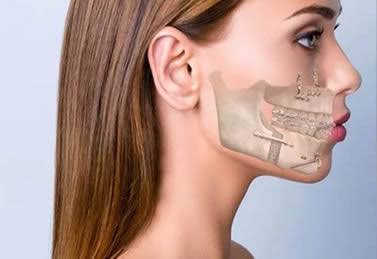
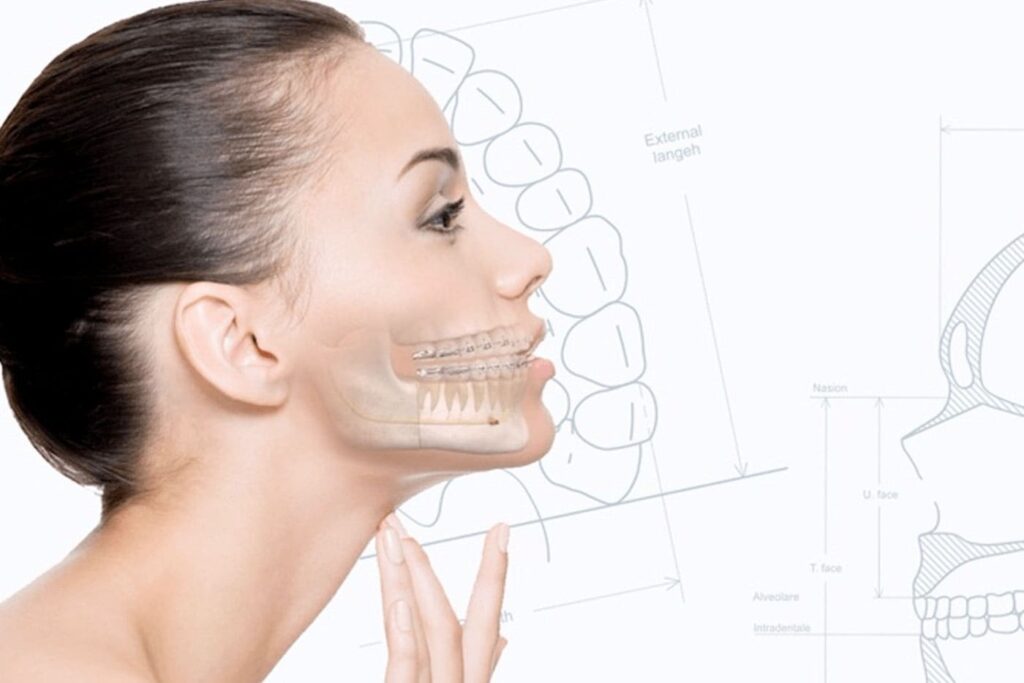
Orthognathic surgery, applied to resolve skeletal jaw disorders, is a medical procedure that brings the lower and upper jaws into their ideal functional positions. Which individuals are biologically suited to this treatment is determined by taking a holistic approach to medical factors such as anatomical development, chewing dynamics, and airway capacity.
| Patient Profile (Skeletal Condition) | Clinical Presentation and Functional Impact | Goal of Orthognathic Surgery |
|---|---|---|
| Those with a Forward-Positioned Lower Jaw (Prognathism) | The lower teeth close in front of the upper teeth, causing difficulty tearing food. | Bringing the lower jaw back into its physiological alignment and balancing chewing pressure. |
| Those with a Recessed Lower Jaw (Retrognathia) | The lower jaw is smaller and set further back than normal, frequently accompanied by snoring and airway narrowing. | Widening the airway by bringing the lower jaw forward and achieving profile harmony. |
| Those with an Open Bite | A gap remains between the front teeth while the back teeth are in contact, with a tendency toward mouth breathing. | Establishing the anatomical closure of the front teeth by correctly angling the upper and lower jaws. |
| Those with Jaw Asymmetry | The jaw’s midline is shifted to the right or left, requiring one-sided chewing. | Equalizing the load on the joint by aligning the skeletal midline symmetrically with the face’s midline. |
Who Is Orthognathic Surgery (Jaw Surgery) Suitable For?
Orthognathic surgery (jaw surgery) is a suitable medical procedure for individuals experiencing skeletal incompatibility due to growth differences between the lower and upper jawbones, resulting in noticeable impairments in chewing, breathing, and speech functions. Individuals with severe bite disorders that cannot be corrected through orthodontic treatment (braces) alone are among the primary candidates for this surgery.
A common feature of these individuals is that the problem stems not only from the alignment of the teeth but directly from the volume, position, or angle of the jawbones that carry the teeth. The disproportion between the jawbones creates conditions for an inability to properly grind food, and consequently digestive system problems. In the radiological diagnostic processes of clinics operating in the Istanbul region, these major deviations in bone structure are measured down to the millimeter, the functional benefit the operation will provide to the patient is calculated, and the individual’s suitability for surgery is based on this objective data.
What Symptoms Indicate Skeletal Jaw Disorders?
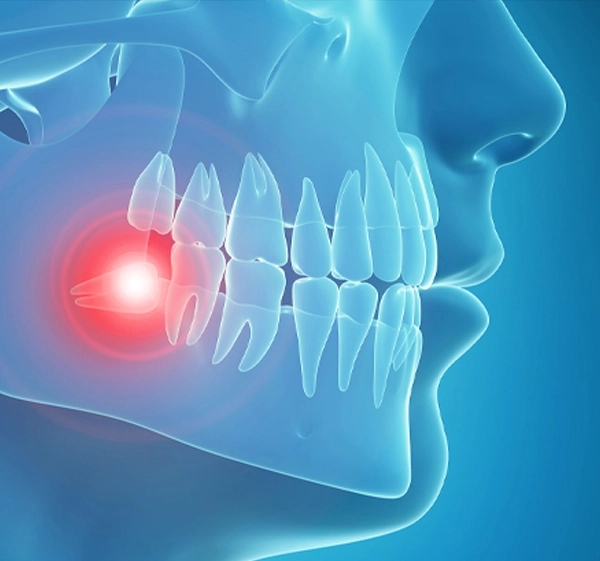
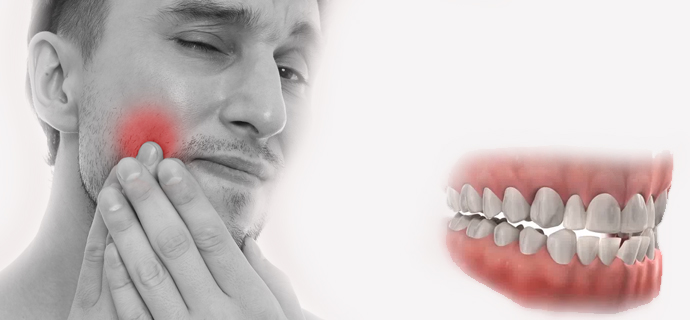
Skeletal jaw disorders present with physical symptoms such as the front teeth not touching each other, the lower jaw being positioned further forward or backward than normal, facial asymmetry, and difficulty biting and grinding food. In addition, chronic mouth breathing and clicking sounds coming from the temporomandibular (jaw) joints are among the most noticeable physiological signs of skeletal incompatibility.
Symptoms can reach a level that disrupts an individual’s daily life functions. When the jawbones do not fit together at the correct angles during closure, the load on the muscles and joints is distributed unevenly. The findings observed in identifying skeletal disorders include the following:
- The lips not touching each other at rest (without contraction), requiring the lip muscles to strain in order to close the mouth.
- A lisp or difficulty pronouncing certain sounds (such as s, z, p, b) during speech.
- Excessive vertical growth of the upper jaw resulting in too much gum showing during smiling (gummy smile).
- Noticeable differences (asymmetry) between the right and left halves of the face in the chin tip or overall jawline.
Why Is Orthodontic Treatment (Braces) Alone Insufficient?
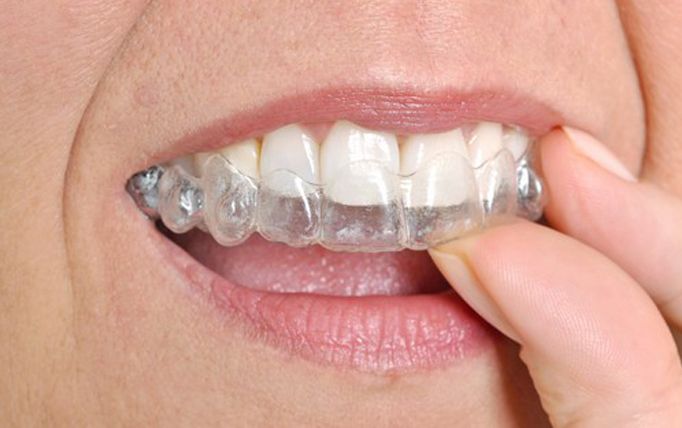
Orthodontic treatment alone is insufficient because braces and clear aligners can only change the inclination and alignment of the teeth within the bone; they cannot move the volume, length, or skeletal position of the jawbones that carry the teeth. Since the bone incompatibilities underlying skeletal disorders cannot be resolved by correcting the teeth, surgical intervention becomes a medical necessity.
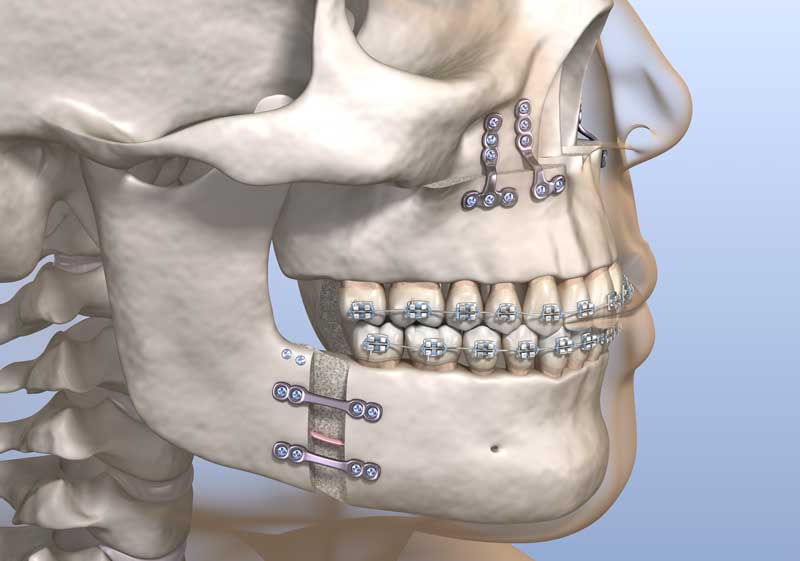
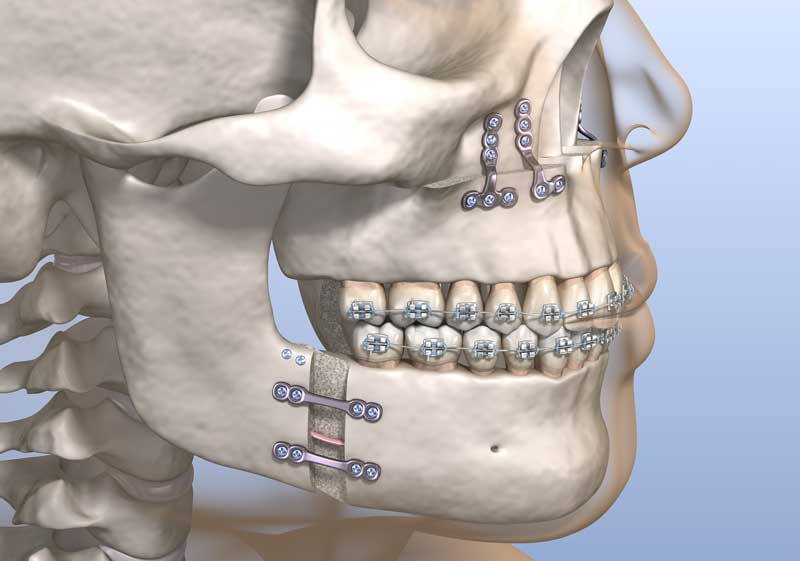
In individuals in the growth and development years (generally before ages 12-14), since the bone structure still retains some flexibility, the growth of the jawbones can be guided to some extent with special appliances. However, once the growth spurt ends, the bones take their final shape and harden. If, in an adult, the lower jawbone is far forward relative to the upper jaw, the orthodontist may try to achieve a “camouflage” simply by tilting the teeth backward; however, this is not always possible or healthy for the roots of the teeth. Anatomically repositioning the bone can only be achieved by surgically cutting it (osteotomy) and re-fixing it in the correct position with plates and screws.
What Medical Criteria Are Assessed When Deciding on Jaw Surgery?
When deciding on jaw surgery, medical criteria such as whether the patient’s bone development has fully finished, the radiological width of the airway, the condition of the jaw joint, and the bite relationship between the upper and lower teeth are assessed. Physicians approve this treatment after a detailed examination of the individual’s anatomical structure using three-dimensional tomography and cephalometric analyses.
The key medical factors determining suitability for the operation are detailed below:
| Assessment Criterion | Clinical Significance | Radiological / Physical Examination Method |
|---|---|---|
| Skeletal Maturity | Growth must have stopped; otherwise there is a risk of relapse after surgery. | Hand-wrist X-rays, comparison of successive cephalometric films. |
| Airway Volume | Determining how narrow the airway is, particularly in cases of lower jaw recession. | Three-dimensional (3D) dental volumetric tomography sections. |
| Joint Health (TMJ) | Determining whether there is active degeneration or disc displacement in the jaw joint. | Joint MRI and opening-closing movements observed during clinical examination. |
| Gum and Surrounding Tissues | The presence of healthy gum tissue that will allow root movement within the bone during the orthodontic preparation stage. | Panoramic X-ray and periodontal measurements taken with a probe. |
Is Orthognathic Surgery Suitable for People with Sleep Apnea and Breathing Problems?
Orthognathic surgery is a functional treatment option for individuals experiencing sleep apnea and breathing problems, particularly those with a jaw positioned further back. Surgically bringing the jawbones forward also moves the tongue base and soft tissues narrowing the airway forward, widening the airway passage and easing oxygen flow during sleep.
Obstructive sleep apnea is when breathing stops for certain periods during sleep. This condition often results from a small, recessed lower jaw causing the tongue to block the airway when lying on the back. In patients who cannot use methods such as CPAP (a breathing device) or who have significant narrowing detected in their skeletal anatomy, the procedure of advancing both jaws together (bimaxillary advancement) can be applied. Medical research shows that this skeletal movement physiologically widens the airway volume, improving breathing quality and largely eliminating snoring complaints.
How Are Individuals Experiencing Loss of Chewing and Speech Functions Assessed?
Individuals experiencing loss of chewing and speech functions are examined through an intraoral clinical exam, joint movement tests, and phonetic assessments to identify deficiencies at the contact points of the teeth. Since patients whose teeth do not fully close cannot grind food and cannot correctly pronounce certain letters, a surgical process is planned.
Digestion begins in the mouth. When the upper and lower teeth cannot achieve grinding contact with each other (open bite or asymmetry), food is swallowed without being sufficiently broken down, placing extra load on the stomach and intestinal system. At the same time, patients whose front teeth do not touch cannot perform the tearing action. From a speech perspective, the tongue’s inability to touch the correct articulation points leads to pronunciation disorders. In Opc Klinik’s processes, when such functional losses are identified, a treatment map is created to bring the patient’s skeletal structure into the ideal position.
How Is Planning Carried Out by Opc Klinik at Its Istanbul Kadıköy Locations?
The planning process carried out by Opc Klinik in the Kadıköy area is conducted by using digital intraoral scanners and three-dimensional tomography scans to precisely transfer the patient’s existing skeletal structure into a computer environment. Following a joint consultation between the orthodontist and the jaw surgeon, virtual surgical planning is performed, and the new positions of the bones are medically clarified before the operation.
The pre-surgical preparation stage requires extremely meticulous medical procedures. Digital records obtained with intraoral scanners, instead of traditional impression materials, are matched with the patient’s tomography. This integration allows physicians to move the jawbones within a virtual simulation. The exact millimeter at which the bone will be cut (the osteotomy line) and the “surgical guide splints,” which ensure the jaw is brought into the correct position during the operation, are produced using 3D printers thanks to this software. This multidisciplinary approach at the Suadiye and Kadıköy branches is a standard medical working model that increases the success of the operation and identifies and prevents possible risks before the surgery.
What Are the Age Limit and Developmental Criteria for Orthognathic Surgery?
The age limit for orthognathic surgery, since it is based on the individual having fully completed their skeletal growth and development, is generally around age 18 in women and around ages 20-21 in men. Performing the operation on patients who have not completed their development is not considered medically appropriate, as it carries the risk of the jawbones continuing to grow according to their own genetics.
Interventions performed during the growth period can cause skeletal incompatibility to recur at a later age. Whether a patient’s growth potential has stopped is determined by radiologically monitoring the closure status of the growth plates (epiphyseal cartilage) in the wrist bones. As for the upper age limit, there is no strict rule. Patients in older age groups can be included in the surgical process if found suitable, based on an assessment of their bone density, cellular healing capacity, and any chronic disease profile that could prevent them from undergoing anesthesia.
Can Individuals with Systemic Health Problems Have Jaw Surgery?
Individuals with systemic health problems can have jaw surgery, provided they do not have conditions that would prevent general anesthesia, such as severe heart disease, advanced lung disease, or uncontrolled diabetes. Medical suitability is finalized through comprehensive blood tests, an anesthesia examination, and approvals from the relevant specialist physicians conducted before the operation.
Since orthognathic surgery procedures are performed under general anesthesia in a hospital setting, the patient’s overall body functions must be stable. The effects of systemic chronic conditions are managed in operation planning as follows:
- Diabetes: Diabetic patients whose HbA1c value is kept within the reference range and who are under regular monitoring can be accepted for the operation. However, if blood sugar levels are erratic, the operation is postponed, since tissue healing would be put at risk.
- Bleeding Disorders and Medication Use: The doses of blood-thinning medications used by patients are adjusted, under the supervision of the relevant physician (cardiologist or internist), a certain period before surgery, in order to manage bleeding risk.
- Bone Metabolism Disorders: In patients with advanced bone loss (osteoporosis), since the capacity of titanium plates and screws to be fixed to the bone may be weak, detailed bone density analyses are requested.
Who Is Required to Undergo Pre- and Post-Operative Orthodontic Treatment?
Pre- and post-operative orthodontic treatment is mandatory for every patient planned for orthognathic surgery, so that the teeth can fit together anatomically after the bone movements. Before surgery, the teeth are brought into their ideal angles on the jawbone; after surgery, the goal is to fully stabilize the chewing balance in the new skeletal position.
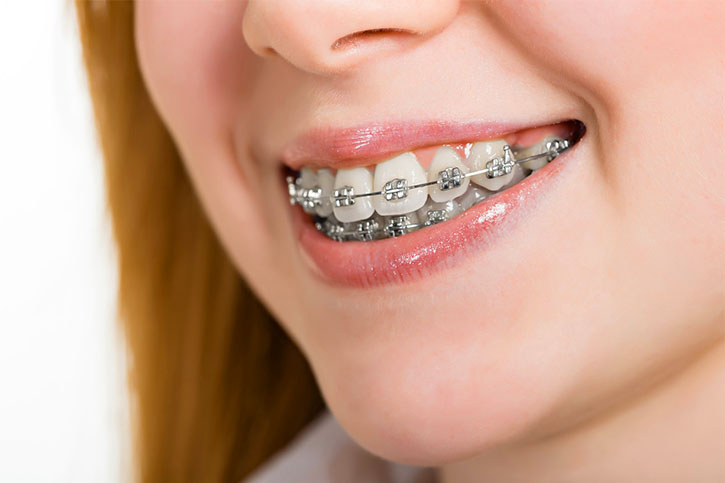
Over the years, the teeth of individuals living with a jaw disorder tilt in various directions to adapt to (compensate for) the existing faulty bite. During the pre-operative preparation (decompensation) stage, these incorrect inclinations are corrected by fitting orthodontic braces, bringing the teeth into the correct upright angles relative to the bone base they belong to. During this stage, the patient’s externally visible jaw disorder may become more pronounced for a temporary period; this is an expected part of the medical planning. In the post-surgical orthodontic period, the contact (occlusion) between the upper and lower teeth in the repositioned jaws is refined down to the millimeter, fully establishing the physiological limits of chewing function.