What Dental Problems Does Orthodontics Address?
The science of orthodontics is directly concerned with the diagnosis and treatment of anomalies originating from both the teeth and the skeleton. Developmental disorders of the jaws, teeth not being positioned correctly on the arch, rotated teeth, and faulty relationships between the elements of the chewing system form the core working area of this branch. Optimizing both aesthetic expectations and vital functions such as chewing and speech is the main goal of these treatments.
- Dental discrepancies and space shortages within the arch
- Skeletal positional errors between the maxilla (upper jaw) and mandible (lower jaw)
- Functional closure barriers and joint position disorders
What Is Orthodontic Treatment?
Orthodontic treatment is a biomechanical process that allows teeth to move within the bone by applying controlled, continuous force within physiological limits to the teeth and jawbone. During this process, cellular-level breakdown and rebuilding reactions (bone resorption and apposition) are triggered in the periodontal ligaments surrounding the tooth root. The treatment aims to bring the teeth to their ideal anatomical positions while also preserving the health of the surrounding tissues.
- Active Phase: The period during which tooth movement is achieved using brackets, wires, or aligners.
- Passive Phase (Retention): The stage in which retention appliances are used to maintain the achieved position.
Who Is Suitable for Orthodontic Treatment?
Orthodontic treatments are suitable for individuals of any age who have active, healthy bone structure and no acute infection in their periodontal tissues. While it is preferred in childhood to guide skeletal anomalies, in adulthood it is mainly preferred for the rehabilitation of dental positional disorders. Any patient of any age with healthy gums can benefit from this treatment.
| Age Group | Indications / Treatment Goal | Method Type |
|---|---|---|
| Children (Ages 7-12) | Guiding growth and development, skeletal jaw problems | Removable Appliances, Functional Devices |
| Teens and Adults | Dental crowding, diastemas, pre-prosthetic preparation | Fixed Braces, Clear Aligners |
What Problems Does Orthodontics Solve?
This treatment method permanently resolves all mechanical, functional, and aesthetic problems that threaten oral and dental health. Eliminating areas caused by overlapping teeth that make brushing difficult, and correcting vertical and horizontal closure disorders form the functional dimension of the treatment. By ensuring harmony between the teeth themselves and with the lip line, an ideal smile design is created.
- Inefficient chewing of food and the resulting burden on the digestive system
- Speech and articulation disorders that develop due to faulty tooth positions
- Tooth enamel wear that develops due to excessive and irregular friction
How Is Orthodontic Treatment Applied?
The application of orthodontic treatment begins with a detailed radiological and clinical examination stage; cephalometric and panoramic X-rays taken from the patient, along with three-dimensional intraoral scans, are analyzed. After planning, depending on the treatment method chosen, brackets are bonded to the tooth surfaces or custom-made clear aligners are delivered to the patient. In sessions held at regular intervals, the force mechanisms are updated so that tooth movement continues without interruption.
- Diagnosis and Digital Planning: Photography, radiography, and 3D digital modeling processes.
- Appliance Application: Bonding the brackets or applying the first set of aligners.
- Periodic Checkups: Performing activations and clinically monitoring tissue response.
When Should Orthodontic Treatment Be Preferred?
When a visible misalignment of the teeth is noticed, when a sound is heard from the jaw joint while chewing, or when the upper and lower teeth do not make contact with each other, orthodontic consultation should be sought without delay. The American Association of Orthodontists (AAO) and clinical authorities recommend that children’s first orthodontic examination be conducted from age 7 onward, so that skeletal developmental processes can be captured in time. In adults, it can be preferred at any time in order to correct alignment prior to prosthetic treatments.
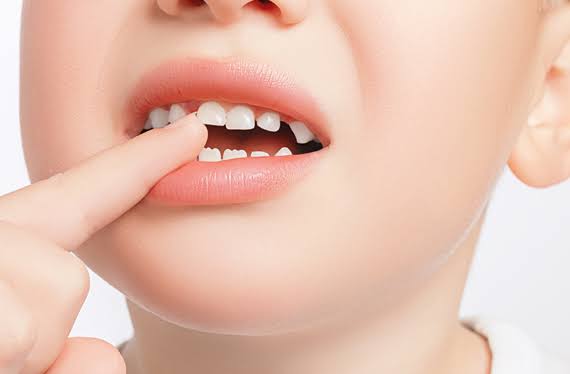
- In cases where baby teeth fall out earlier or later than expected
- In chronic soft tissue traumas such as lip and cheek biting
- In cases of social withdrawal and low self-confidence caused by aesthetic concerns
What Is Orthodontics (Braces Treatment)?
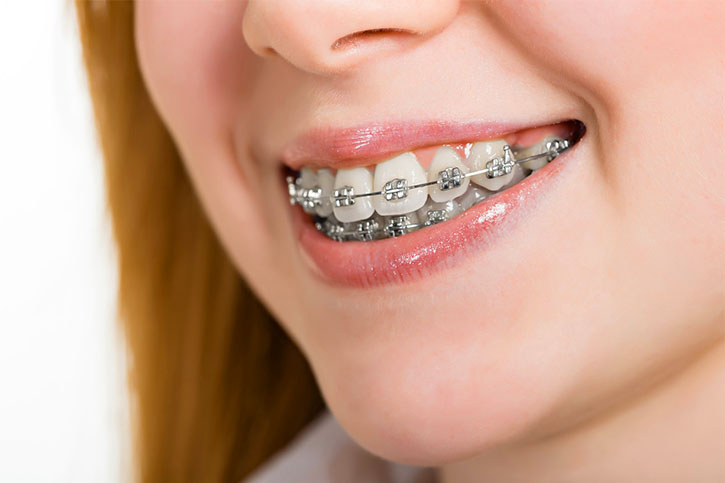
Traditionally called “braces treatment,” this procedure is the entirety of the mechanical system formed by small retaining pieces (brackets) bonded onto the teeth and the archwires that pass through them. Archwires are manufactured from memory metals (nickel-titanium) and, as they try to return to their original shape after being bent, apply a continuous push/pull force to the teeth. This classic method is a reliable system capable of controlling even the most complex and advanced tooth movements with high precision.
- Bracket: Metal, ceramic, or sapphire materials fixed onto the tooth.
- Archwire: The main force wire that passes through the brackets and directs the tooth.
- Ligature: The metal or elastic elements that secure the wire into the bracket slot.
What Dental Problems Does Orthodontics Treat?
Orthodontics is the primary solution for the treatment of every type of volumetric, positional, and directional anomaly found on the dental arch. This scope includes teeth having incorrect axis inclinations, teeth becoming impacted due to a narrow dental arch, or wide gaps existing between teeth due to genetic factors. The system fully normalizes the static and dynamic contact relationships that the upper and lower jaw teeth have with each other.
| Problem Group | Clinical Definition | Orthodontic Solution Approach |
|---|---|---|
| Malocclusion | Faulty upper-lower jaw closure relationship | Intermaxillary elastics and archwire activations |
| Dental Malposition | Teeth erupting in the wrong direction or position | Bracket positioning and rotation-correcting wires |
Why Does Dental Crowding Occur and How Is It Corrected?
Dental crowding occurs when the total volume of the jawbone is smaller than the total width of the teeth erupting on that bone (space shortage). Genetic factors, neighboring teeth shifting into a gap due to early loss of baby teeth, and pressure from wisdom teeth are among the factors that cause crowding. To correct it, teeth are aligned on the arch through arch expansion applications, micro-level abrasion between teeth (stripping), or, in necessary cases, tooth extractions.
- Mild Crowding: Corrected with clear aligners or simple archwire changes.
- Severe Crowding: May require tooth extraction or surgically assisted jaw expansion.
How Are Gaps Between Teeth (Diastema) Treated?
Gaps between teeth (diastema) arise from tooth size being small relative to jawbone volume, microdontia (small teeth), missing teeth, or a thick lip frenulum. Using orthodontic mechanics, these gaps are completely closed by bringing the teeth, along with their roots, closer together. While gaps are closed with the help of clear aligners or fixed orthodontic appliances, the anatomical integrity of the surrounding tissues and gum formation are preserved at the same time.
- If the frenulum (lip tie) is high, a minor surgery (frenectomy) is performed first.
- After the gaps are closed, a retainer wire must be fitted to prevent them from reopening.
How Is Protruding Teeth (Overjet) Corrected?
Protruding teeth, medically known as increased overjet, is a condition in which the upper front teeth are positioned significantly further forward horizontally compared to the lower front teeth. This anomaly can result from the upper jaw being forward, the lower jaw being set back, or simply the upper teeth erupting with an outward tilt (proclination). In treatment, jaw growth is guided using functional appliances in children who are still growing, while in adults, teeth are extracted from the upper jaw to reposition the front teeth backward.
- Class II Elastics: Used to coordinate tooth movement between the lower and upper jaws.
- Mini Screws (Temporary Anchorage Devices): Provide maximum support while moving teeth backward.
How Is Lower Jaw Protrusion Treated?
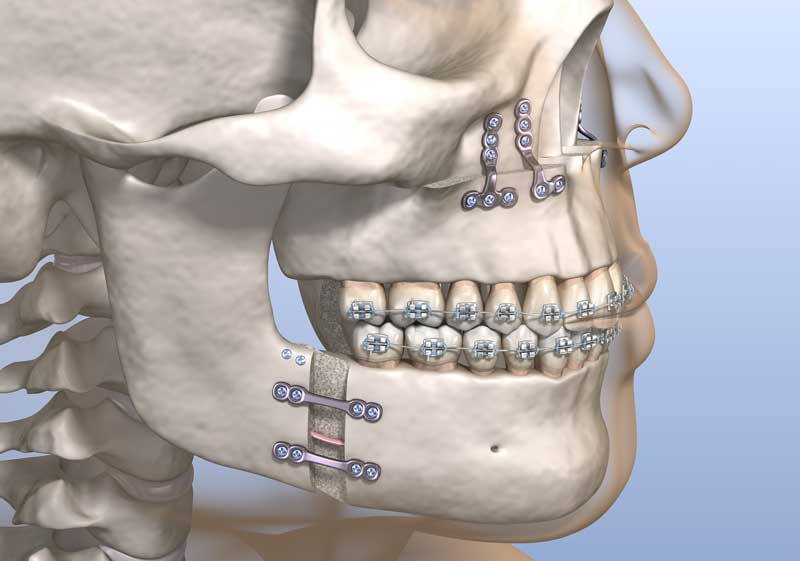
Lower jaw protrusion (Class III malocclusion) is a condition in which the lower jaw is abnormally positioned forward relative to the upper jaw, or the upper jaw’s development is insufficient. In early childhood, while growth and development are still ongoing, skeletal devices such as a facemask (chincap/facemask) can be used to suppress the growth of the lower jaw and pull the upper jaw forward. In adult individuals who have completed their growth and development, if the condition cannot be corrected by orthodontics alone, combined orthognathic surgery (jaw surgery) treatment is applied.
| Patient Stage | Treatment Model Applied | Expected Outcome |
|---|---|---|
| Growth-Development Period | Functional devices, facemasks, skeletal anchorage | Modification and guidance of jaw growth |
| Adult Period | Orthodontic Camouflage or Orthognathic Surgery | Dental angle change or skeletal jaw repositioning |
What Is Deep Bite and How Is It Corrected?
Deep bite is a condition in which the upper front teeth vertically overlap the lower front teeth much more than normal (in some cases, completely). This condition causes the lower teeth to traumatically contact the gum tissue behind the upper teeth, restricts chewing function, and can lead to joint problems. In treatment, vertical dimension is reorganized using mechanisms that push the front teeth into the bone (intrusion) or lengthen the back teeth (extrusion).
- The bite is opened using elevators such as bite-turbos or anterior bite-blocks.
- The vertical load on the front teeth is reduced, balancing hyperactivity in the chewing muscles.
How Is Open Bite Corrected?
Open bite is a condition in which, while the back teeth are in contact with each other, there is a vertical gap in the front region between the upper and lower teeth, and they do not touch. It generally develops due to habits during childhood such as thumb sucking, prolonged pacifier use, or tongue thrust (pushing the tongue between the teeth while swallowing). Treatment initially involves tongue exercises and habit-breaking appliances; in later stages, clear aligners or fixed mechanics are used to intrude the back teeth and close the front region.
- Habit-Breaking Appliances: Physically block the forward movement of the tongue.
- Posterior Tooth Intrusion: Back teeth are pushed upward, allowing the mandible to rotate upward.
Why Does Crossbite Occur?
Crossbite is a condition in which, contrary to normal circumstances where the upper teeth should surround the lower teeth from the cheek and lip side, the lower teeth instead protrude outside the upper teeth. This can be seen in a single tooth, or it can occur on the right or left side of the jaw (posterior crossbite) or completely in the front region. Genetic narrowness of the upper jaw, pacifier use, mouth breathing, and asymmetric jaw development are among the primary causes of this condition.
- Dental Crossbite: Results solely from faulty tooth inclination and is resolved with local wires.
- Skeletal Crossbite: Depends on upper jaw narrowness and requires a rapid maxillary expansion appliance (RME).
Can Impacted Teeth Be Treated with Orthodontics?
Impacted teeth (especially canines) that remain in the jawbone past their expected eruption time and fail to reach the oral cavity can be successfully treated with orthodontic methods. In this process, the position of the impacted tooth within the jaw and its root anatomy are first carefully examined with three-dimensional tomography (CT). Afterward, the mucosa over the tooth is surgically opened, a bracket or button is bonded to the tooth, and it is gradually pulled with orthodontic wires into its proper position in the mouth.
- Instead of being extracted and lost, the impacted tooth is brought into the mouth.
- A safe surgical-orthodontic pathway is planned that will not damage the roots of neighboring teeth.
How Are Jaw Anomalies Treated?
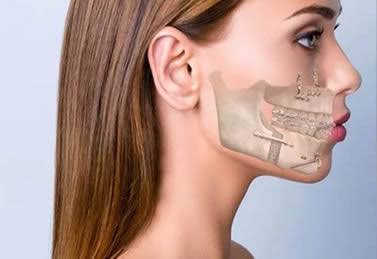
Jaw anomalies are skeletal irregularities in which the upper and lower jaws are positioned asymmetrically, too far forward, or too far back relative to each other, the base of the skull, and the face. In the treatment of these major anomalies, the patient’s age and growth potential are considered the most critical determining criteria. While skeletal modification is performed with functional appliances in patients who are still growing, adult patients undergo combined surgical procedures called “orthognathic surgery,” carried out jointly by jaw surgery and orthodontics.
| Anomaly Type | Growth-Period Solution | Adult-Period Solution |
|---|---|---|
| Maxillary Retrognathia (Upper Jaw Deficiency) | Facemask (Reverse Pull Headgear) | Le Fort I Surgery + Orthodontics |
| Mandibular Prognathism (Lower Jaw Protrusion) | Functional Regulators | Bilateral Sagittal Split Osteotomy (BSSO) |
Why Do Orthodontic Problems Occur?
Orthodontic problems are not attributable to a single cause; they are generally defined as multifactorial, arising from the combination of many different factors. While the hereditary bone and tooth structure anomalies an individual inherits from their parents form the basic foundation of the problem, environmental factors trigger or intensify this condition. Functional disorders in the early period, airway problems, and eating habits can also directly deform jaw and facial development.
- Genetic and familial skeletal patterns
- Harmful parafunctional habits acquired in childhood that continue for a long time
- Insufficient jawbone development due to nutritional deficiencies and low consumption of hard foods
Do Genetic Factors Cause Orthodontic Disorders?
Genetic factors are considered one of the most dominant and primary factors in the formation of orthodontic disorders, especially skeletal jaw disorders. For example, when a small jaw structure is inherited from one parent and a large tooth structure from the other, severe crowding due to the teeth not fitting becomes inevitable. Likewise, conditions such as lower jaw protrusion (Class III) and hereditary facial asymmetries show a high degree of similarity among family members.
- The size, volume, and positioning angles of the jawbones relative to the base of the skull are genetically coded.
- Missing teeth (hypodontia) or the presence of extra teeth (hyperdontia) are mostly hereditary.
Does Early Loss of Baby Teeth Lead to Orthodontic Problems?
Baby teeth are critical organs that act as space holders in the mouth and stimulate jawbone development until the permanent teeth beneath them erupt. When a baby tooth is lost early due to deep decay or trauma, neighboring teeth quickly tip or shift to close the resulting gap. Since the permanent tooth that would come from below cannot find space to erupt into the oral cavity, it either remains impacted or erupts entirely outside the arch, causing severe crowding.
- In cases of necessary early extraction of baby teeth, a “space maintainer” appliance must be made.
- Space maintainers definitively prevent neighboring teeth from migrating into the gap until the permanent tooth erupts.
Do Habits Such as Thumb Sucking Affect Tooth Structure?
Habits such as thumb sucking, prolonged use of a pacifier or bottle, lip biting, and pencil chewing apply continuous local pressure to the teeth and surrounding bone structures. This mechanical pressure deforms the alveolar bone, especially during the developmental stage, causing the upper front teeth to tilt outward and the lower front teeth to tilt inward. If the habit continues chronically past ages 4-5, skeletal open bite and a narrow upper jaw structure become permanent.
- The upward pressure the thumb exerts on the palate narrows the upper jaw arch and leads to a high, vaulted palate.
- Habits need to be identified early and ended with psychological or appliance-based support.
What Methods Are Used in Orthodontic Treatment?
Modern orthodontics has a very wide range of treatments and biomechanical material variety that can respond to the patient’s clinical picture, age, and aesthetic expectations. These methods are basically divided into two main groups: mechanisms fixed to the tooth surface and removable systems that the patient can put on and take off. The force transmission mechanism and clinical application procedures of each method are completely different from one another.
| Treatment Method | Material Property | Advantage |
|---|---|---|
| Metal Fixed Orthodontics | Stainless Steel Brackets | High durability, maximum mechanical control |
| Aesthetic Fixed Orthodontics | Porcelain, Ceramic, or Sapphire | Tooth-colored appearance, low visibility |
| Wireless Treatment (Clear Aligners) | Thermoplastic Smart Polyurethane | Removability, maximum comfort and aesthetics |
How Do Metal and Aesthetic Brackets Work?
Metal and aesthetic brackets are bonded to the front surface of the teeth using special composite agents, and through grooves called “slots” on them, they transmit the force coming from the archwires to the tooth. Metal brackets are produced from industrial stainless steel with high mechanical resistance, while aesthetic brackets are made from porcelain or sapphire crystals, which reflect light and mimic tooth color. In both systems, the archwire sits in the slot, delivering continuous micro-level force to the tooth root and initiating movement within the bone.
- Since metal brackets have lower friction, some tooth movements can be completed faster.
- Aesthetic porcelain brackets do not negatively affect adult patients’ social and professional lives.
How Does the Clear Aligner Treatment Process Work?
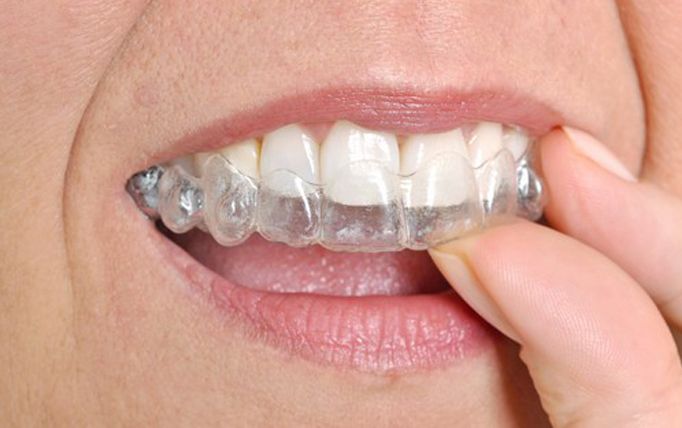
Clear aligner treatment (wireless orthodontics) is a treatment performed with clear molds produced in patient-specific series using computer-aided design (CAD) and manufacturing (CAM) technologies. The patient’s intraoral scan data is transferred to special software, and the micro movements (approximately 0.25 mm) that the teeth will make with each aligner are digitally simulated in advance. The patient wears each aligner for an average of 7-10 days, 22 hours a day, in sequence, and the teeth gradually reach the target position.
- Since aligners can be freely removed while eating and brushing, oral hygiene is maintained at a maximum level.
- Before starting treatment, the smile design at the end of treatment can be viewed three-dimensionally on a digital screen.
Which Treatment Is Preferred for Which Orthodontic Problem?
Which method will be used to solve which problem is determined by the specialist physician based on the severity of the malocclusion, whether there is skeletal involvement, and the patient’s cooperation ability. Fixed metal brackets and surgically supported anchorage elements are mostly preferred in the rehabilitation of severe skeletal narrowness and impacted teeth. Dental crowding, spaced teeth, and mild-to-moderate closure disorders, on the other hand, can be treated today extremely comfortably with clear aligner systems.
- Severe Rotation and Extraction Cases: Fixed metal or self-ligating (Damon) bracket systems.
- Cases with High Social Aesthetic Expectations: Clear aligners (Invisalign, etc.) or lingual (inner-mounted) wires.
How Is the Orthodontic Treatment Process Planned?
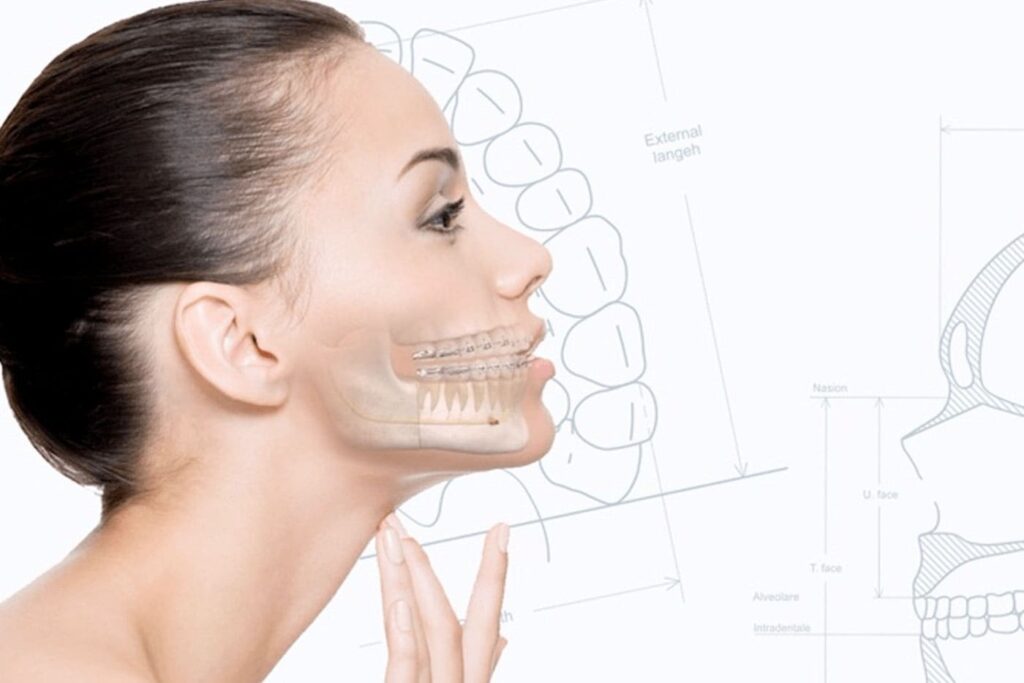
Orthodontic treatment planning is an entirely personalized, preventive medical engineering process that includes reverse calculations. In the first session, the angles of the jaws relative to the base of the skull are calculated using cephalometric analyses obtained, and the amount of missing or excess space in millimeters on the arch is determined through model analyses. In light of this data, the decision for extraction/non-extraction treatment is made, the mechanics to be used are listed, and a patient-specific time simulation is drawn up to clarify the process.
- Profile analyses are performed to calculate the effect of tooth movements on lip and chin-tip aesthetics.
- The biological tolerance limits of the periodontal tissues and roots are included in the planning throughout the treatment.
Who Are We? | OPC Clinic Orthodontic Services
OPC Clinic is a modern healthcare institution in the field of oral, dental, and jaw health that targets international standards and has adopted an innovative, patient-centered approach. With our team of specialist orthodontists, we carry out personalized treatment plans using the most advanced 3D intraoral scanners and software offered by digital dentistry. Our goal is not only to correct the alignment of the teeth, but to holistically optimize facial aesthetics, jaw joint health, and ideal chewing function, giving our patients functional smiles they can display with health for a lifetime.