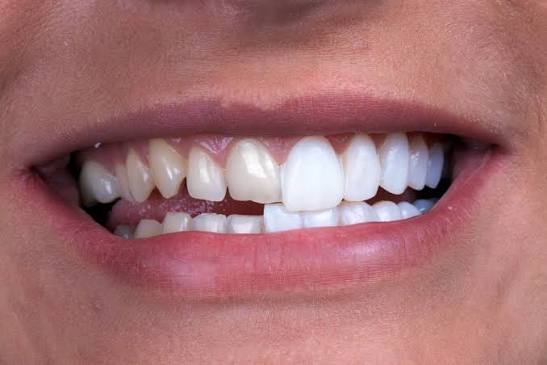
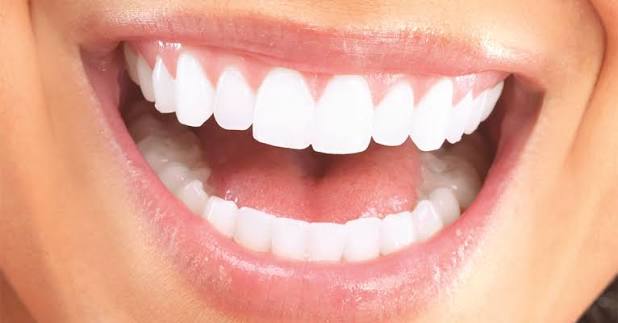
Missing Teeth and Treatment Methods
1. What Is a Missing Tooth and Why Does It Occur?
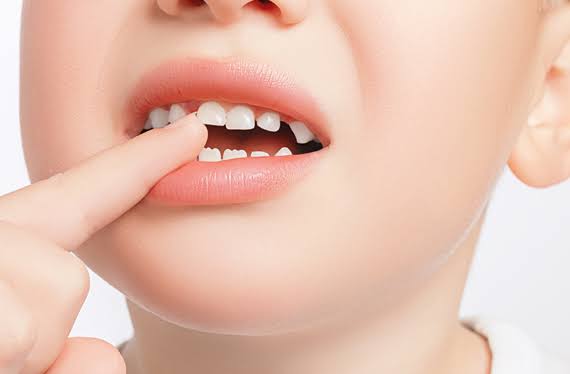
A missing tooth refers to the functional or anatomical absence of one or more teeth that should be present on the dental arch. This can result developmentally from a tooth germ never forming at all (impacted tooth or agenesis), but it is more commonly due to acquired factors. Advanced untreated tooth decay, chronic periodontal (gum) disease that destroys the tooth’s supporting tissues, physical trauma, and root fractures are the main biological causes of tooth loss.
- Periodontal Disease: Teeth becoming loose and falling out or being extracted due to the erosion of gum and bone tissue.
- Deep Cavities: Dental infections that progress to the pulp layer and cannot be saved with root canal treatment.
- Dental Trauma: Acute root and crown fractures resulting from accidents, falls, or impacts.
2. Why Do Missing Teeth Negatively Affect Oral Health?
The oral ecosystem has a dynamic and balanced architecture in which each tooth supports the others. When a tooth is lost, this balance is directly disrupted, triggering pathological processes in neighboring tissues. Localized alveolar bone loss occurs due to exposure of the tooth roots facing the gap, dentin sensitivity, and the cessation of bone stimulation in that area. This situation leads to changes in the oral flora and shortens the lifespan of the remaining teeth as well.
| Affected Structure | Mechanism of Negative Effect | Clinical Outcome |
|---|---|---|
| Alveolar Bone | Failure to transmit chewing pressure | Localized bone resorption |
| Neighboring Teeth | Unsupported teeth tilting into the gap | Interproximal decay and periodontal pockets |
| Opposing Teeth | The antagonist tooth extending into the gap | Root surface exposure and sensitivity |
3. How Do Missing Teeth Affect Chewing Function?
Chewing function is the process of mechanically breaking down food and preparing it for digestion. Tooth loss directly reduces the chewing surface area, decreasing the effectiveness of this function. Patients often develop the habit of chewing on only one side by avoiding the area with the missing tooth. This causes food to be sent to the stomach in larger pieces, setting the stage for gastrointestinal problems.
- Reduced Chewing Efficiency: Insufficient grinding of food, placing a burden on the digestive system.
- Unilateral (One-Sided) Chewing: Development of asymmetric hypertrophy and dysfunction in the jaw muscles.
4. Do Missing Teeth Disrupt Speech Patterns?
Speech sound is shaped by the mechanical interaction of air from the lungs with the tongue, lips, palate, and teeth. Especially in the absence of front incisors, producing dental and labiodental sounds such as “f, v, s, sh, z” at the correct frequency becomes difficult. Because air escapes uncontrollably through the gap, articulation disorders such as whistling sounds or lisping may be observed in speech.
- Phonetic Disorders: Inability to clearly produce sounds of dental origin.
- Social Hesitancy: Loss of self-confidence developing in the individual due to distorted sounds while speaking.
5. Do Missing Teeth Change the Position of Neighboring Teeth?
Teeth biomechanically remain fixed in their row thanks to the lateral pressure exerted by neighboring teeth. When a tooth is extracted, the neighboring teeth in front of and behind the resulting gap begin to tilt into the space (mesialization/distalization) under the influence of occlusal forces. This horizontal shift in position disrupts the vertical axis of the teeth, reducing their resistance to the chewing loads placed on them.
- Axis Shift: Teeth transitioning from a vertical position to a tilted one.
- Disrupted Force Distribution: Tilted teeth becoming exposed to lateral forces and starting to loosen.
6. Do Missing Teeth Cause Disruption in Tooth Alignment?
Even the loss of a single tooth creates a domino effect throughout the entire dental arch, leading to a disruption of tooth alignment (occlusion). The shifting of neighboring teeth into the gap and the extension of opposing teeth into the space (extrusion) cause microscopic gaps (diastema) to open between teeth. This disrupts the overall geometry of the tooth alignment, creating functional bite obstructions.
| Alignment Change | Causal Mechanism | Long-Term Effect |
|---|---|---|
| Diastema Formation | Migration of teeth | Widespread food impaction between teeth |
| Extrusion | Vertical extension of the opposing tooth | Bite locking and chewing obstruction |
7. Do Missing Teeth Cause Jawbone Resorption?
The jawbone (alveolar ridge) is a function-dependent tissue designed to support tooth roots and absorb chewing forces. After tooth loss, since the bone tissue no longer receives functional stress (chewing stimulation), it undergoes atrophy in accordance with Wolff’s Law. Within the first year following a tooth extraction, the bone volume in that area undergoes 40-60% resorption in both horizontal and vertical directions.
- Physiological Atrophy: Cessation of bone formation and acceleration of bone breakdown at the cellular level.
- Approaching Anatomical Boundaries: The sinus floor or mandibular nerve canal moving closer to the ridge crest as a result of bone loss.
8. How Do Missing Teeth Affect the Jaw Joint?
Bite disorders and one-sided chewing that develop due to missing teeth cause asymmetric loads to be placed on the Temporomandibular Joint (jaw joint). Disruption of the condyle-disc relationship leads to microtrauma within the joint, displacement of the joint disc, and, over time, degenerative joint disease.
- Joint Clicking: Sounds coming from the jaw when opening and closing the mouth.
- TMJ Pain: Chronic spasm pain radiating to the area in front of the ear, and to the head and neck muscles.
9. Do Missing Teeth Affect Gum Health?
The morphological anatomy and gum-boundary relationship of teeth that shift position, tilt, and drift toward gaps changes. This causes abnormal folds in the gum margin and the formation of deep pathological pockets. Food debris accumulates in these pockets, creating an ideal breeding ground for pathogenic microorganisms and triggering localized gum inflammation (gingivitis/periodontitis).
- Pathological Pocket Formation: Formation of depths between the gum and tooth surface that cannot be cleaned.
- Gum Bleeding: Increased fragility of capillary vessels due to chronic inflammation.
10. Do Missing Teeth Make Oral Hygiene More Difficult?
The interproximal surfaces of teeth that tilt or rotate toward a missing tooth gap create blind spots that cannot be cleaned with traditional toothbrushes and dental floss. Plaque and tartar (calculus) buildup around these teeth, whose anatomical position has become disrupted, increases geometrically. This prevents the patient from achieving thorough mechanical cleaning no matter how well they brush.
- Plaque Accumulation: Bacterial plaque organizing more quickly on tilted tooth surfaces.
- Increased Risk of Secondary Decay: New cavities beginning to form in surfaces that cannot be cleaned.
11. How Do Missing Teeth Affect Facial Aesthetics?
Especially in cases of multiple missing teeth and loss of back-group teeth, the vertical dimension of the lower third of the face is shortened. As the mechanical support that teeth provide to the cheek and lip muscles disappears, the lips collapse inward, nasolabial folds deepen, and the mentolabial fold becomes more pronounced. This anatomical collapse causes the individual to appear much older than they actually are (an aged facial appearance).
| Area of Loss | Aesthetic Change in the Face | Visual Result |
|---|---|---|
| Anterior (Front) Region | Loss of lip support | Thinning of the lips and wrinkling |
| Posterior (Back) Region | Decrease in vertical dimension | Sunken cheeks, forward protrusion of the chin |
12. What Can Happen If Missing Teeth Are Left Untreated for a Long Time?
Chronically leaving missing teeth untreated causes the damage in the mouth to spread beyond a localized area to the entire jaw system. Over time, the alveolar bone can thin to a knife-edge and erode to a degree that makes future implant treatment impossible. While the damage to the jaw joint turns into irreversible cartilage damage, the remaining few teeth may fracture or be lost due to excessive loading.
- Advanced Bone Resorption: Bone height and width decreasing to a point that requires surgical grafting.
- Excessive Wear of Remaining Teeth: Vertical wear and fractures caused by a reduced number of teeth sharing the chewing load.
13. Should Even a Single Missing Tooth Be Treated?
Although the common perception is that a single missing tooth is unimportant, from a clinical biomechanical standpoint, the loss of even one tooth is the factor that initiates the collapse process of the entire system. The loss of a single large molar reduces chewing efficiency on that side by 30% and directly disrupts the position of the two neighboring teeth and the opposing tooth. Therefore, single missing teeth should not be neglected and should be restored prosthetically to preserve functional balance.
- Early intervention prevents neighboring teeth from migrating.
- Localized bone loss in the relevant area is prevented.
14. What Risks Does Having Multiple Missing Teeth Create?
Having multiple teeth missing side by side or in different parts of the mouth accelerates the process of deterioration inside the mouth. A complete shift of the chewing center can restrict the patient’s eating habits, leading to malnutrition. In addition, when the chewing load falls entirely on the front teeth, protrusion, spacing, and periodontal breakdown of the front teeth accelerate.
- Occlusal Collapse: Complete loss of bite height and the lower jaw shifting upward and forward.
- Muscle Fatigue (Myofascial Pain): Chewing muscles being in a constant state of spasm due to uneven loading.
15. How Do Missing Teeth Affect Quality of Life?
Tooth loss is a multidimensional health issue that negatively affects the individual both physically and psychosocially. The inability to freely eat desired foods and the lack of comfort while eating due to pain or joint sounds reduce physical quality of life. Aesthetic concerns and speech disorders, on the other hand, cause the individual to hide their smile, withdraw from social settings, and experience psychological stress.
16. Which Methods Are Preferred in Missing Tooth Treatment?
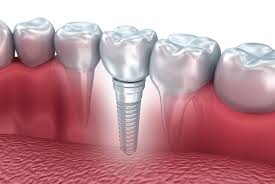
In modern dentistry, three main methods are preferred for restoring missing teeth, depending on the patient’s bone structure, the number of missing teeth, and their general health condition. These are: artificial roots placed into the bone (dental implants), fixed prostheses supported by neighboring teeth (bridges), and removable dentures used in cases of multiple losses. As long as clinical conditions allow, implant treatment, being the most physiological method, is considered the first option.
- Dental Implants: Permanent solutions that preserve bone and do not touch neighboring teeth.
- Fixed Bridge Prostheses: Traditional restorations made by reducing the teeth adjacent to the gap.
- Removable/Partial Dentures: Removable systems supported by tissue and teeth, used in cases of extensive tooth loss.
17. How Does Implant Treatment Resolve the Problems Caused by Missing Teeth?
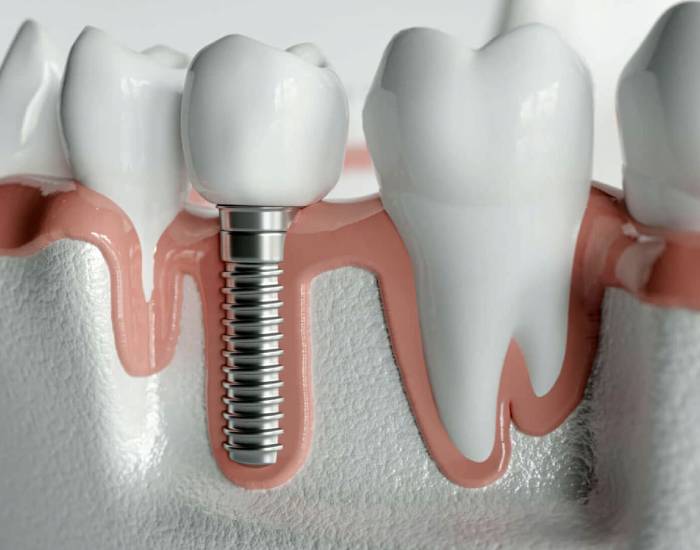
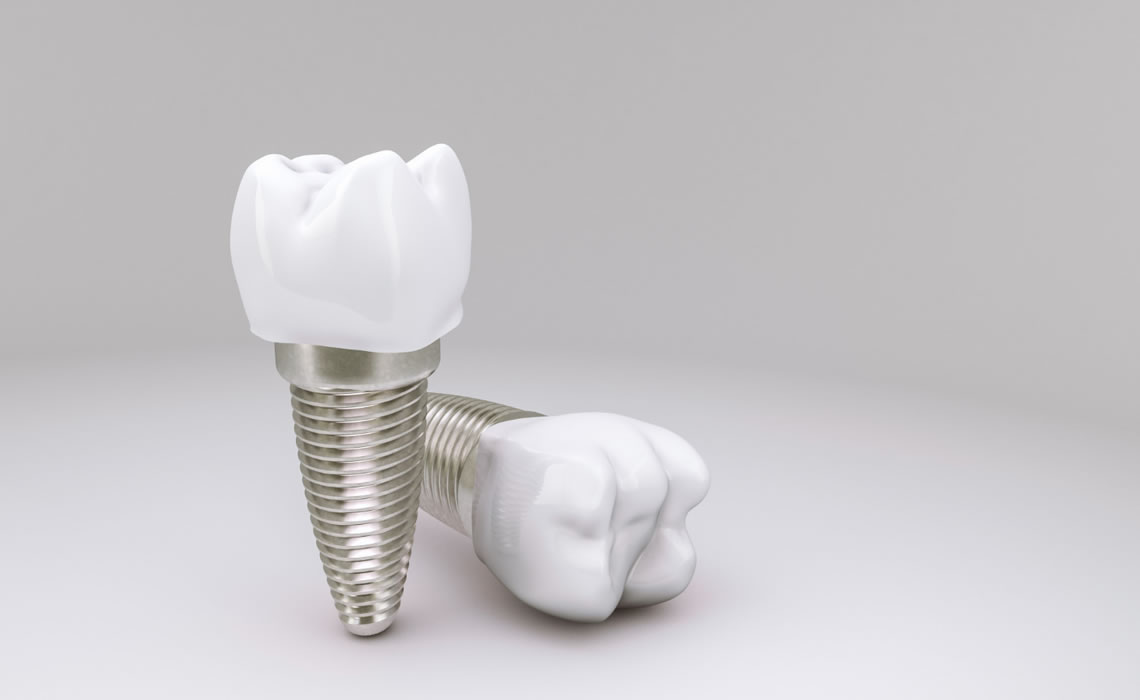
Implant treatment is the only method that reverses all the pathological processes caused by missing teeth at the biomechanical level. The titanium screw placed in the jawbone behaves like a natural tooth root, transmitting chewing pressure directly to the bone and stopping bone loss (atrophy). Since it does not rely on support from neighboring teeth, it preserves the structure of healthy teeth and restores facial aesthetics and joint health by keeping the vertical dimension at an ideal level.
18. Why Is Early Treatment of Missing Teeth Important?
Starting treatment early, immediately after tooth loss, ensures that the bone tissue is preserved before it has a chance to erode. Thanks to early intervention, neighboring teeth do not get the chance to shift and tilt, allowing success to be achieved with simpler and more effective prosthetic solutions, without the need for complex and costly orthodontic or advanced surgical treatments (such as bone grafting or sinus lifting).
| Treatment Timing | Required Surgical Procedure | Success and Comfort Rate |
|---|---|---|
| Early Period (0-3 Months) | Direct Standard Implant Application | Maximum bone compatibility, minimal surgical burden |
| Late Period (1 Year or More) | Bone Graft + Sinus Lift + Implant | Longer healing process, increased surgical cost |
19. How Is Proper Planning Done in Missing Tooth Treatment?
Proper planning for missing tooth treatment begins with an analysis of the patient’s systemic health profile. Then, with the help of Three-Dimensional Dental Volumetric Tomography (CBCT), the quality, density, and anatomical risk points of the bone are examined down to the millimeter. Using digital dentistry software, the angles at which implants will be placed and the occlusal design of the prosthesis to be placed on them are simulated in a computer environment, creating an error-free treatment plan.
- Radiological Analysis: Mapping bone volume with 3D tomography.
- Gnathological Evaluation: Examination of jaw relationships and joint movements.
- Prosthetic Design: Pre-planning aesthetics and function using digital measurement systems.
Frequently Asked Questions About Missing Teeth
Question 1: If a missing tooth is not treated, will other teeth fall out too?
Answer: They may not fall out directly, but areas that cannot be cleaned form around neighboring teeth that tilt into the gap and have their position disrupted due to the missing tooth. Advanced gum disease (periodontitis) that develops in these areas eventually erodes the supporting bone of those teeth as well, causing them to loosen and eventually be lost.
Question 2: Is bridge treatment or an implant healthier?
Answer: As long as there is no surgical obstacle, implant treatment is much healthier. This is because bridge treatment requires cutting down and reducing two healthy teeth adjacent to the gap. An implant, on the other hand, is an independent artificial root system that directly preserves the bone without touching the neighboring teeth at all.
Question 3: How long after a tooth extraction should an implant be placed?
Answer: Ideally, the implant should be placed within the first 2 to 4 months following the tooth extraction. In certain suitable, infection-free cases, it is also possible to place the implant into the socket on the same day the tooth is extracted, in the same session, using the “immediate implantation” technique.
Question 4: If my jawbone has completely resorbed, can an implant never be placed?
Answer: Even in cases of advanced bone loss, implants can be placed using “advanced surgical techniques.” Thanks to block bone transfers, bone grafting, or angled placement implant concepts (All-on-4), the resorbed bone volume can be increased, allowing stable implant foundations to be created.
Question 5: Do prostheses made to replace missing teeth look natural?
Answer: Thanks to the CAD/CAM systems used in today’s digital dentistry, along with zirconium and all-ceramic (E-max) materials, the light transmission, color tone, and surface characterization of artificial teeth can be produced to be virtually identical to natural teeth.