Why Is Orthodontic Treatment Needed?
The main reason orthodontic treatment is needed is to correct dental or skeletal discrepancies that occur in the chewing system. Teeth being incorrectly positioned on the jawbone, or the jaws being in a faulty position relative to each other, gives rise to inefficient grinding of food, speech disorders, temporomandibular joint (TMJ) disorders, and aesthetic concerns. By eliminating these structural anomalies, the treatment rebuilds the biomechanical balance of the mouth and surrounding tissues.
- The need to distribute chewing forces evenly across the tooth roots and jawbone
- Preventing jaw joint (TMJ) degeneration caused by faulty occlusion
- Preventing premature wear and enamel fractures caused by teeth pressing against one another
What Is Orthodontic Treatment?
Orthodontic treatment is a clinical process applied to correct faulty dental and jaw relationships known as malocclusion, generating controlled pressure on the periodontal fibers and bone cells. Throughout this process, osteoclast and osteoblast cells in the alveolar bone surrounding the tooth root become active, causing bone resorption in the direction of the pressure and new bone formation in the opposite direction. This branch of dentistry applies mechanical force both through removable clear appliances and fixed metal/ceramic bracket systems.
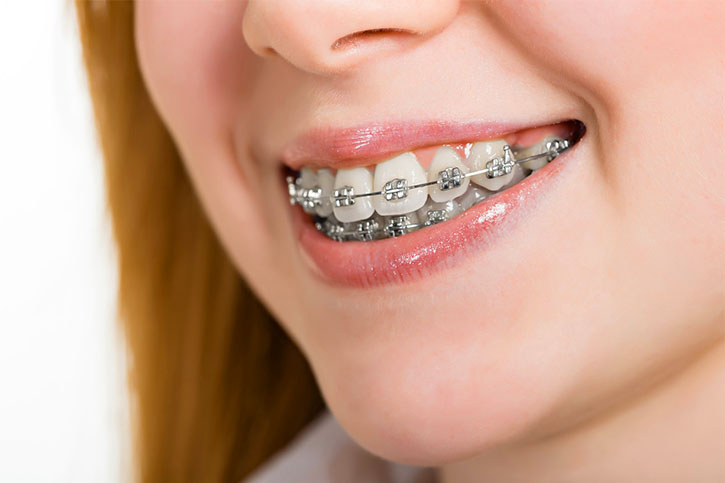
- Fixed Orthodontics: Mechanical treatment carried out with brackets bonded to the tooth surface and the archwires passing through them.
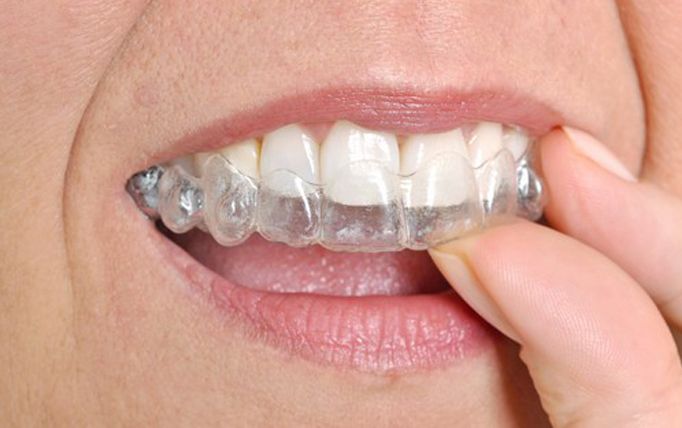
- Removable/Digital Orthodontics: Clear aligner systems, made up of sequential series, that the patient can put on and take off.
Who Is Orthodontic Treatment Suitable For?
Orthodontic treatment is suitable for individuals of any age group who do not have an active periodontal (gum and bone) infection and who maintain an optimal level of oral hygiene. While it offers the opportunity for early intervention in skeletal anomalies in children whose growth and development is still ongoing, in adults it is safely applied only for the correction of dental alignment disorders. Thanks to today’s technologies, even older individuals with adequate bone support can benefit from this treatment.
| Target Group | Clinical Indications | Preferred Treatment Approach |
|---|---|---|
| Early Period (Ages 7-12) | Skeletal jaw deficiency/protrusion, functional narrowing | Removable functional appliances, jaw expansion devices |
| Adult Period (Ages 12+) | Dental crowding, diastema, pre-prosthetic preparation | Fixed brackets (metal/aesthetic), clear aligner systems |
What Problems Does Orthodontic Treatment Help Solve?
This treatment method helps solve a very broad range of pathologies, from dental crowding that disrupts oral integrity to advanced skeletal jaw discrepancies. Mechanical obstructions such as teeth overlapping because they do not fit on the jaw arch, unaesthetic gaps existing between teeth, or the jaws locking during closure are eliminated through orthodontics. At the same time, by correcting the occlusal geometry of the teeth, excessive tension in the chewing muscles and asymmetric facial appearances are rehabilitated.
- Localized or generalized dental crowding in the anterior and posterior regions
- Dimensional and positional discrepancies between the maxilla (upper jaw) and mandible (lower jaw)
- Widespread gaps between teeth (diastema) resulting from missing teeth or microdontia
Why Does Dental Crowding Require Orthodontic Treatment?
Dental crowding absolutely requires orthodontic intervention because it creates blind spots and interproximal surfaces that physically make cleaning teeth difficult. Food debris that gets caught between overlapping teeth cannot be fully removed with standard toothbrushes or dental floss; this accelerates bacterial plaque accumulation. Correcting crowding with orthodontic mechanics brings the teeth to their ideal anatomical limits along the arch, directly increasing the cleanability of the tooth surfaces.
- Minimizing the risk of interproximal cavities forming
- Slowing the accumulation of tartar and preserving gum health
- Preventing the unbalanced vertical loads that abnormally positioned teeth take on during chewing
Why Should Bite Disorders Be Treated?
Bite disorders (malocclusions) must be treated because they disrupt the static and dynamic contact relationships of the upper and lower teeth, causing the chewing cycle to become pathological. When the teeth do not close properly, certain teeth bear forces many times greater than normal, while some teeth do not participate in function at all. Over the long term, this lays the groundwork for chronic pain in the chewing muscles, gum recession, alveolar bone loss, and weakening of the supporting tissues of the teeth.
- Traumatic Occlusion: Tissue breakdown resulting from teeth striking each other at a hard, incorrect angle.
- Joint Deformation: The lower jaw head (condyle) becoming incorrectly positioned in the joint socket due to faulty occlusion.
Can Jaw Development Disorders Be Corrected with Orthodontics?
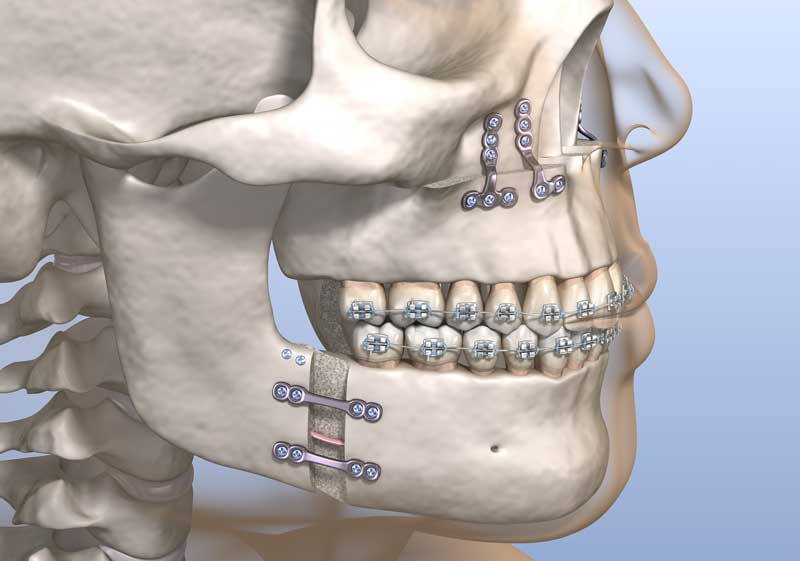
Jaw development disorders can be successfully corrected with orthodontic and orthopedic devices, provided the patient’s chronological age and degree of skeletal maturity (growth-development period) allow for it. During the pubertal growth spurt of childhood, modifying functional devices can be used to stimulate the growth of the retruded jaw or change the growth direction of the protruded jaw. However, in adult individuals whose growth and development has completely stopped, planning surgical intervention (orthognathic surgery) in addition to orthodontic treatment is required to correct these skeletal anomalies.
| Type of Jaw Anomaly | Growth-Period Intervention | Adult-Period Intervention |
|---|---|---|
| Class II (Lower Jaw Deficiency) | Functional devices such as Activator, Twin-block | Orthodontic camouflage or mandibular advancement surgery |
| Class III (Lower Jaw Protrusion) | Facemask, chincap applications | Bimaxillary orthognathic surgery (Jaw surgery) |
Why Are Gaps Between Teeth Treated?
Wide gaps between teeth (diastemas) are treated not only because they are an aesthetic flaw, but also because they prevent sounds from being produced correctly during speech and leave the gum tissue vulnerable to trauma. Teeth not being in tight side-by-side contact causes food boluses to exert direct vertical pressure on the gums during chewing, leading to localized gum pockets. Orthodontics closes these gaps by shifting the teeth along with their root axes, establishing a natural, cohesive dental arch.
- Eliminating phonetic problems (particularly the pronunciation of letters like “s, f, v”)
- Preventing chronic papillary (gum) inflammation caused by food impaction
- Stopping the tendency of teeth to tip sideways (migrate) along the arch
Do Impacted Teeth Require Orthodontic Treatment?
Impacted teeth that deviate from their eruption path and become stuck within the bone (especially upper jaw canine teeth) require orthodontic treatment because they carry the risk of resorbing the roots of neighboring teeth and forming cysts. If the tooth’s anatomical position and root angulation are favorable, it is surgically exposed and an orthodontic force is applied via a small button bonded to the tooth, gradually pulling it into the oral cavity. This way, the patient’s own natural tooth is restored to the functional system and root damage is prevented.
- Preventing resorption (dissolving) that could occur in the roots of neighboring lateral or central teeth
- Preventing pathological cystic formations within the jawbone
- Eliminating the need for prosthetic (bridge/implant) solutions that would arise from tooth loss
Are Jaw Joint (TMJ) Problems Related to Orthodontic Treatment?
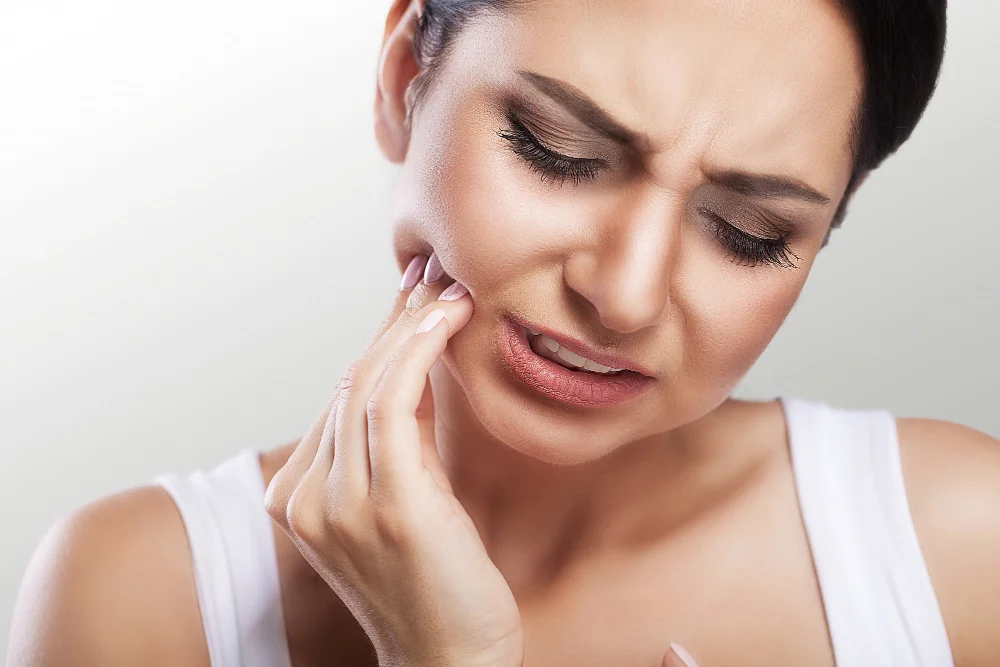
Jaw joint (temporomandibular joint) problems are directly related to orthodontic treatment because faulty occlusion and tooth alignment disorders place an asymmetric load on the joint disc. The lower jaw being forced to shift backward or sideways during closure causes the disc within the joint to become displaced, leading to clicking sounds and muscle spasms. Orthodontics eases the harmful compression on the joint head by ensuring that the upper and lower teeth close correctly in centric relation.
- Reducing chronic hyperactivity in the chewing muscles and the associated head and neck pain
- Restoring the joint disc to its physiological range of motion
- Easing bruxism (teeth grinding) symptoms through occlusal stabilization
Does Orthodontic Treatment Help with Speech Disorders?
Orthodontic treatment helps with speech disorders by correcting the anatomical relationship between the teeth and jaws, allowing the tongue to make contact with the tooth surfaces and palate at the correct angle during speech. Particularly in cases of open bite or severe protruding teeth (overjet), the tongue cannot properly manage airflow within the mouth, causing certain sounds to come out with a whistle or lisp. Closing the dental arches and establishing ideal vertical-horizontal relationships normalizes the quality of phonetic articulation.
- Clarifying “f” and “v” sounds by correcting lip-to-tooth contact
- Eliminating lisping in the “s,” “z,” and “t” sounds by closing the gap in the front region
- Optimizing the free functional volume of the tongue at the floor of the mouth
How Does Orthodontic Treatment Support Chewing Function?
Orthodontic treatment supports chewing function by bringing the relationship between the cusps (protruding parts of the teeth) and fossae (grooves) in the lower and upper jaw into a flawless tooth-to-tooth occlusal format. In a correct bite, food is broken down and ground to a maximum degree while using minimal muscular force. This also indirectly prevents the digestive problems and functional strain that food swallowed in large pieces could place on the stomach and intestinal system.
- Establishing an effective cutting, tearing, and grinding cycle
- Distributing chewing force evenly across the entire dental arch
- Preventing soft tissue trauma, such as cheek and tongue biting, while eating
How Does Orthodontic Treatment Facilitate Oral Hygiene?
Aligning the teeth along a proper line mechanically facilitates oral hygiene by allowing toothbrush bristles and interdental brushes to reach all surfaces without obstruction. Once crowding is eliminated, the “bacterial retention areas” that form in the tight spaces where teeth press against each other — areas that are impossible to clean mechanically — are eliminated. In a mouth that is easier to clean, plaque buildup decreases and the effectiveness of daily personal care routines performed at home reaches its maximum level.
- Shortening brushing time and increasing brush effectiveness
- Allowing dental floss to pass comfortably through interproximal surfaces without fraying or breaking
- Allowing mouthwashes and the natural cleaning function of saliva to reach all surfaces
Does Orthodontic Treatment Contribute to Preventing Gum Disease?
Yes, orthodontic treatment directly contributes to preventing gum disease (gingivitis and periodontitis) by eliminating chronic food accumulation around the teeth and localized foci of inflammation. Chronic tartar buildup on crowded teeth disrupts the marginal border where the gum attaches to the tooth, causing deep gum pockets to open up. Once the teeth are aligned, the gingival tissues wrap tightly around the tooth root, pocket depths decrease, and the fundamental mechanical cause of gum bleeding is eliminated.
| Current Condition | Risk Level Before Orthodontics | Clinical Condition After Orthodontics |
|---|---|---|
| Severe Crowding | High (Chronic gingivitis, bone loss) | Low (Healthy pink gums, stable bone level) |
| Deep Bite | Moderate-High (Palatal tissue trauma) | Minimal (Mucosal integrity free of trauma) |
Does Orthodontic Treatment Help Prevent Tooth Wear?
Orthodontic treatment helps prevent premature tooth wear and enamel loss by correcting the abnormal friction angles that occur when teeth move against each other during function. In conditions such as crossbite or protruding teeth, the cutting edges of the upper and lower teeth rub against each other with abnormal force; this causes the enamel layer to wear down and exposes the sensitive dentin layer beneath it. Balanced tooth contact eliminates this localized wear and the risk of functional cracking.
- Preventing micro-fractures and chipping that occur on the edges of the incisors
- Preventing hot-cold tooth sensitivity that develops due to exposed dentin
- Halting the chronic shortening of the vertical dimension (length) of the teeth associated with aging
How Does Orthodontic Treatment Contribute to Aesthetic Smile Design?
Orthodontic treatment provides a permanent aesthetic smile design by adjusting not only the alignment of the teeth but also their parallelism with the lip line, their visibility, and the width of the smile line (corridor). By optimizing the vertical and horizontal positions of the teeth, aesthetic issues such as excessive gum visibility while smiling (gummy smile) or gums not being visible at all are resolved. Adjusting the degree to which the teeth fill the cheek spaces gives the face a more dynamic and youthful expression.
- Smile Arc: The cutting edges of the upper front teeth following the curve of the lower lip.
- Negative Space Control: Filling the dark gaps remaining at the corners of the mouth with proper tooth alignment.
What Problems Can Develop If Orthodontic Treatment Is Not Performed?
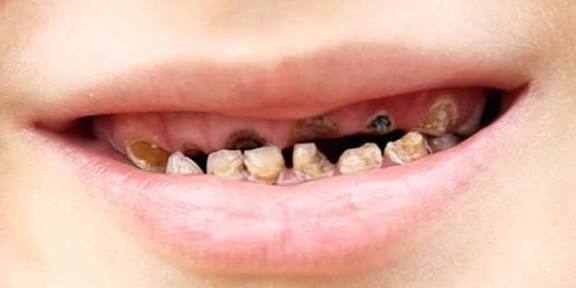
If orthodontic treatment is neglected or not performed, intraoral anomalies become chronic, leading to the development of irreversible skeletal and dental pathologies. As time passes, abnormal friction between teeth, localized periodontal breakdown, and intra-joint wear increase in severity. A clinical picture that initially consists of simple crowding can, at more advanced ages, turn into tooth loss, widespread cavities, and severe joint lock-ups requiring surgical intervention.
- Localized bone resorption leading to early loosening and loss of teeth
- Chronic facial, neck, and ear pain caused by spasms in the chewing muscles
- Increased aesthetic dissatisfaction and the resulting social anxiety
How Is an Orthodontic Examination Performed?
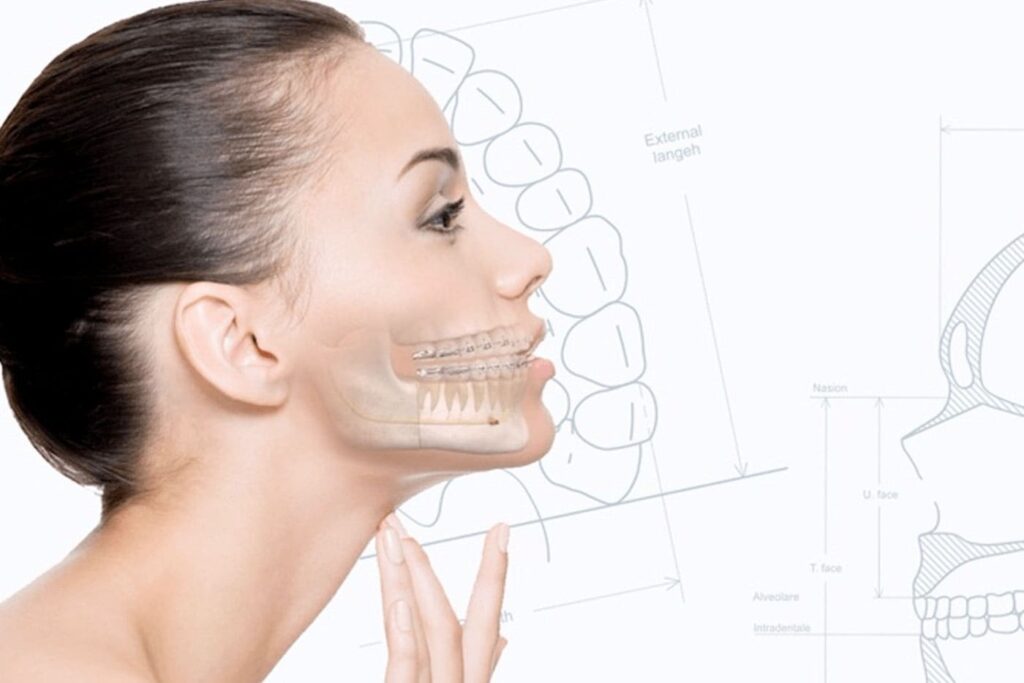
A professional orthodontic examination is carried out following the patient’s complaints being listened to, through a detailed extraoral (outside the mouth) and intraoral (inside the mouth) clinical assessment protocol. The physician examines the patient’s facial symmetry, profile lines, lower jaw range of motion, and lip closure competence macroscopically. Afterward, the alignment of all teeth in the mouth, the bite classification, gum health, and functional obstructions are individually recorded using clinical instruments.
- Determining facial asymmetry and the direction of lower jaw deviation
- Measuring the millimetric differences between centric relation and centric occlusion
- Analyzing the relationship between the soft tissue profile and the tip of the chin (pogonion)
Why Is Digital Imaging Important?
Digital imaging methods form the most critical part of planning because they reveal intraosseous structures, the position of impacted teeth, and root anomalies that are impossible to detect with the naked eye, with millimetric precision. Thanks to digital panoramic and cephalometric X-rays, the angular relationships between the jawbones relative to each other are calculated mathematically. Three-dimensional intraoral scanners (digital impressions), on the other hand, transfer the patient’s dental models into a virtual environment, enabling computer-assisted treatment simulations.
| Imaging Method | Clinical Purpose | Primary Advantage It Provides |
|---|---|---|
| Cephalometric X-ray | Measuring the angles that form the skeleton and profile | Determining the direction of jaw growth and the limits of treatment |
| 3D Intraoral Scan | Obtaining a digital model of the dental arch | Eliminating the need for traditional putty impressions, high precision |
How Is Bracket Treatment Applied?
The application of bracket treatment begins with roughening, washing, and drying the tooth surfaces, followed by securing the brackets to the teeth using special bonding agents (composite resin). Each bracket is placed in a highly precise position that determines the angle of force it will transmit to the tooth, and then light-cured. In the final stage, flexible memory-metal archwires are threaded through all the brackets and secured to them using mechanisms called ligatures, initiating the active force process.
- Direct Bonding: The method of individually bonding the brackets to the tooth surfaces in the clinical setting.
- Activation Sessions: The process of updating the force by replacing the archwires roughly every 4-6 weeks.
Who Are We? | Özel OPC Klinik Orthodontics Department
Özel OPC Klinik is a modern healthcare center that closely follows the global technological transformation in the field of oral and dental health, serving with an advanced digital infrastructure and a team of specialist physicians. In all orthodontic treatments applied within our clinic, the margin of error is reduced to zero through the use of 3D intraoral scanning systems and AI-supported planning software. Thanks to our multidisciplinary working discipline, our orthodontic patients’ treatment processes are carried out with the joint consultation of our jaw surgery, periodontology, and cosmetic dentistry specialists, so that we build not just straight teeth, but a comprehensive oral anatomy that will function healthily for a lifetime.