The honest answer to how long a domestic implant lasts is this: the origin alone does not decide an implant’s lifespan; bone quality, oral hygiene, smoking and the regularity of check-ups do. A well-planned, regularly maintained implant can be used for many years, whether domestic or imported. When choosing a brand, what really matters is the scientific data behind that system, the dentist’s experience and the continued availability of parts.
Does the brand or the patient decide implant lifespan?
The lifespan of an implant depends less on the brand and more on the health of the bone that carries the implant and the tissue around it.
An implant that has fused with the bone works for many years when it is placed correctly and looked after regularly. Most of the causes that shorten its life are independent of the brand:
- Insufficient bone or poor bone quality
- Gum inflammation spreading around the implant
- Smoking and uncontrolled chronic diseases
- Habits that put load on the implant, such as clenching and grinding at night
- Skipping check-ups and professional cleaning
For this reason, answering the question of implant lifespan with a single number would be misleading; the same brand can give very different results in two different mouths.
Differences between domestic and imported implants
The basic differences between domestic and imported implants are the country they are made in, the amount of published clinical data and the parts and service processes; the working principle is the same.
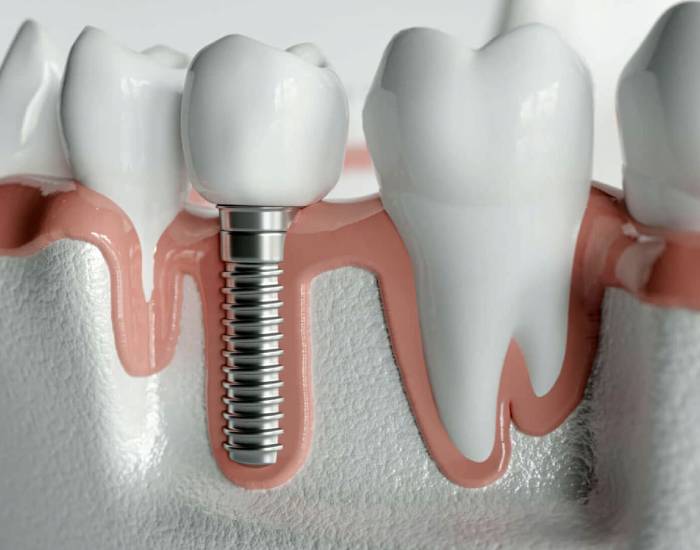
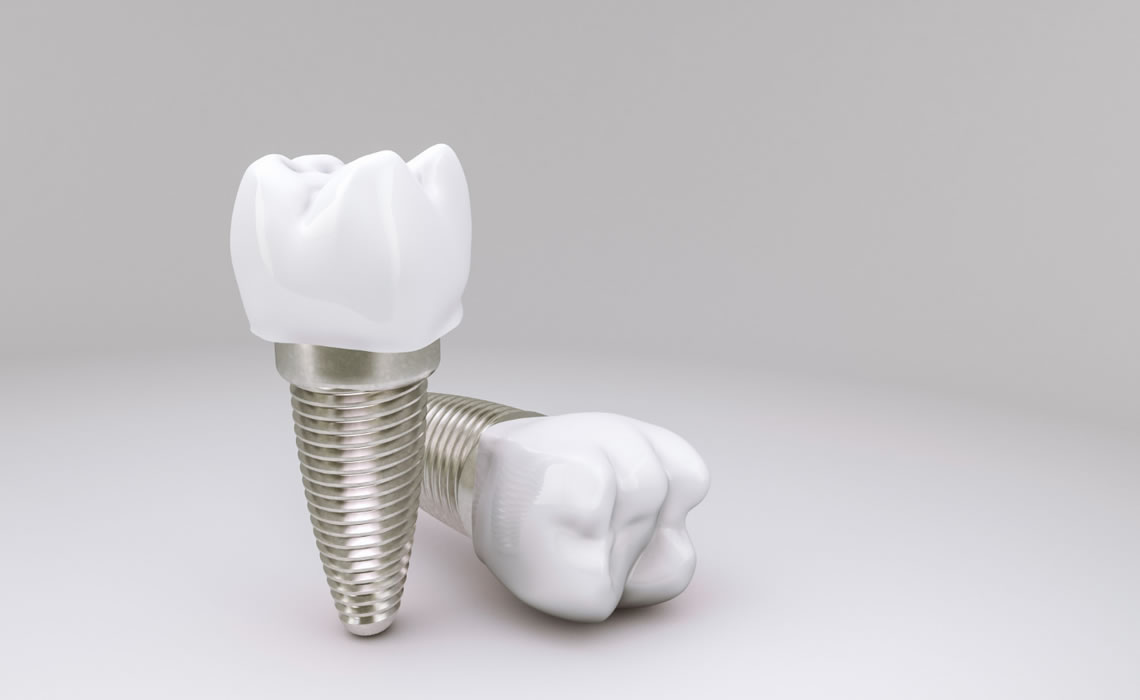
Both are titanium root systems that are screwed into the bone, fuse with it and carry a prosthesis on top. The comparison can be summarised as follows:
| Point | Domestic implant | Imported implant |
|---|---|---|
| How it works | A titanium root that fuses with the bone; carries a prosthesis on top | The same principle |
| Clinical data | Varies by brand and model; ask for the published studies of the system used | Systems that have been widespread for a long time usually have more published studies |
| Parts and service | If the manufacturer is in the country, supply and communication can be easy | Provided through a distributor; its continuity should be asked about |
| Prosthetic compatibility | A system the dentist knows and has used for years is important | The same |
| Maintenance | Not different; hygiene and check-ups are the same | Not different |
The advantage of a domestic implant is usually closeness to the manufacturer and service; the advantage of imported systems is that they have been widespread for a long time and more studies exist on them. Which one is more suitable for you depends on the condition of your mouth more than on the brand. Whether domestic or imported, a known system with written documentation and traceability should be preferred.
How to read scientific data and clinical experience
When reading scientific data, you should look not at the brand’s advertising but at long-term, independent studies.
To judge the success of an implant system, the answers to these questions are sought: is there a long-term follow-up study on the system, do the dentists working with the same system publish their results, and are the surface treatment and connection design known and tested? Clinical experience matters too: the better a dentist knows a system, the sooner they find a solution if a problem comes up. Since success percentages differ from study to study, instead of trusting a single figure, it is healthier to ask about the dentist’s own experience and the patients they have followed.
Factors that affect success: bone, hygiene, smoking
The three factors that affect success most are the amount and quality of bone, oral hygiene and smoking; the brand cannot replace them.
- Bone: enough bone is needed for the implant to stay firm. This is why the amount of bone is the first step of planning.
- Hygiene: an implant does not decay, but the gum around it can become inflamed. Daily cleaning and regular check-ups reduce this risk.
- Smoking: it delays healing and increases problems around the implant. For details you can read the article on implant treatment and smoking.
We also covered the components of a successful treatment in our article on what a successful implant treatment depends on.
To clarify the domestic versus imported implant question, there are three things you can ask at the first examination: how many years you have used this system, how you follow your long-term results, and what steps you take if a problem comes up. If the answers are clear and concrete, you are on the right track regardless of the brand’s origin. If the answers are evasive, getting a second opinion is also your right.
In which cases does the dentist recommend which
The dentist makes a recommendation by looking at the patient’s bone structure, the number of missing teeth and how well they know the system they use; there is no single correct brand.
At OPC Klinik, treatment is planned for different situations such as single-tooth implants, multiple missing teeth, All-on-4 and All-on-6, and zygomatic implants in cases of insufficient bone. The system needed for a single tooth and the one needed for the whole jaw may differ. The dentist chooses the system they use based on their own experience and recommends the one that suits your mouth. For this reason, the most correct way is to ask the “which brand” question to the dentist according to the condition in your mouth.
Implant lifespan and prosthesis lifespan are not the same thing
The root of the implant inside the bone and the tooth on top of it (a crown or bridge) wear over different periods; the two must be separated when lifespan is discussed.
Because the root part fuses with the bone, it stays in place for many years with proper care. The prosthesis on top, however, may wear depending on chewing force, biting habits and its material; it may need to be renewed over time. Changing a crown does not mean renewing the implant itself. So when looking at the question “how many years does an implant last”, you need to ask whether it describes the implant or the prosthesis on top. The same distinction applies in the brand discussion: it is as important that the prosthetic connection parts remain available in the future as it is for the root.
Which one suits whom
Choosing domestic or imported is about finding the system that suits you together with your dentist; the question of which is for whom has no single answer.
- Those considering a domestic system: people who look for closeness to the manufacturer and service and easy supply of parts; provided that the dentist knows the system closely and published data exists.
- Those considering an imported system: people who want to rely on the many published studies of a system that has been widespread for a long time; provided that the continuity of parts and service is assured.
- Difficult cases: if bone is insufficient or an earlier implant was problematic, planning and surgical experience are as decisive as the brand. In such cases options like a zygomatic implant can be discussed.
Common misconceptions
The most common misconceptions about implant brands are the ideas that a domestic one is bad or that an imported one is always flawless; neither reflects reality.
- “Let it be a foreign brand, then no problem will come up.” The brand does not make up for insufficient bone or insufficient cleaning.
- “A domestic implant does not hold up.” The quality of a system depends on the material, surface treatment, quality control and clinical data more than on the country of production.
- “Every implant with a brand name is the same.” The same brand has different models and sizes; what suits each mouth is different.
- “If the dentist does not name a brand, they are hiding something.” Not every dentist uses every system; so it is appropriate to ask openly which system will be used and why.
The brand rankings going around the internet are also mostly for sales or advertising. A real comparison should be based on individual cases and long-term data.
What to ask the clinic for when asking about a brand
When choosing an implant brand, it is your right to ask the clinic for clear information on the brand, the model and traceability.
- The brand, model, diameter and length of the implant to be used
- The manufacturer and the country of production
- The serial or batch number of the product and the implant card
- Published clinical studies on the system
- Information that the prosthetic parts will remain available in the future
- The check-up schedule and the steps to follow if a problem comes up
Getting this information in writing also makes things easier if you need care at another clinic in the future. You can also look at the page where we answer in detail whether the implant brand matters.
The role of check-ups and maintenance
Check-ups and maintenance are the most controllable factor deciding an implant’s lifespan.
Periodic check-ups are needed after the prosthesis is fitted too. At these appointments the gum, the bone level and the fit of the prosthesis are monitored; small problems are noticed before they grow. Hygiene and professional cleaning are also part of this routine.
Frequently asked questions
Is a domestic implant good?
Quality varies from brand to brand; a domestic system that has scientific data and traceability and that your dentist knows can be a suitable option. For the decision, ask your dentist about the studies on the brand to be used.
What are the advantages of a domestic implant?
Closeness to the manufacturer and service, easy supply of parts and ease of communication stand out. These advantages do not replace the quality of the system; the two should be evaluated together. For your questions, you can reach us through our contact page.