The main difference between All-on-4 and All-on-6 is the number of implants that carry one jaw: All-on-4 uses four and All-on-6 uses six, and a fixed prosthesis is made on top. Which one is suitable depends on the amount and quality of bone in the jaw, the biting force and the plan for the prosthesis. So instead of “which is better”, the right question is “which suits my jaw”, and the answer comes from the examination and the tomography scan.
What All-on-4 and All-on-6 are, in short
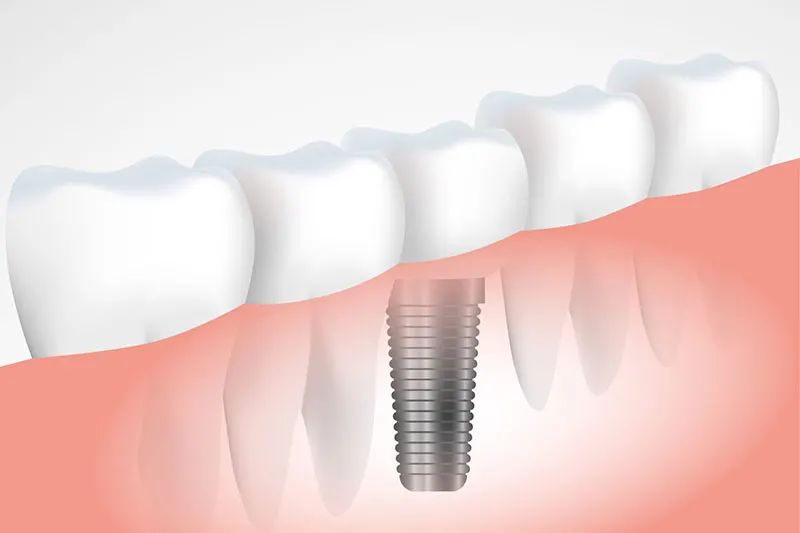
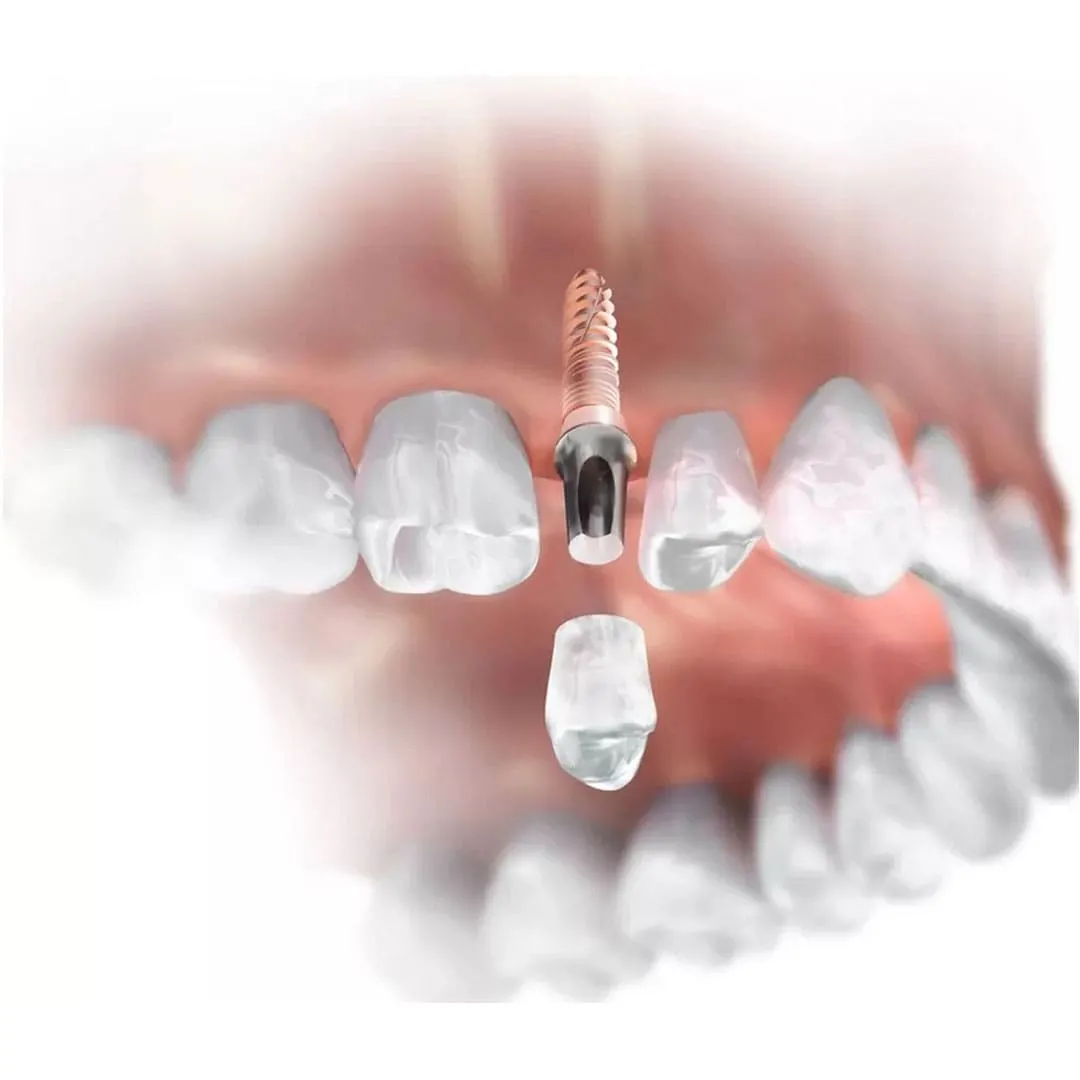
Both methods aim to make a fixed prosthesis that carries all the teeth on a small number of implants, in a jaw that is toothless or whose teeth cannot be saved. Instead of placing an implant for every single tooth, the implants are put at strategic points and a one-piece bridge is attached on top.
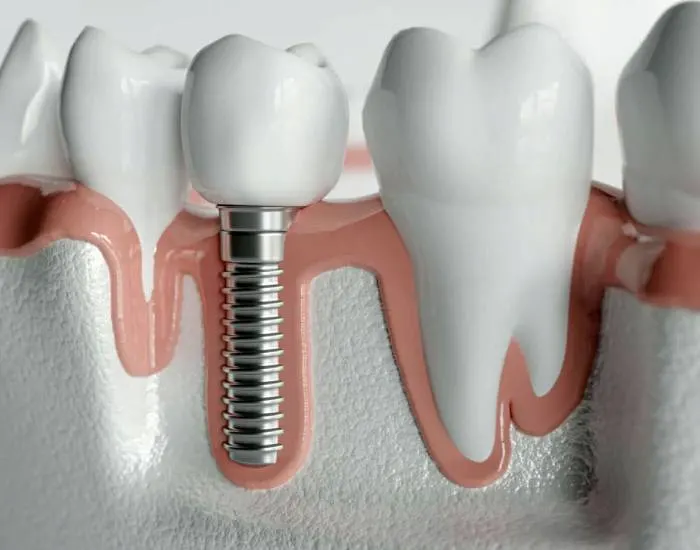
In All-on-4 the back implants are mostly placed at an angle; this allows longer implants to be used and, in some cases, makes bone preparation unnecessary. In All-on-6, two extra implants spread the load of the prosthesis over more points. For a general definition of the method, see what All-on-4 / All-on-6 implants are, and for the treatment at the clinic, see All-on-4/6 implant treatment in Kadıköy.
Comparison table
| Point | All-on-4 | All-on-6 |
|---|---|---|
| Number of implants | Four in one jaw | Six in one jaw |
| How does it work? | Four implants support a one-piece prosthesis that carries all the teeth; the back implants are often placed at an angle | Six implants spread the load over more points |
| Who is it suitable for? | Suitable cases with limited bone who want less surgery | Cases with sufficient bone in which the prosthesis is to be carried with more support |
| Surgical scope | Fewer implant sockets are opened | More implant sockets are opened |
| Chewing load | The load of the prosthesis is gathered on four points | The load is spread over six points |
| Care | The area under the prosthesis and around the implants is cleaned with a special brush | The same care is needed; the number of points to clean increases |
| Decision | The dentist decides according to the examination and tomography result | The dentist decides according to the examination and tomography result |
How the amount and quality of bone guide the choice
The amount and quality of bone is the first factor that determines the number and position of the implants. A three-dimensional tomography scan shows the height, width and density of the bone, and the plan is built on this image. If there is little bone, the angled-implant approach of All-on-4 can be an advantage in some cases. If bone preparation is needed, bone augmentation surgery comes into question. You can find why the amount of bone is so decisive on the page about the amount of bone before implants.
In very advanced bone loss, classic methods may not be enough. Zygomatic implants, which are used at OPC Klinik, are considered an option in such cases; details are on the page about zygomatic implants in Kadıköy.
When is All-on-6 considered
If the bone is sufficient and the prosthesis is to be supported at more points, All-on-6 is considered. In a wide jaw, in people who are used to eating hard food, in teeth clenching and grinding, or when a long prosthesis is needed in the lower jaw, the dentist may prefer six implants. This is not a rule but a case-by-case assessment.
In both methods the fit of the bite matters as much as the structure of the prosthesis. If a fixed prosthesis is not designed to spread the biting force evenly, certain points are overloaded whatever the number of implants. For this reason, during planning not only the implants but also the length of the prosthesis, its bite and its relationship with the gum are reviewed. Whether the prosthesis will be removable or fixed is also a decision that should be discussed separately.
The difference in chewing load and durability of the prosthesis
In a suitable case, both methods aim to restore the chewing function. The difference lies in how many points the load is spread over. More implants divide the load over more points, but this does not mean the method is more durable in every case. Durability depends on bone quality, the design of the prosthesis, biting habits and care.
The difference in treatment process and duration
In both methods the process moves in a similar order: examination and tomography, planning, tooth extraction and bone preparation if needed, placement of the implants, healing, and making the permanent prosthesis. The difference in duration comes from whether bone preparation is needed and from the person’s healing rate rather than from the number of implants. Placing six implants may need a somewhat longer surgical time; however, what mainly determines the total time is the bone fusing with the implants.
During healing, the worry of being without teeth is among the most discussed topics. Options for a temporary prosthesis during this period should be discussed with the dentist beforehand.
Who is each method recommended to more often
Although there is no fixed rule, there are some general tendencies. All-on-4 is considered more often for people with limited bone height who want the surgical scope kept narrow. All-on-6 comes forward for people with sufficient bone, a wide jaw and a wish to have the prosthesis supported at six points. For people who clench and grind their teeth, the dentist may recommend extra implants and a night guard, because spreading the load is important. None of these tendencies means a decision until it is confirmed by the tomography image and the examination findings.
There are a few questions that can be asked when deciding: Is my bone sufficient for which method? Is an additional bone procedure needed? What material will the prosthesis be made of? How often will the check-ups be? The answers to these questions show more clearly which of the two methods makes sense for you.
Oral hygiene and long-term care
In both methods the area under the prosthesis and around the implants must be cleaned daily. Interdental brushes, water-cleaning devices and floss-like tools can be used; the dentist shows which tool suits you. Regular check-ups catch an inflammation that starts around an implant early. Smoking negatively affects healing and the long-term health of the implant; this topic should also be discussed with the dentist before treatment.
Common concerns about All-on-4 and the dentist’s reply
The most common concern about All-on-4 is whether only four implants are enough. When done in suitable bone and with the right plan, the method was developed for this purpose; however, it is not suitable for every mouth. The second concern is pain: the procedure is done under anesthesia, and complaints afterwards are managed with the care advice the dentist gives. The third concern is the worry of being without teeth during this process; temporary prosthesis options are discussed at the planning stage.
What the cost depends on and how it becomes clear at the examination
The cost varies with the number of implants, whether bone preparation is needed, the material of the prosthesis and the treatment plan. So the difference between All-on-4 and All-on-6 is not only the difference of two implants. At OPC Klinik, the treatment options, their duration and cost are explained openly; the plan is finalized with the patient’s approval. For clear information, the most sensible step is to ask for a written treatment plan after the examination and tomography.
Assessments made at the first examination to decide
At the first examination, the oral examination, the tomography and the general health history are assessed together. The dentist looks at the condition of the bone, the neighboring structures, the gum health and your expectations, and proposes a plan. In full-jaw implant treatment, placing the implants is surgical and designing the prosthesis is prosthetic work; at OPC Klinik, Doç. Dr. Ezgi Yüceer Çetiner works in oral, dental and maxillofacial surgery, and advanced treatments such as zygomatic implants are also offered at the clinic.
Frequently asked questions
What is the difference between All-on-4 and All-on-6?
In All-on-4, four implants are used in one jaw, and in All-on-6, six, and a fixed prosthesis is made on top.
When is All-on-6 preferred?
When the bone is sufficient and the prosthesis is to be supported at more points, the dentist considers All-on-6.
If there is little bone, is All-on-4 or All-on-6 done?
If the bone is limited, All-on-4 with angled implants is possible in some cases; in very insufficient bone, bone preparation or a zygomatic implant may be needed. The decision is made according to the tomography.
Does All-on-4 have disadvantages?
It is not suitable for every mouth, and the load on four points needs to be planned well. Neglecting care can cause problems around the implants.
How are All-on-4 and All-on-6 cared for?
The area under the prosthesis and around the implants is cleaned daily; regular check-ups with the dentist are done.
Is there a difference in durability between the two methods?
Durability depends on bone quality, prosthesis design and care; the number of implants is not the only factor.
Who decides which one is suitable?
The dentist who carries out the implant treatment decides according to the examination and the tomography result.
If you would like to assess your full-jaw implant plan together in Istanbul, you can contact OPC Klinik through our contact page.