Let us call you.

What is a Sinus Lift Surgery?

Contents

Sinus lifting

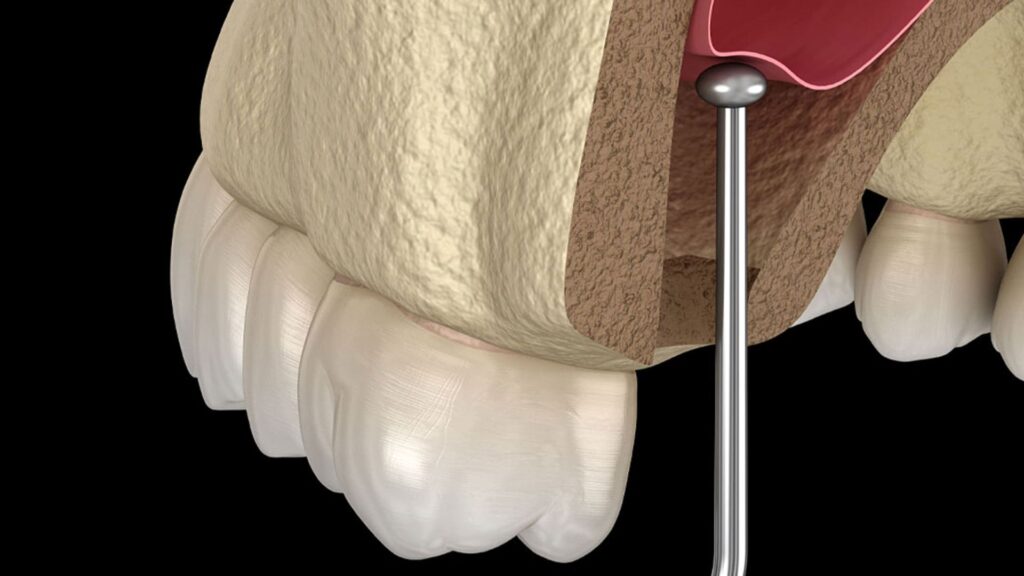
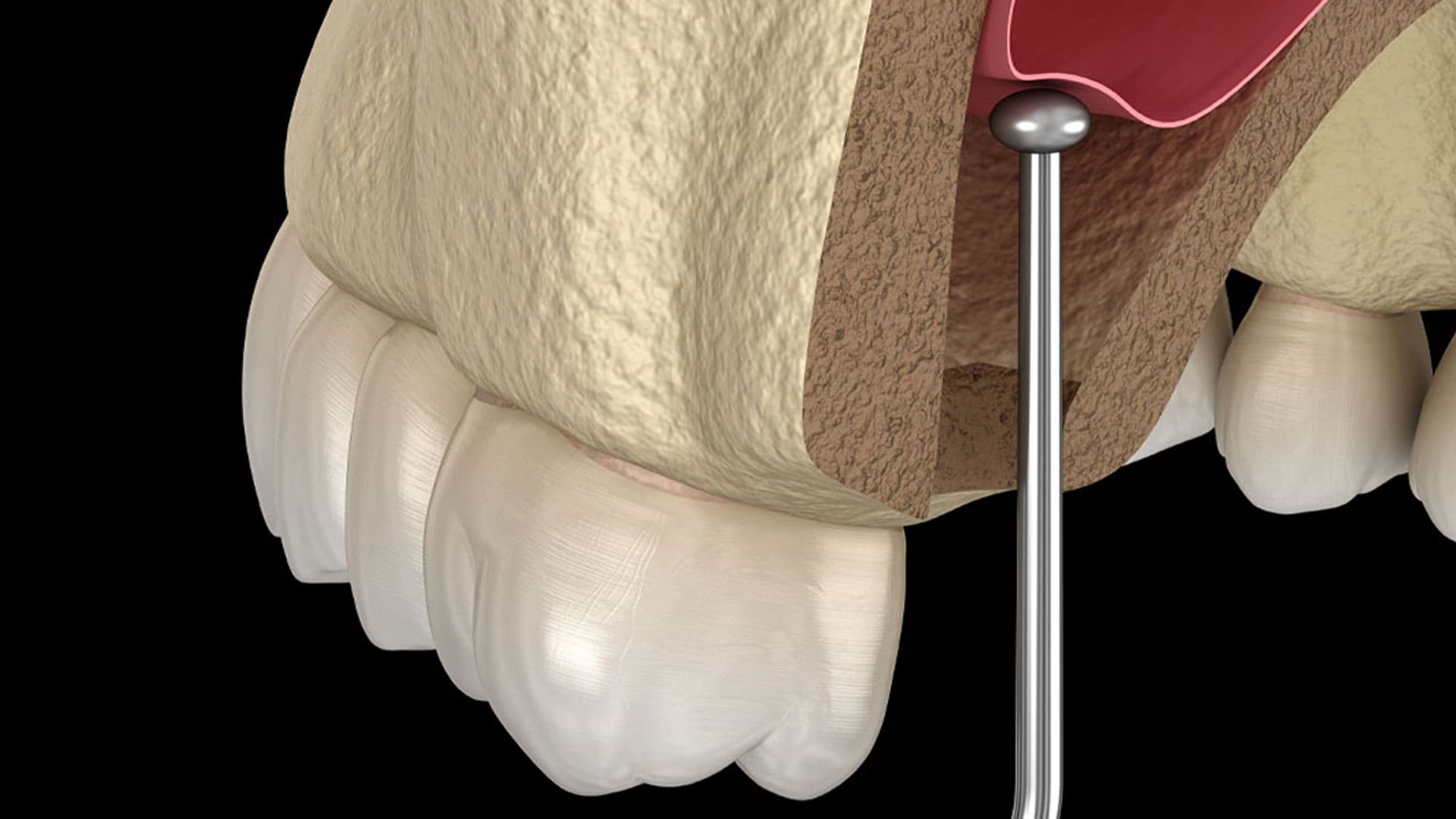
The maxillary sinuses are physiological spaces located beneath the cheekbones on either side of the nose. These spaces are adjacent to the upper molars and often widen after the extraction of adjacent teeth, or thin out due to dysfunction of the bone supporting the teeth. In some cases, after tooth loss, it is necessary to create new bone in the area between the membrane surrounding the maxillary sinus and the bone to accommodate implants in the posterior region of the upper jaw. This procedure is called a sinus lift.

Placing implants in the posterior region of the upper jaw does not always require a sinus lift. This depends on the amount of bone in the area, the location, and size of the sinuses.

There are two types of sinus lift procedures.

  1. Closed sinus lift
  2. Open sinus lift
Closed Sinus Lift

If there is enough bone in the area where the implant will be placed to hold the implant, the bone in this area can be removed without making a new incision outside the implant placement area. This procedure is performed by compressing the sinus or by placing bone powder. It is called closed because no incision is made outside the implant area to reach the sinus.

The prerequisite for this procedure is sufficient bone in the area. You can only determine if you are suitable for the procedure after an oral surgeon’s examination. The post-operative period is more comfortable than with an open sinus lift, but since implants are placed with this procedure, the recommendations at the end of the procedure should be followed.

Open Sinus Lift

An open sinus lift is a procedure performed on patients with very little bone in the posterior region of the upper jaw. A small opening is created outside the implant-placed area on the cheek-facing side of the jaw, and a graft is placed between the sinus membrane and the jawbone. This method allows areas of bone that have eroded too much to accommodate implants to be made suitable for implant placement.

In some cases, a two-stage surgery is performed. First, an open sinus lift is performed, and the bone graft is allowed to ossify. This can take 3-4 months before the implants are placed. Sometimes, enough bone can be found to allow implant placement in the same session as the procedure, thus shortening the waiting period.

What to Expect After a Sinus Lift?

The precautions to be taken after the closed sinus fiber procedure are the same as those after the implant operation. Implant operationClick here for the article about the topic.

Mild swelling and pain can be expected after an open sinus lift. Bleeding in the form of leaks is normal. Blowing your nose or blowing your nose forcefully after the procedure is prohibited, as it will create pressure inside the sinuses. As with all oral surgical procedures, smoking should be avoided during recovery. A slight nosebleed is considered normal after a sinus lift.

Our Other Blog Posts;