Invisalign Planning Process in Kadıköy: The Secrets of Perfection
The secret of success in orthodontic treatments lies not in the plastic applied, but in the digital engineering that shapes that plastic. In your health tourism journey extending from abroad to Turkey, we examine behind the scenes of the flawless smile planning built with OPC Clinic’s three-dimensional algorithms.
Beyond Traditional Predictions: Why Planning Is Everything
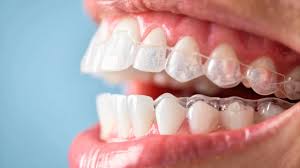
In the conventional era of dentistry, the orthodontic treatment process progressed largely through the physician’s manual wire tightening at monthly intervals and “trial-and-error” reflexes. When the treatment would end and what the final form of the teeth would look like was a completely uncertain, dark tunnel. However, Invisalign technology has completely eliminated this uncertainty with artificial intelligence (AI) and machine learning. In clear aligner treatment, 90% of the work is completed in the computer environment before the patient even wears their first aligner.
At OPC Clinic, an international attraction center in Istanbul Kadıköy with its 1500 m² indoor area, the planning stage resembles an architect designing a massive skyscraper in three dimensions from its foundation to its roof rather than a dentist. For a health tourist choosing our clinic from the other side of the world, from London or Berlin, this process builds tremendous trust; because the patient can see the final point they will reach with their own eyes before allocating their entire budget and time.
Step 1: Cross-Border Digital Data Collection (Tele-Consultation)
Our planning process begins by establishing an intercontinental digital bridge while you, our valued patients, are still in the comfort of your home. In clear aligner treatments, in-depth analysis of bone structure is essential. Our international patient coordinators ensure that you upload your panoramic and cephalometric (profile) X-rays taken in your own country into the system.
The expert orthodontic board of OPC Clinic analyzes this radiological data by evaluating your bone thickness, the angles of your tooth roots, and the condition of your jaw joint. If your skeletal structure is within the limits of clear aligner mechanics (and modern Invisalign technology can now solve up to 95% of even the most challenging cases), your treatment eligibility is approved, and your Istanbul travel planning begins.
Step 2: Creating Your Digital Twin with iTero in Kadıköy
When you arrive in Turkey and step into our clinic in Kadıköy with our private VIP vehicles, you encounter a measurement technology comparable to science fiction films. Traditional impression materials (alginate), which cause discomfort and make breathing difficult, are not included in OPC Clinic protocols. Instead, intraoral optical scanners such as iTero Element or 3Shape TRIOS are used.
These special pen-like cameras, which capture thousands of laser images per second, transfer the surface topography of your teeth to the computer at the micron level. At the end of this comfortable process, which takes only 3–4 minutes, a movable, three-dimensional, and fully colored “Digital Twin” of your jaw structure appears on our high-resolution screens. The data is so precise that every detail, from your gum margins to micro-cracks in your enamel, is processed into the algorithm.
Why Is Digital Scanning Superior to Traditional Impressions?
Traditional impression materials may shrink or expand due to temperature changes during shipment to the laboratory; this can cause the produced aligner not to fit perfectly (tracking error). In digital scanning, there is zero data loss. The file reaches the Invisalign data center in America via the cloud within seconds after the scan is completed.
Step 3: ClinCheck Software and Biomechanical Engineering
When your scan data reaches Invisalign’s cloud system, the core of the process—the ClinCheck phase—begins. This is where OPC Clinic physicians make a difference. Initially, the software provides a draft roadmap for aligning the teeth through artificial intelligence. However, human biology is not purely mathematics; only an experienced orthodontist can determine whether a tooth will collide with the root of a neighboring tooth while moving within the bone or whether the smile line matches the patient’s facial symmetry.
OPC Clinic specialists perform the following critical engineering adjustments within the software:
- Vectoral Force Analysis: The exact amount of pushing, pulling, or rotational force to be applied to each tooth is calculated manually with millimetric precision.
- Attachment Design and Positioning: The angles and sizes of “attachments,” small composite protrusions that prevent aligners from slipping on the rounded tooth surface, are optimized according to the load on the tooth.
- IPR (Interproximal Reduction) Planning: If there is not enough space in the jaw to resolve crowding, it is determined with millimetric precision between which teeth very fine sanding (as little as 0.1 mm) will be performed.
| Planning Feature | Traditional Orthodontics (Braces) | Invisalign ClinCheck (OPC Clinic) |
|---|---|---|
| Result Predictability | Completely uncertain. The patient can only see the final result after the braces are removed. | 100% transparent. The position of the teeth at each week of the treatment can be tracked on the screen. |
| Force Control | The wire applies a single force and may sometimes move adjacent teeth undesirably. | Specific and isolated force is applied only to the targeted tooth in the intended direction. |
| Time/Process Management | The process may be prolonged and depends on the physician’s monthly adjustments. Risky for traveling patients. | The number of aligners to be worn and the exact day the treatment will end are determined at the planning stage. |
| Patient Approval | The patient cannot intervene in the treatment protocol. | The patient watches the simulation and, if not satisfied, can request revisions such as “My front teeth should be slightly more recessed,” and the plan is updated. |
Step 4: Presentation of the Simulation and Production Approval
When engineering and medical adjustments are completed, a perfect 3D timeline emerges. For our health tourism patients, this stage usually takes place on their second day at our clinic. On our large screens, you watch like a movie how your teeth transform from their current state into a perfect form aligner by aligner.
The most beautiful aspect of this stage is that it is a democratic process. Our physician asks you, “This will be the design of your smile line, do you approve?” Your aesthetic feedback (for example, “Can my canine teeth look slightly softer?”) is instantly processed into the system. The moment you say, “This is exactly the smile of my dreams!” the approval button is pressed, and 3D printers at the center in America begin producing your custom aligner series.
A Planned Smile Is Never Left to Chance
Invisalign technology is only as powerful as the digital planning capability of the expert physician behind it. In Istanbul Kadıköy, OPC Clinic transforms this step you take into your new life into an art with its advanced equipment and unwavering experience in health tourism.