🔬 The Biology of Movement: How Does a Plastic Mold Shift Teeth?
For patients seeking healthcare services on international platforms and turning their route toward Turkey, especially Kadıköy, which stands out with its medical infrastructure, the most fundamental question is this: How do teeth straighten with Invisalign in Kadıköy? How these devices, which appear to be an extremely simple, thin, and transparent piece of plastic, shape a structure as extremely hard as the human jawbone is one of the most fascinating achievements of modern medicine and biomechanics. As OPC Clinic, the system we apply to our international patients is not magic, but a digital orchestration of the pure rules of physics and biology.
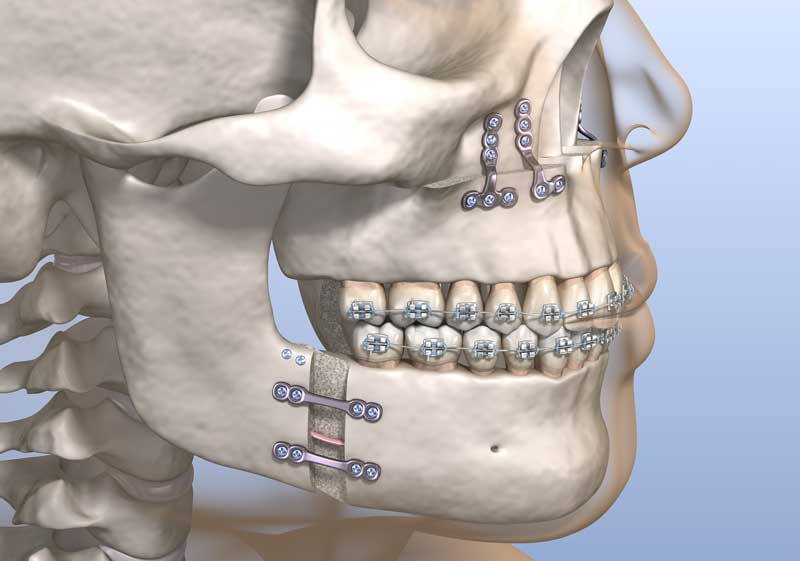
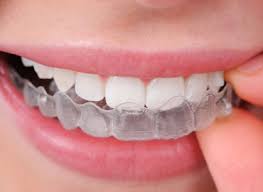
At the core of tooth movement lies “cellular remodeling.” Our teeth are not directly attached to the jawbone; in between, there is a flexible and fibrous cushion called the periodontal ligament. Clear aligners are specially manufactured to fit your teeth exactly, while creating a micro-level pressure toward the “new” and “correct” position where they should be. When the aligner is worn, the periodontal ligament on the side where the tooth is intended to move compresses, while the ligament on the opposite side stretches. In the compressed area, the body activates bone-resorbing cells called “osteoclasts” to open the way for the tooth. In the stretched area, bone-forming cells called “osteoblasts” produce new bone tissue to stabilize the tooth in its new position. This is exactly what Invisalign is: a biomechanical key that triggers this cellular cycle in the most perfect and painless way.
SmartTrack® Material: The Hidden Hero
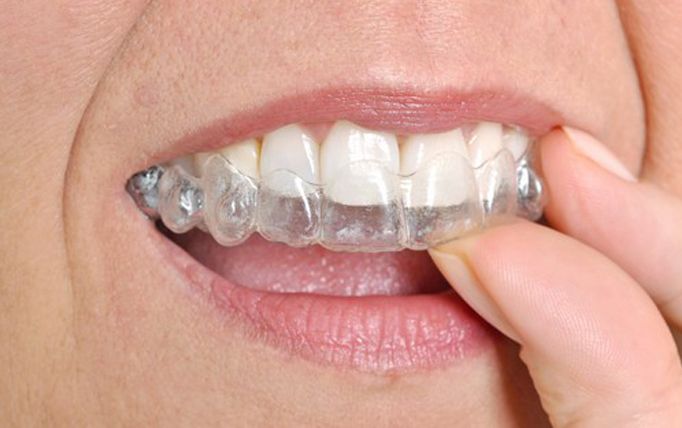
Ordinary plastics lose the force they apply to the tooth within a few hours. However, the patented Invisalign material used at OPC Clinic works with the principle of “elastic memory.” Even while you sleep, eat, or take an intercontinental flight, it applies an extremely stable, low, and continuous force to your teeth. This smart polymer structure minimizes discomfort while accelerating the cellular response, thus greatly shortening the treatment schedule of our patients from abroad.
Attachments: The Directors of Force
Sometimes it is difficult to grip smooth and round-shaped teeth with just an aligner. To ensure tooth rotation or intrusion into the bone, tiny tooth-colored grips made of composite filling are placed on the tooth surface. These structures, called “attachments,” take on the role of a steering mechanism that enables the clear aligner to fully grasp the tooth and transmit the biomechanical force in the correct vector.
How the Perfect System Works for International Patients
Even if you live on the other side of the world, the biomechanical principles of the clear aligner system applied by OPC Clinic completely eliminate geographical boundaries. We can summarize how this treatment progresses so smoothly within the concept of health tourism through these basic steps:
-
📲Divided Treatment Stages (Staging)
The movement of the teeth from beginning to end is divided into 0.25-millimeter micro stages using computer software. Each aligner you wear after returning to your country performs only its own task. When one aligner completes its duty, you move on to the next aligner at home. The mechanical process works flawlessly without the need for manual intervention by the physician. -
🌐AI-Supported Virtual Monitoring
Even if you are not physically in Kadıköy, you take and send your intraoral photos thanks to scanning applications integrated into your smartphone. Artificial intelligence and OPC Clinic physicians check whether the tooth is moving in the planned vector and digitally give the approval to “move on to the new aligner.”
Medical Comparison: The Effect of Force on the Jawbone
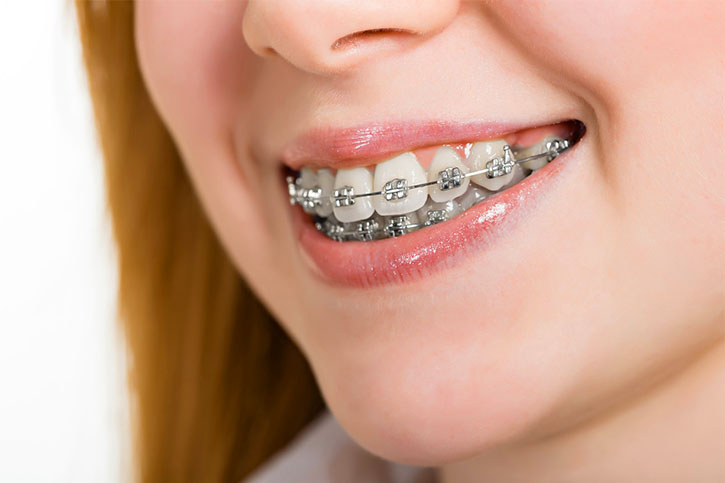
To fully understand the mechanism of how teeth straighten, it is highly illuminating to compare the pushing force applied by clear aligners with the pulling force of traditional metal braces: