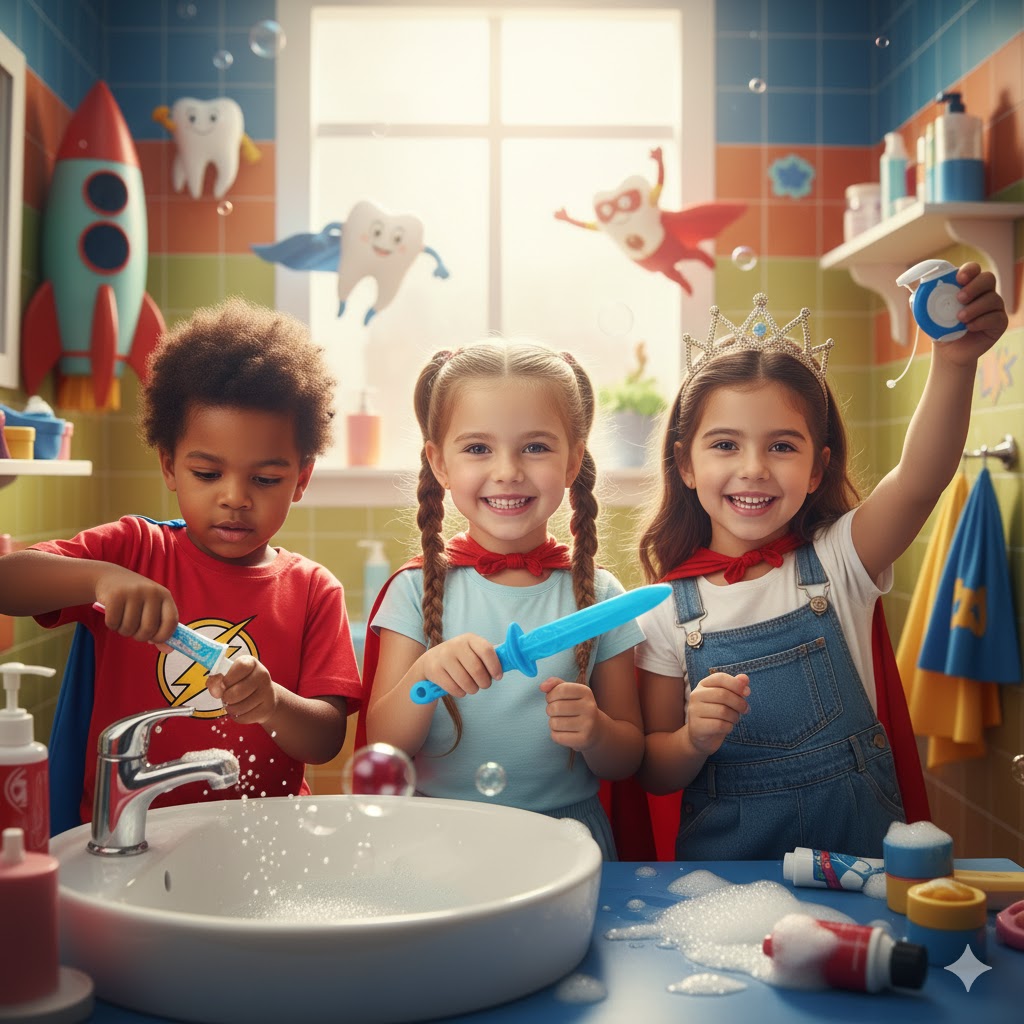
Childhood is the most critical period, not only for growth and discovery, but also for laying the foundation for lifelong healthy habits. Chief among these is oral and dental care. When baby teeth are neglected with the belief that “they’ll change anyway,” our little heroes’ smiles can be overshadowed by cavities, jeopardizing the health of their future permanent teeth.
At OPC Clinic, located in Suadiye, one of Istanbul’s liveliest neighborhoods, we place special emphasis on pediatric dental health (Pedodontics) and offer parents scientific and compassionate guidance on this journey. A healthy start is the key to a lifelong, cavity-free smile.
First Step: When Should Oral Care Begin?
Dental care should begin from birth, not when the first tooth appears. This early start is vital for familiarizing your baby with oral hygiene and preventing the accumulation of harmful bacteria.
a. Infancy (Ages 0-1)
- Before the First Tooth: After each feeding (breast milk or formula), gently wipe your baby’s gums with a clean, damp gauze pad or a silicone finger brush. This minimizes the potential for bacterial growth from bottle and pacifier use.
- Eruption of the First Tooth: The first teeth (usually the lower incisors) usually appear between 6 and 8 months. These teeth should then be brushed twice a day using a soft-bristled, small-headed fingerbrush and a small amount of fluoride toothpaste (about the size of a grain of rice) (to prevent swallowing).
b. First Dentist Visit (No Later Than 1 Year of Age)
The American Association of Pediatric Dentists (AAPD) and the OPC Clinical Pediatric Dentists recommend that the first dental visit occur after the first tooth emerges or at the latest at 1 year of age.
- Purpose: This visit is not treatment-oriented, but rather preventive and informative. The pedodontist provides parents with a personalized preventive care program by evaluating proper brushing technique, dietary habits, and individual caries risk.
Golden Rules for Brushing and Toothpaste Selection
As the child grows, the oral hygiene routine should evolve with their development.
a. Toothpaste Dosage
Toothpaste usage in children should be carefully adjusted according to age and swallowing control to prevent the risk of fluoride poisoning:
| Age Group | Paste Amount | Fluoride Content Recommendation | Brushing Responsibility |
| 0-3 Years | Amount as a Grain of Rice | Low Fluoride (Max. 500 ppm) | Parent Brushes |
| 3-6 Age | About the size of a pea | According to pediatrician recommendations (usually 1000 ppm) | Brushes under parental supervision |
| Ages 6+ | About the size of a pea | Can be switched to adult toothpaste | Self-Brushing (Parental Supervision Required) |
Important Note: Until the age of 6-7, children cannot effectively clean all surfaces of their teeth because their fine motor skills are not fully developed. Therefore, after the child brushes themselves, the parent must brush again (control brushing).
b. Proper Brushing Technique (Fones Technique and Control)
Brushing in circular motions, touching the teeth together (Fones Technique), is generally the most practical method for preschool children. However, it’s important that each brushing last at least 2 minutes and that all surfaces of the teeth (inner, outer, and chewing) are reached.
The Biggest Enemy in Children: Early Childhood Cavities (Baby Bottle Caries)
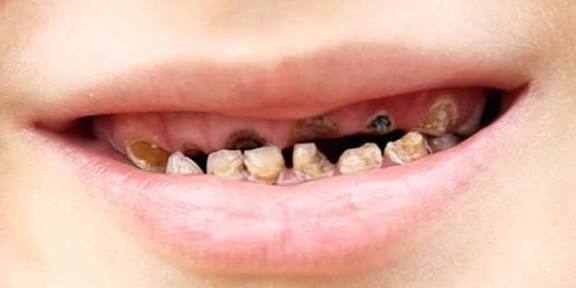
The most common problem threatening dental health in children is widespread cavities, commonly known as Early Childhood Cavities (Baby Bottle Caries).
a. Mechanism of Baby Bottle Caries
These cavities occur as a result of prolonged exposure to sugary liquids (milk, fruit juice, honey water) through bottle feeding or breastfeeding, especially while babies are sleeping at night. Because saliva flow decreases during sleep, sugars in the mouth are converted to acid by bacteria, rapidly eroding tooth enamel. It usually begins on the upper surfaces of the front teeth and progresses rapidly.
b. Preventive Measures
- Nighttime Feeding Rule: Never put your baby/child to sleep with a bottle of milk, juice, or sweetened liquid. If a bottle is offered, it should be water only.
- Pacifier Use: Do not dip the pacifier in sugar, honey, or anything sweet.
- Personal Use: To prevent the spread of oral cavity bacteria from parent to child, parents should never share spoons, pacifiers, or toothbrushes with their children. OPC Clinic also recommends regular checkups for parents to ensure preventative treatments against cavities.
OPC Clinic Pedodontics Preventive Practices
Prevention is essential before treatment. OPC Clinic Suadiye Pedodontics Department offers the following scientifically proven practices to protect our young patients from cavities:
a. Fissure Sealants (Dental Grafting)
- What is it? It is the process of sealing the deep and narrow grooves (fissures) found on the chewing surfaces of newly emerging permanent molars (usually 6-year-old teeth) with a special filling material.
- Purpose: Because these grooves are narrower than toothbrush bristles, they provide ideal accommodations for food debris and bacteria. The sealant prevents the formation of cavities by sealing these areas. It is a completely painless and quick procedure.
b. Fluoride Application
- What is it? Professional fluoride varnishes applied by a dentist that strengthen tooth enamel and increase its resistance to decay.
- Purpose: Applied every 3 to 6 months to support the enamel structure, especially in children at high risk of decay and in newly erupted permanent teeth.
Summary of Preventive Medicine Approach
| Preventive Application | Age of Starting | Application Frequency | Main Benefit |
| Early Care Visit | After First Tooth Appears | Every 6 Months | Parent Education, Early Detection of Baby Bottle Tooth Decay |
| Fissure Sealant | Age 6 (First Permanent Molar) | One-Time (Controlled) | Protecting the Chewing Surfaces of Molars |
| Professional Fluoride | Age 3 and Older | Every 3-6 Months | Strengthening Enamel, Increasing Caries Resistance Increase |
Conclusion: At OPC Clinic Suadiye, we know that dental care for children is not just about treating cavities; it’s also about fostering a positive relationship with their pediatric dentist. Good habits and preventative care practices established at an early age ensure our little heroes can sit in the dentist’s chair without fear and maintain a healthy smile throughout their lives. Your child’s smile is a bright reflection of their future; to protect this reflection, make an appointment today to meet with our pediatric dentists.