One of the most challenging tasks of raising children is making vital yet routine tasks like brushing teeth fun. Those “no” crises that occur in the morning rush or in the bathroom just before bed are a common problem for many parents.
At OPC Clinic, located in Istanbul’s popular neighborhood Suadiye with a team specializing in pediatric dentistry (Pedodontics), we know that being stubborn with a child who dislikes brushing will only pave the way for dental phobia in the long run. The solution is scientifically based gamification and positive reinforcement methods.
In this comprehensive guide, we explore step-by-step, with expert advice from the OPC Clinic, how to help your child develop a toothbrushing habit, reduce resistance, and transform this process into a joyful family ritual.
Understanding the Source of Resistance: Why Do People Refuse to Brush?
Children often refuse to brush their teeth because they find it unpleasant, boring, or uncomfortable. OPC Clinic pediatricians categorize the common reasons for resistance under three main headings:
- Desire for Control (2-4 Year Old Syndrome): At this age, children assert their autonomy by saying, “I’ll do it myself!” The perception of brushing as an adult’s imposition leads to resistance.
- Sensory Sensitivity: The hardness of the toothbrush, the strong taste of the toothpaste, its foaming, or the gag reflex can cause sensory discomfort in some children.
- Boredness of the Routine: Brushing time (the recommended 2 minutes), in particular, can feel like an eternity for a child. A monotonous activity is boring for their creative minds.
Solution: To overcome resistance, instead of forcing it, we need to put the control and fun in the child’s hands.
Fun Brushing Strategies Step by Step from the OPC Clinic
Brushing teeth is a game, not a task. Here are proven methods to transform this routine:
A. No More Power Struggle: Choice and Shared Responsibility
Use children’s desire for control in a positive way:
- Choosing Equipment: Go shopping for toothbrushes and toothpaste with your child. Let them decide on the color of the brush, the cartoon character on it, or the flavor of the toothpaste (strawberry, banana, etc.). OPC Clinical Warning: When choosing toothpaste, be sure to choose one with amount of fluoride appropriate for your child’s age (about a grain of rice for ages 0-3, a pea-sized amount for ages 3-6).
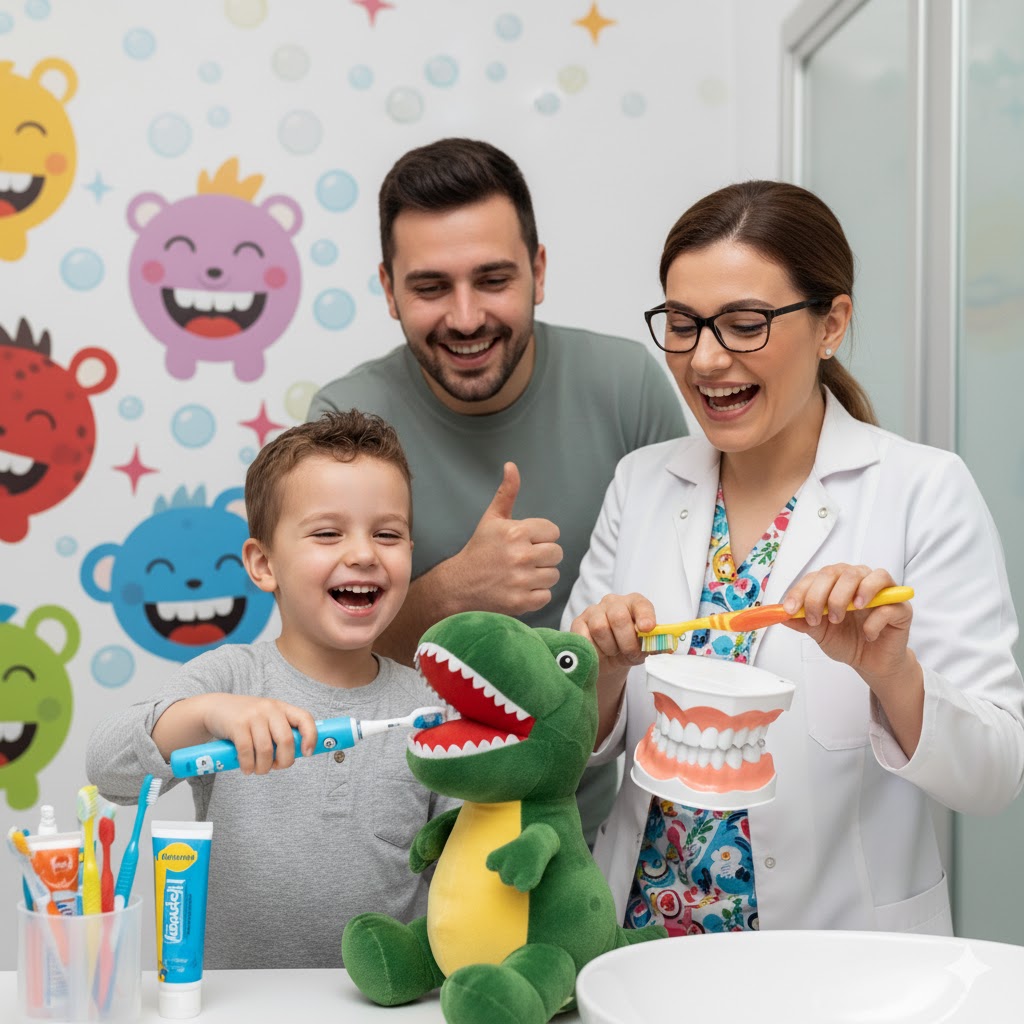
- Reciprocal Brushing Ritual: Change the brushing order. Let your child brush their own teeth first (unleash the chaos!), then you “control brush.” You can even start a fun pretend play by letting your child brush yours. This teaches responsibility and reinforces the importance of brushing.
B. Managing Time: Gamifying the 2-Minute Rule
Make sure the child passes the effective brushing time of 2 minutes without realizing it:
- Brushing Songs: Use 2-minute songs published on platforms like YouTube and Spotify, or created by toothbrush brands. Brushing ends when the song ends. OPC Clinic pediatricians highly recommend dancing to these songs in the bathroom!
- Hourglass or Timer: Place colorful hourglasses or digital brushing timers in the bathroom. A visual endpoint increases the child’s patience and makes the time concrete.
C. Tooth Monster Stories and Positive Reinforcement
Instead of abstract concepts (cavities, bacteria), create concrete enemies for children:
- Tooth Monster Game: Explain that the fluoride in toothpaste is a superpower used to catch “bad germs/monsters” hiding between teeth. Brushing becomes a superhero mission to chase these monsters away.
- Brushing Schedule: Create a weekly board. For each successful brushing session (morning and evening), attach a star sticker or smiley face. At the end of the week, reward the child who collects enough stickers on the board with a small, sugar-free reward (a new book, extra time at the park). Rewarding reinforces behavior.
Expert Supervision: Professional Training at OPC Clinic Suadiye
While efforts at home are valuable, training from a professional pediatric dentist accelerates and reinforces the habit formation process.
OPC Clinic Pediatric Oral Hygiene Training:
At the Suadiye OPC Clinic, the following training is provided, tailored to your child’s age, motor skills, and jaw structure:
- Age-Appropriate Brushing Technique: The Fones Technique (brushing with circular movements), especially recommended for ages 3-6, is demonstrated in practice on models. A brush grip appropriate to the child’s hand motor skills is taught.
- Making Plaque Visible: The dentist, inspecting the decayed teeth,In children with high risk factors, plaque-revealing paints can be used to demonstrate the effectiveness of tooth brushing. The paint highlights the areas that haven’t been cleaned in a vibrant color. This visual feedback instantly boosts the child’s motivation.
- Parent Control Education: The pediatrician teaches parents how to correctly and effectively control brush the areas their child most frequently misses (especially the chewing surfaces of the back molars). Remember: The responsibility for effective brushing rests with the parent until the age of 6-8.
Critical Stage: Distribution of Brushing Control by Age
Establishing a toothbrushing habit is directly related to the development of the child’s motor skills.
| Age Range | Brushing Responsibility | Main Focus | OPC Clinical Recommendation |
| 0-1 Years (When the First Tooth Appears) | Parent (Wet gauze/finger brush) | Gums and first baby teeth. | Cleaning after feeding. You can start without toothpaste or fluoride. |
| 1-3 Years | Parent (Basic Brushing) + Child (Playing on Their Own) | Establishing a routine, getting used to the toothpaste taste. | Use a rice-sized amount of toothpaste with fluoride. You should have complete control. |
| 3-6 Years | Child (Beginner) + Parent (Absolute Control) | Try circular movements, extend brushing time. | A pea-sized amount of toothpaste with fluoride. Parents should absolutely supplementary brushing. |
| 6-10 Years | Child (Responsibility) + Parent (Supervision/Control) | Chewing surfaces and permanent back teeth. | Despite school age, don’t give up control. Especially supervise nighttime brushing. |
Important Tips and Global Precautions from a Global Perspective
A. Avoid Setting a Bad Example:
Parents’ attention to their own oral hygiene is the most powerful learning model. Seeing your child brush regularly and with pleasure subconsciously makes this a normal and important routine.
B. Store Your Toothbrush Properly:
Brushes should be stored upright, allowing them to breathe and avoid contact with each other. Shared storage increases the risk of bacterial transmission.
C. Don’t Just Brush:
To reduce the risk of cavities, it’s essential to pay attention to your diet in addition to brushing your teeth and reinforce protection with professional fluoride application and fissure sealant (dental vaccine) every six months at OPC Clinic Suadiye.
Conclusion:
Instead of fighting a child who dislikes brushing, make it a part of the routine. OPC Clinic Suadiye‘s pediatric dentists are ready to guide your child to brush their teeth willingly, using proper technique, patience, and plenty of play. A healthy smile is the product of a happy routine. Remember, winning this challenging but short-term challenge is the biggest investment in your child’s future health.