Introducing your child to the world of dentistry is the most important step towards their future oral health. However, the dentist’s chair, sometimes a source of tension even for adults, can be a source of great uncertainty and fear for children. This is where the expertise of Pediatric Dentistry and the special atmosphere of the clinic come into play. A pedodontic examination goes beyond a traditional medical checkup; it’s the art of creating a positive and enjoyable experience that focuses on child psychology.
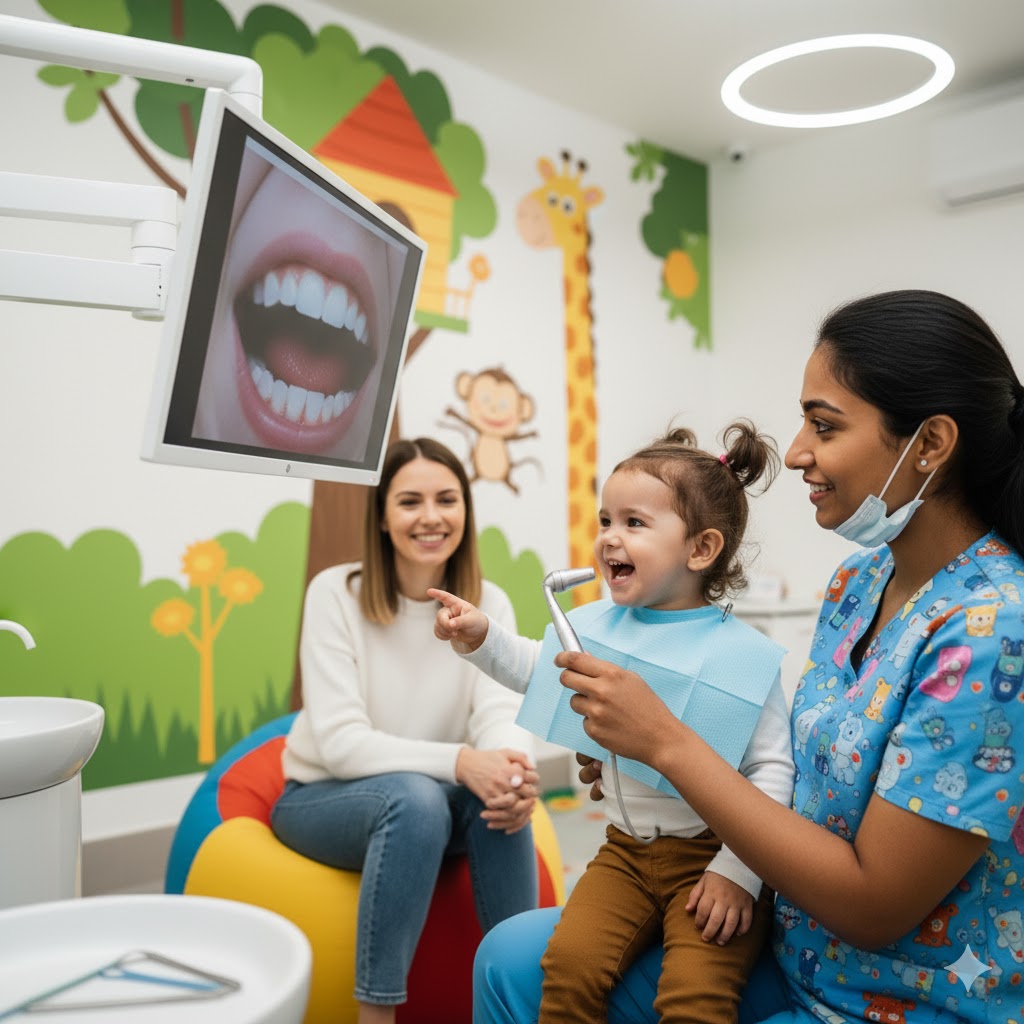
The Private OPC Clinic Oral and Dental Health Polyclinic, located in Kozyatağı, a central and easily accessible location in Kadıköy, Istanbul, aims to make children’s first visits unforgettable and anxiety-free with specialized behavioral management techniques. At our clinic in Kozyatağı, Kadıköy, we gain children’s trust from the very first visit, laying the foundation for a lifelong healthy relationship with the dentist.
Pre-First Visit Preparation: Special Guidance for Parents
Our pediatric dentists at the OPC Clinic understand that a successful first visit begins before they even enter the clinic. Parental engagement is crucial during this phase.
- Using Positive Language: Avoid negatively connoted words like “don’t be afraid,” “no shots,” or “it won’t hurt.” Instead, explain to your child that a dental visit is a fun game where they will “count their teeth,” “check their shine,” and “take a mini shower.”
- Timing: Schedule the appointment for a time when your child is sleepy and well fed. A tired or hungry child will be less adaptable to the clinic environment.
- No Surprises: Inform your child before arriving at our clinic. Making the dentist visit a mysterious or surprising event increases anxiety.
Phases of the First Exam at OPC Clinic Kozyatağı: Introduction and Trust Building
A pediatric dentistry exam at OPC Clinic Kozyatağı is meticulously planned based on the child’s developmental level and psychological state. The first visit typically proceeds as a brief and pleasant introductory session.
A. Stage 1: History and Adaptation to the Clinical Environment (Play Time)
The exam typically begins with an initial friendly conversation between the dentist and the child in our waiting area, designed to appeal to children.
- Detailed History: Our pediatric dentist obtains detailed information from the parents about the child’s medical history, eating habits (especially nighttime feedings), medications, and oral hygiene routine. This is the most important data for determining caries risk.
- Behavior Redirection: A few minutes are allocated for the child to become accustomed to the clinic and the doctor. The child’s attention is distracted with toys or colorful objects in the clinic to help them relax.
B. Stage 2: Examination and the “Tell-Show-Do” Technique
The examination itself is transformed into an engaging, rather than challenging, exploration process. OPC Clinic Pedodontists use specific behavior management techniques during this stage:
- “Tell-Show-Do” Technique: This is the fundamental technique of Pedodontics.
- Tell: The procedure to be performed (e.g., counting teeth) is explained in simple, positive language.
- Show: The tools to be used (e.g., mirror, probe, air-water spray) are given to the child or allowed to touch them. The tools are given cute names (“little brush,” “teeth camera,” “mini umbrella”).
- Do: A brief, painless examination is performed using tools the child is no longer familiar with.
- Comprehensive Oral Examination: The counting of teeth, the presence of caries, the condition of the gums, and the jaw closure are examined. In infants (1 year of age), the examination is usually performed on the parent’s lap in the knee-to-knee position, which helps the baby feel secure.
C. Stage 3: Preventive Practices and Education
After the initial examination, preventive practices are implemented, often without the need for treatment, and critical information is provided to parents.
- Radiologic Evaluation: If deemed necessary, digital radiographs (X-rays) are taken at the lowest dose to check the condition of the child’s permanent teeth and hidden decay.
- Preventive Practices: If the risk of tooth decay is high, Professional Fluoride Application may be performed immediately during the first or second visit.
Personalized Roadmap After the First Visit
The initial Pedodontic examination at OPC Clinic Kozyatağı concludes with a report of results and a personalized plan for the child’s long-term oral health. This plan is tailored to each child’s unique needs.
A. Caries Risk Level and Follow-Up Program
Our pediatrician determines the child’s caries risk level based on examination and history data and determines follow-up frequency.
| Caries Risk> | Frequency of Follow-up | Focused Preventive Procedures |
| Low Risk | Every 6-12 months | Verification of Diet and Brushing Techniques |
| High Risk | Every 3-4 months | Frequent Fluoride Application, Fissure Sealant Planning, Nutrition Counseling |
B. Treatment Options for Special Situations
If extensive decay or a condition that is not amenable to treatment is detected during the initial examination, our pediatric dentist will inform the family about comprehensive treatment options:
- Conscious Sedation: This is a method used in the clinic for children with mild anxiety or those who cannot tolerate minor procedures. The child is conscious but calmed.
- Treatment Under General Anesthesia: This is a single-session, safe environment, with an anesthesiologist present for all treatments, especially for children with numerous cavities, special needs, or severe dental phobia. At OPC Clinic, we offer full support to our families in these procedures.
OPC Clinic Oral and Dental Health Clinic, located in Kadıköy Kozyatağı, is committed to making your child’s first encounter with the dentist a friendship and trusting one. You can contact our expert Pedodontics unit to lay the foundations of a healthy smile, one of the most valuable gifts you can give your child.