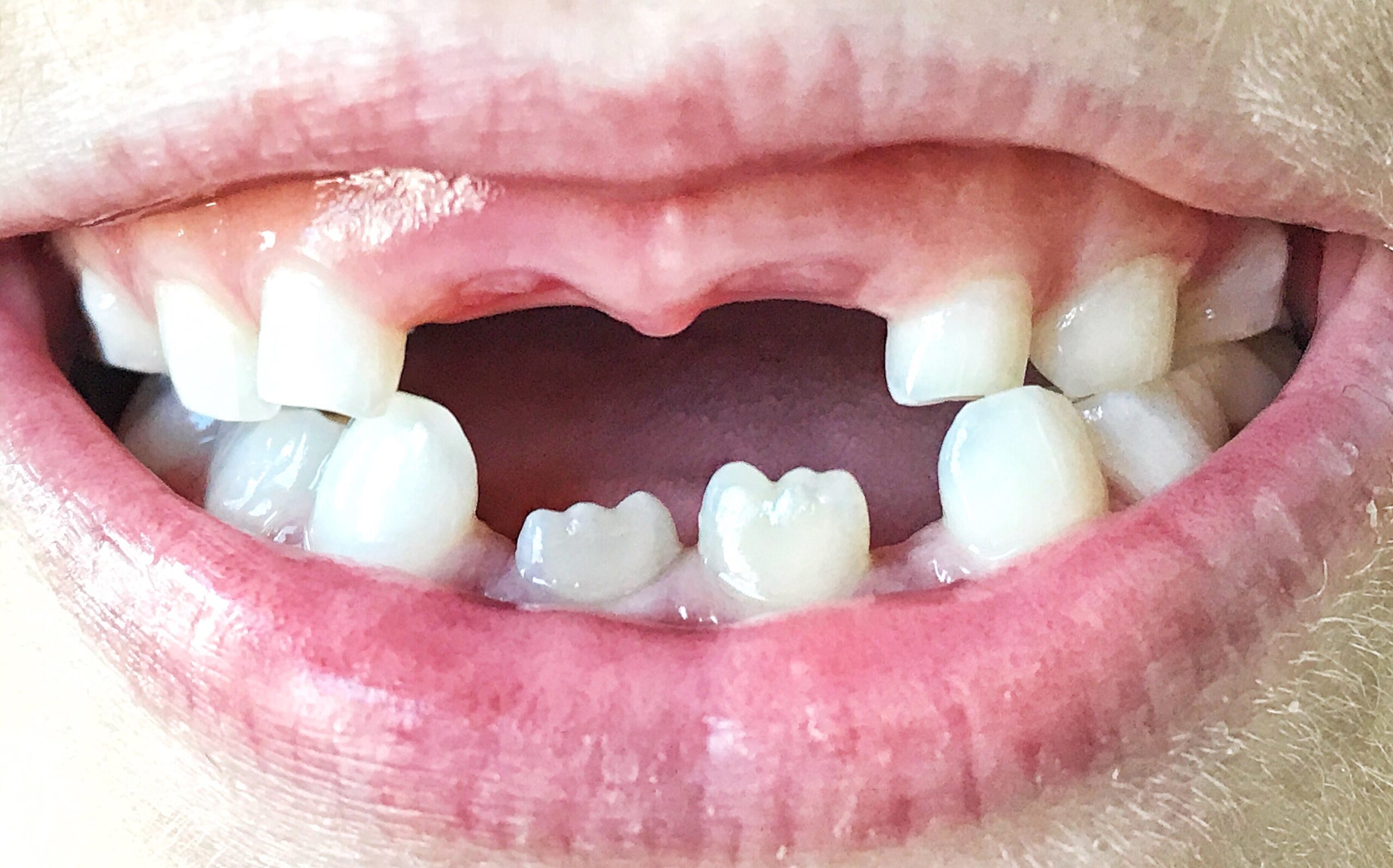
How Does Multiple Tooth Loss Affect Oral Health?
Have you ever struggled to chew a delicious kebab in Istanbul’s rich cuisine, or felt your teeth ache when the wind blew by the Bosphorus? Losing multiple teeth is not just an aesthetic flaw that causes you to cover your mouth in photos. This is the beginning of a biological “chain reaction” that starts in the mouth and affects the entire body.
Most patients don’t care about tooth loss in the back areas, saying, “It’s not visible anyway.” But nature abhors a vacuum. Each lost tooth causes the jawbone to erode, other teeth to shift, digestive problems, and even makes the face sag and look older.
1. “Domino Effect”: Displacement of Other Teeth
The teeth in the mouth are arranged in an arch, supporting each other (contact points). When one or more teeth are removed, the entire arch loses its stability.
In the case of multiple missing teeth, the following 3 critical movements occur:
Tipping: The healthy teeth next to the gap tilt towards the gap because they lose their support. This creates “dead areas,” and new cavities begin in these areas that cannot be cleaned.
Extrusion: The tooth opposite the gap (in the opposite jaw) begins to elongate because it cannot find a surface to contact during chewing. Its root is exposed, and it eventually loosens and falls out. Diastema: Gaps (diastema) begin to open between the front teeth, and the aesthetics deteriorate.
2. Bone Resorption and Facial Sagging
This is the most insidious and irreversible consequence of tooth loss. The jawbone needs chewing pressure from the tooth roots to maintain its existence. This is called “Wolff’s Law” (Use it or Lose it) in medicine.
When a tooth is extracted, the bone in that area begins to resorb because it is not stimulated. This resorption accelerates with the loss of multiple teeth. As a result:
Distortion of Facial Profile
The distance between the chin and the tip of the nose shortens. The lips sink inward.
Premature Aging
Deep wrinkles form around the mouth because lip and cheek support is lost. The person looks 10-15 years older than they are.
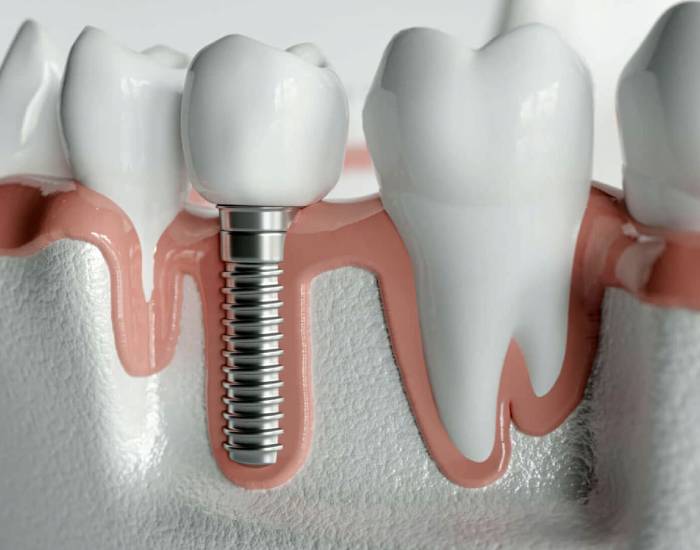
- Becoming Impaired for Implants
If the bone erodes too much, there will not be enough volume left for implant placement in the future, and advanced surgical procedures (bone powder) will be required.
🦴 Why Does Jawbone Erosion Occur?
The body is very economical. It does not nourish tissue that is not useful. When the tooth root is lost, the body sees the bone there as “unnecessary expense” and thins the bone by reabsorbing calcium. Bone loss can reach 40% in the first 6 months. That’s why dentists in Istanbul recommend that implants be placed immediately after tooth extraction (immediate implant).
3. Digestive and Stomach Problems
“Digestion begins in the mouth.” This simple biological rule is disrupted in the case of missing teeth. Meat, a staple of Istanbul cuisine, and hard vegetables or nuts cannot be properly ground.
Individuals with multiple missing teeth tend to swallow food whole without chewing. Food that goes into the stomach unchewed causes the stomach to secrete more acid. In the long term, this leads to chronic digestive problems such as gastritis, reflux, bloating, and indigestion. Furthermore, because the patient cannot chew, they tend to gravitate towards soft, carbohydrate-rich foods, which triggers weight gain and increases the risk of diabetes. 4. Temporomandibular Joint (TMJ) Disorders
If there is unilateral tooth loss in the mouth, the patient involuntarily chews only with the side that has teeth. This “unilateral chewing” habit places an unbalanced load on the temporomandibular joint (TMJ).
Over time, clicking sounds in the joint, difficulty opening and closing the mouth, pain in the temples, and even migraine-like headaches begin. Even the body’s balance (posture) can be affected by this asymmetry.
📍 Stress in Istanbul and Tooth Loss
Stress-induced teeth grinding (bruxism), common in Istanbul, is much more destructive in patients with missing teeth. This is because there aren’t enough teeth to support the chewing load. The few remaining teeth cannot bear the excessive weight and break or begin to loosen. In other words, stress accelerates the tooth loss process.
5. Speech Disorder (Phonation)
Contact between the tongue and teeth is essential for correct pronunciation. Especially in cases of front tooth loss, letters such as “s, f, v, t, z” cannot be pronounced correctly. A lisping or hissing sound occurs. This causes the person to hesitate to speak in social situations and leads to a loss of self-confidence.
Table: Short and Long-Term Effects of Tooth Loss
The cost of ignoring the problem increases over time. Here is the process diagram:
| Time Zone | Possible Effects | Treatment Difficulty |
|---|---|---|
| First 6 Months | Difficulty chewing, aesthetic concerns, onset of bone loss (40% loss). | Easy (Implant or Bridge) |
| 1 – 3 Years | Twisting of adjacent teeth, elongation of opposing teeth, food accumulation, joint pain. | Moderate (Orthodontics may be required) |
| 5 Years and Over | Severe bone loss, facial drooping, digestive diseases, remaining tooth loss. | Difficult (Bone powder, All-on-4, Sinus Lifting) |
Conclusion: Take Action to Stop the Loss
Multiple tooth loss doesn’t just mean having gaps in your mouth; it means losing a piece of your health, youth, and quality of life every day.
But the good news is that with the modern dental facilities in Istanbul, it’s possible to stop and reverse this destruction. Whether it’s Implants, Bridges, or All-on-4 systems; completing your missing teeth is the most effective way to protect not only your smile but also your overall health. Delaying only makes treatment more difficult and increases the cost. Do yourself a favor and take a step today.