For many people, the dental experience is still a source of deep anxiety, inherited from childhood traumas or past negative experiences. Research shows that a large percentage of adults are hesitant to sit in the dentist’s chair, and this hesitation is often rooted in a single element: the anesthetic needle and the accompanying pain.
However, as the boundaries of medicine and technology expand daily, modern dentistry offers a revolutionary solution that will shatter these walls of fear: Digital Anesthesia.
Located in the heart of Istanbul’s Kadıköy Kozyatağı district, the OPC Clinic is pioneering this new era, revolutionizing the dental treatment process for those with needle phobia (trypophobia), children, and all patients with high anxiety levels. This method, now referred to as “needle-free” and “painless,” forms the basis for a holistic comfort protocol that erases all preconceptions about dental treatment.
In this comprehensive blog post, we will examine in detail the scientific basis of this advanced digital technology implemented by the OPC Clinic in Kozyatağı, its differences from conventional anesthesia, the patient groups for whom it is vital, and the clinic’s integrated psychological comfort management strategies.
Conventional Anesthesia: The Unknown Cause of Fear and Pain
While traditional local anesthesia has been standard practice for decades, it carries both physiological and psychological disadvantages. These disadvantages are the most significant triggers of “Dental Phobia” (Dentophobia), which causes patients to avoid dental treatments.
1.1. Psychological Triggers: Needle Phobia (Trypophobia)
Needle phobia is not simply a fear of needles; it is an intense anxiety disorder triggered by the sight of needles, the perception of a loss of control, and the possibility of intravenous anesthesia. This anxiety can begin days before an appointment, leading to panic attacks and negatively impacting the quality of treatment. The sharp, metallic appearance of a traditional syringe immediately triggers this phobia.
1.2. Physiological Pain: The Problem of Tissue Pressure and Speed
The sensation patients describe as “pain” is largely due to the rapid, high-pressure injection of anesthetic fluid into the tissue, rather than the prick of the needle tip.
- Rapid Injection: In the traditional method, the anesthetic is pushed into the tissue with the physician’s fingertip, sometimes in as little as 15-20 seconds.
- Tissue Trauma: The tissue cannot instantly adapt to this speed. The pressure created by the rapidly increasing fluid spreads to surrounding tissues, causing a severe burning and stinging sensation. This physiological trauma is encoded as “pain” in the patient’s brain, creating a lasting fear for the next appointment.
The Digital Anesthesia Revolution: The Science of Painlessness
The Computer-Controlled Digital Anesthesia System (STA) used at the Kozyatağı OPC Clinic is a revolutionary system designed to eliminate all these disadvantages of the classical anesthesia method. This technology aims to reduce the psychological and physiological stress experienced during anesthesia administration to zero.
2.1. Needle-Free Experience: Pen Appearance and Visual Comfort
The most distinctive feature of the Digital Anesthesia device is its elegant, pen-like design, completely different from the traditional syringe appearance.
- Psychological Relief: This “pen” or “mouse”-like appearance of the device neutralizes the patient’s subconscious image of a needle. Especially when interacting with pediatric dentists (Pediatric Dentistry), presenting the device as a toy or magic pen transforms fear into fun.
- Physician Control: Thanks to its ergonomic design, the physician can hold the device more steadily and precisely, focusing on the injection site.
2.2. Microprocessor-Based Pressure Management: The Pain-Preventing Mechanism
The fundamental scientific secret behind the painlessness of digital anesthesia is the computer-controlled flow rate.
- Constant and Ultra-Slow Flow: The device delivers the anesthetic solution to the tissue at a constant rate of microliters per second, with a precision unattainable by human hands. This rate matches the tissue’s absorption rate.
- Pressure Sensors: The system monitors tissue pressure at the injection site in real time. When an increase in pressure is detected (risk of a burning sensation), the device automatically slows or stops the flow. This way, the only thing the patient feels is a minimal touch, absolutely no burning or stinging.
- Side Effect Minimization: Controlled flow minimizes tissue trauma (swelling, bruising, and prolonged numbness). Recovery is accelerated, and post-treatment comfort is increased.
OPC Clinic Kozyatağı Comfort Protocol: A Holistic Approach to Anxiety Management
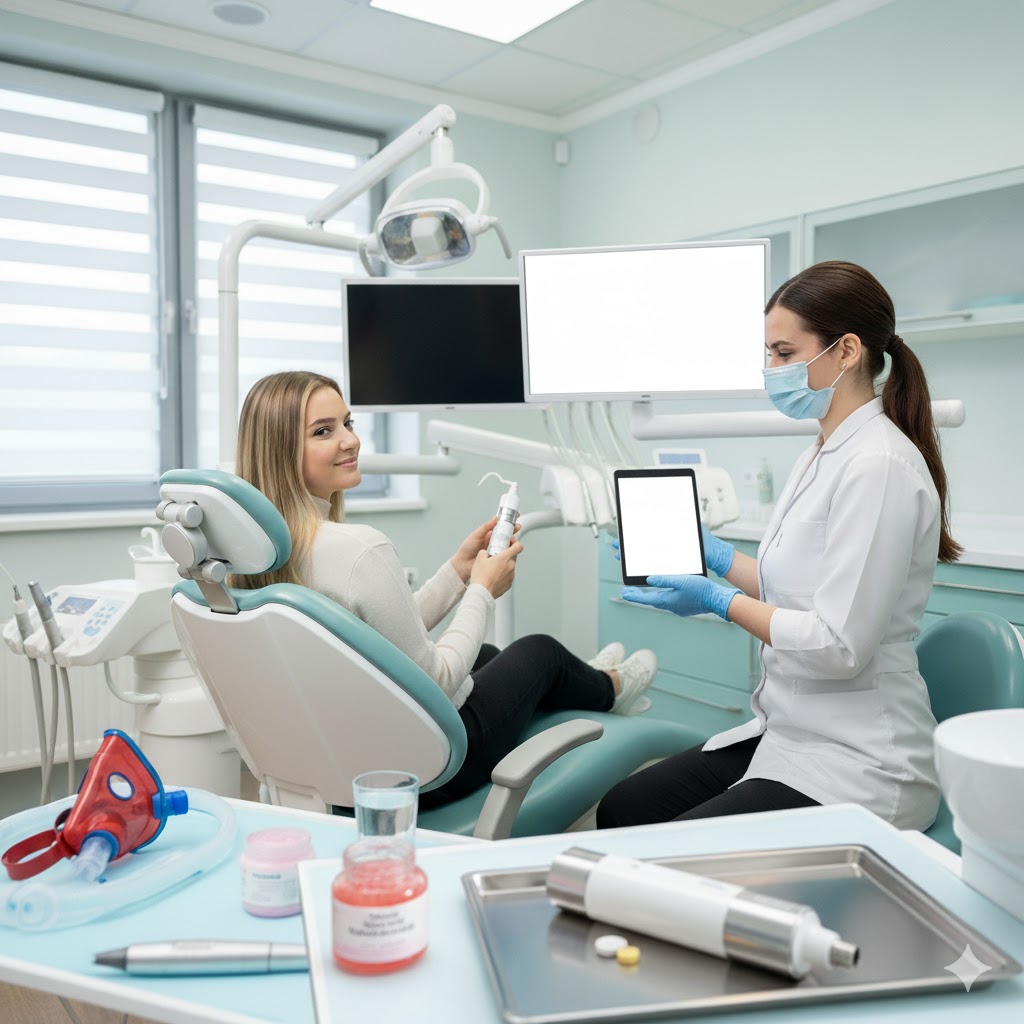
The Kozyatağı OPC Clinic offers painless anesthesia not just as a technology, but as a holistic approach to anxiety management.The protocol is based on a three-stage comfort strategy, which continues from the moment the patient steps into the clinic until the end of treatment:
Stage 1: Psychological Preparation and Communication
- Behavior Guidance (Tell-Show-Do): Especially for children and adults with severe phobias, the procedure is implemented step by step, using simple and understandable language (Tell), then visually (Show), and finally with confidence (Do). This transparency eliminates the fear of the unknown.
- Empathy and Trust Building: Our expert medical staff listens to the patient’s fears without judgment and respects the patient’s own pace and rhythm.
Stage 2: Maximum Physical Comfort (Topical + Digital Anesthesia)
OPC Clinic’s Painless Anesthesia Protocol includes two basic steps:
- Preliminary Anesthesia (Topical Anesthesia): Before the digital anesthesia is applied, a special, highly concentrated topical numbing gel/spray is applied to the area where the needle will be inserted. This completely blocks the initial sting of the needle.
- Digital Application: Immediately after the initial anesthesia, the pen-like Digital Anesthesia device is activated. The slow flow, with microliter precision, numbs the patient without feeling any pressure or pain.
Stage 3: Pharmacological Support (Conscious Sedation)
For severe dental phobia, gag reflexes, or procedures that will take a long time, the OPC Clinic offers an additional comfort option:
- Conscious Sedation (Laughing Gas): Through the use of Nitrous Oxide gas (N2O), the patient remains fully awake but experiences a state of deep relaxation, apathy, and mild euphoria. This method helps patients with high anxiety levels remain calm and cooperative throughout the treatment. The effects wear off quickly, and the patient can leave the clinic without assistance. This method acts as a bridge to overcoming their fear of dentistry.
Who is Ideal for Needle-Free Anesthesia? Patient Groups from Global to Local
While digital anesthesia can theoretically be applied to any patient, according to the experience of the Kozyatağı OPC Clinic, it provides vital comfort and ease of treatment compliance for the following patient groups:
- Pediatric Patients (Pediatric Dentists): The pen-like appearance and painless injection prevent children from subconsciously forming the “dentist = fear” equation. Pediatric Dentists at the OPC Clinic use this device to create a positive dental experience.
- Patients with Intense Dental Phobia and Anxiety: For adults who have had negative experiences in the past, who panic as appointments approach, or who suffer from insomnia, needle-free anesthesia eliminates the reason for postponing treatment.
- Those with a Strong Gag Reflex: Stress and anxiety can trigger the gag reflex. A painless and stress-free anesthesia process helps control this reflex.
- Individuals with Special Needs: In cases where cooperation is difficult, digital anesthesia and, if necessary, sedation/general anesthesia options allow all treatments to be completed comfortably in a single session.
Clinical and Aesthetic Advantages of Needle-Free Anesthesia
Digital anesthesia not only overcomes fear but also directly improves clinical outcomes and patient comfort after treatment. These functional advantages elevate OPC Clinic’s treatment quality to international standards.
5.1. Reduction of Collateral Numbness:
With conventional anesthesia techniques, even when attempting to anesthetize a single tooth, especially in the upper jaw, the cheek, lip, and sometimes the nasal area may also be numb. Thanks to the digital system’s high precision and controlled distribution, the physician can more accurately localize the anesthetic agent. This provides:
- Precision in Aesthetic Procedures: During aesthetic procedures such as fillings or laminates, the natural sensation of the surrounding tissues is preserved, allowing the physician to perform more accurate bite and lip contour analysis.
- Fast Return to Normal: Patients can return to their social lives more easily immediately after treatment, and they do not experience difficulties speaking or eating, as their lips and cheeks are not unnecessarily numb.
5.2. Key Concepts for an Effective SEO Strategy
This service from OPC Clinic can be associated with the following keywords to ensure high visibility in global and local searches:
- Painless Dental Treatment Kozyatağı
- Needle Phobia Dentist Kadıköy
- Digital Anesthesia Istanbul Price
- What is Painless Local Anesthesia
- The Wand Dental Treatment
- Dental Phobia Solutions OPC Clinic
Comparison of Classical Anesthesia and Digital Anesthesia (OPC Clinic Protocol)
The table below shows the advantages of the digital anesthesia system used at Kozyatağı OPC Clinic compared to the traditional manual injection method.This summarizes the key differences:
| Feature | Classic Local Anesthesia | Kozyatağı OPC Clinic: Digital Anesthesia (STA) | |
| Visual Perception | The scary syringe triggers needle phobia. | The pen/mouse-looking device neutralizes anxiety. | |
| Pain Source | Tissue pressure (Burning/Aching) from rapid injection. | The source of pain is eliminated thanks to pressure sensors. | |
| Flow Rate | Uncontrolled and rapid, dependent on the physician’s finger strength. | Computer-controlled, microliter-accurate, slow flow that matches the tissue absorption rate. | |
| Tissue Effect | Risk of swelling and bruising due to high pressure. | Minimal tissue trauma, less swelling. | |
| Spreading of Numbness | Unnecessary numbness of the cheek, lip, and tongue (Collateral Numbness). | More localized, targeted anesthesia. | |
| Additional Comfort | Usually just one numbing session. | Topical Numbing and optional Conscious Sedation integration. |
A Fear-Free Future Begins in Kozyatağı
Comfort and technology in dental treatment are no longer luxuries, but a necessity. Every dental treatment you postpone due to needle phobia or general dental anxiety leads to greater health and financial problems in the long run.
Kozyatağı OPC Clinic offers its patients in Istanbul the greatest convenience offered by modern dentistry, combining the experience of painless and needle-free anesthesia with holistic psychological support and a cutting-edge technology infrastructure. The clinic’s specialist dentists aim to heal not only your teeth but also all your treatment-related concerns.
Fear and pain are a thing of the past. By discovering Digital Anesthesia, you can start viewing your dental appointments not as an obligation, but as a comfortable step toward a healthy life. Contact OPC Clinic Kozyatağı for more information and to step into this new era of comfortable dentistry. Don’t postpone your smile, don’t postpone your comfort.